47:10
533 views
·
Last viewed: 2 days ago
Uploaded: 04 Apr 2012 (14 years ago) · Shared: 29 Sep 2017
Video Description (from Youtube)
The Early Middle Ages, 284--1000 (HIST 210) Professor Freedman focuses on the question of how the Eastern Roman (Byzantine) Empire survived, while the West collapsed in the fifth century. He beginswith a brief overview of Procopius' Secret History, a work which presents a highly critical account of the reign of the emperor Justinian. The more urbanized, economically stronger, and geographically more stable Eastern Empire was able to survive while the West was dismantled by barbarian tribes. Yet under pressure from its old enemy, Persia, and new threats, the Slavs and Avars in the West and Arabs in the East, the Eastern Empire experienced a decline in the seventh century. Against the background of this political instability, Professor Freedman also discusses the Christological controversies of Nestorianism and Monophysitism which plagued the Church in the East. Beginning in the late seventh century, Iconoclasm also added to the pressures facing the Eastern Church and Empire.
00:00 - Chapter 1. Introduction
05:11 - Chapter 2. Procopius' Secret History
07:36 - Chapter 3. Circumstances of the Survival of the East
11:56 - Chapter 4. Christological Controversies -- Nestorianism and Monophysitism
26:48 - Chapter 5. The Rise of Islam, the Persian Threat, and Barbarian Invasions
39:25 - Chapter 6. Iconoclasm
45:35 - Chapter 7. Conclusion
Complete course materials are available at the Yale Online website: online.yale.edu
This course was recorded in Fall 2011.
DISCLAIMER
All videos are shared for educational and information purposes only. All videos are hosted and viewable on Youtube servers. Video titles are generated using the original video title; overall content theme including actual dialogue and speech (Transcript); and A.I-based recommendations with a focus on SEO, keyword density, and internal search functions. The video title does not represent the views held by the Youtube video uploader, or any individual, organisation or business.
If you spot any mistake, omission or give feedback, kindly Contact Us with details
Overview & Key Concepts
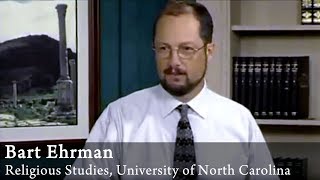
Who is Paul Freedman?
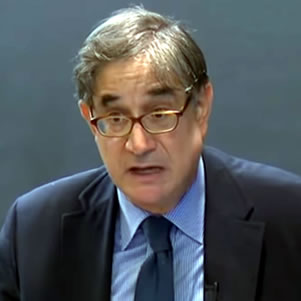 Paul Freedman is the Chester D Tripp Professor of History at Yale University. He specializes in medieval social history, the history of Spain, the
study of medieval peasantry, and medieval cuisine.
Where is Rome?
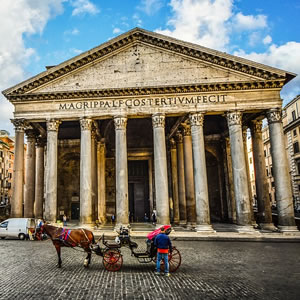 Rome is the capital city of Italy and a special comune (named Comune di Roma Capitale). Rome also serves as the capital of the Lazio region. With
2,872,800 residents in 1,285 km2 (496.1 sq mi), it is also the country's most populated comune. It is the fourth-most populous city in the European Union by population within city limits. It is the centre of the Metropolitan City of Rome, which has a population of 4.3 million residents. Rome is located in the central-western portion of the Italian Peninsula, within Lazio (Latium), along the shores of the Tiber. The Vatican City is an independent country inside the city boundaries of Rome, the only existing example of a country within a city: for this reason Rome has been often defined as capital of two states. Rome's history spans 28 centuries. While Roman mythology dates the founding of Rome at around 753 BC, the site has been inhabited for much longer, making it one of the oldest continuously occupied sites in Europe.
Frequently Asked Questions
1.When did Catholic Christianity become official religion of Rome?
2.What happened after Rome chose Christianity as the state religion?
3.What is the 'Lazarus Effect' or 'Lazarus Syndrome' in science?
Multipart Video (1)
This video is part of a series as displayed below :Rome: Survival in the East - Paul Freedman 8/18
Videos on Paul Freedman (18)
 40:08
40:08
527
1493856000
1787419400
Rome: Rome's Greatness and First Crisis - Paul Freedman 1/18
002408
1
 48:37
48:37
596
1506722487
1787396484
Rome: 3rd Century Crisis and Diocletian Reforms - Paul Freedman 2/18
002917
2
 45:17
45:17
1105
1506722498
1787271784
Rome: Constantine & The Early Roman Church - Paul Freedman 3/18
002717
3
 47:56
47:56
845
1506722501
1787367384
Rome: Christian Roman Empire - Paul Freedman 4/18
002876
4
 46:23
46:23
624
1506722504
1787355192
Rome: Augustine's Confessions - Paul Freedman 5/18
002783
5
 49:22
49:22
707
1506722507
1787265156
Rome: Transformation of the Roman Empire - Paul Freedman 6/18
002962
6
 49:15
49:15
362
1506722515
1787283184
Rome: Barbarian Kingdoms - Paul Freedman 7/18
002955
7
 47:10
47:10
533
1506722518
1787264790
Rome: Survival in the East - Paul Freedman 8/18
002830
8
 48:47
48:47
443
1506722520
1787264733
Rome: The Reign of Justinian - Paul Freedman 9/18
002927
9
 46:55
46:55
702
1506722523
1787413519
Rome: Clovis and the Franks - Paul Freedman 10/18
002815
10
 50:01
50:01
445
1506722527
1787264743
Rome: Frankish Society - Paul Freedman 11/18
003001
11
 44:15
44:15
543
1506722534
1787353226
Rome: Britain and Ireland - Paul Freedman 12/18
002655
12
 45:50
45:50
403
1506722662
1786410503
Rome: Monasticism ('Devoted Living') - Paul Freedman 13/18
002750
13
 43:15
43:15
457
1506722660
1787264714
Rome: Muhammed and the Arab Conquests - Paul Freedman 14/18
002595
14
 49:44
49:44
594
1506722656
1787262302
Rome: Islamic Conquests, Forced Conversions and Civil War - Paul Freedman 15/18
002984
15
 44:11
44:11
679
1506722610
1787291048
Rome: The Splendor of the Abbasid Period - Paul Freedman 16/18
002651
16
 45:18
45:18
481
1506722613
1787264787
Rome: The Crucial 7th Century - Paul Freedman 17/18
002718
17
 48:40
48:40
473
1506722616
1787264746
Rome: The Splendor of Byzantium - Paul Freedman 18/18
002920
18