HEBREW: Shlomo
ARAMAIC: Shlemon
ARABIC: Sulaiman
AGE: 80 Years
BIRTH: 1010 BC
DEATH: 930 BC
GENDER: Male
BORN IN: Israel, Jerusalem
LIVED IN: Israel, Jerusalem
DIED IN: Israel, Jerusalem
SCRIPTURE: Proverbs, Ecclesiastes and Song of Solomon
29,064 views
Last view: 2 hrs ago
1.Who Was Prophet Solomon?
Solomon as a legendary prophet, a wise king, and the son of King David.
Born in Jerusalem around 990 BC, he inherited his father's throne around 970 BC and ruled over the United Kingdom of Israel during its golden age of peace and prosperity. God blessed Solomon with unmatched wisdom and a unique kingdom, granting him miraculous authority over the wind, animals, and the Jinn. He famously built the First Temple (the Bayt al-Maqdis) in Jerusalem as a grand center for monotheistic worship. His wisdom attracted rulers from all over the world, including the famous Queen of Sheba, whom he guided to worship the one true God. Solomon wrote several books of scripture, including Proverbs and Ecclesiastes. He ruled for forty years, dying at 60 years old around 931 BC in Jerusalem.2. Who Is Prophet Solomon in Judaism, Christianity, and Islam?
| Solomon in Judaism |
| Honored as the last king of a united Israel, he is credited with building the First Temple in Jerusalem and is venerated as a wise ruler rather than a traditional classical prophet. |
| Solomon in Christianity |
| Known for his legendary wisdom, power, and the construction of the Temple, he is considered a pivotal ancestor of Jesus in the royal lineage recorded in the Gospels. |
| Solomon in Islam |
| He is revered as a major prophet and a powerful, just king who was granted miraculous abilities, such as the power to understand animals and control the Jinn. |
3. Family Tree of Prophet Solomon and His Relations to Abrahamic Prophets
4. What Was the World Like for Prophet Solomon?
| The Environment |
| The hyper-prosperous, heavily fortified, and architecturally grand capital of Jerusalem, surrounded by an expansive empire stretching to the Euphrates. |
| The Society |
| A highly centralized, Golden Age Israelite kingdom featuring an elite class, advanced international trade networks, vast military installations, and a massive state bureaucracy. |
| The Social Climate |
| Characterized by unprecedented peace, immense material luxury, and intellectual sophistication, which ultimately degraded into public unrest due to heavy royal taxation, forced labour, and spiritual compromise driven by foreign pagan influences. |
5. Why Did God Send Prophet Solomon?
| 1. To construct the First Holy Temple in Jerusalem |
| God chose Solomon to fulfill the dream of his father David by building a magnificent, permanent sanctuary (the Beit HaMikdash / Al-Aqsa) to house the Ark of the Covenant and centralise worship. |
[1KINGS 6:1] [QURAN 34:13] |
| 2. To manifest supreme divine wisdom and judicial insight |
| God endowed Solomon with an unparalleled level of discernment, making him a legendary judge whose wisdom drew rulers from around the world to seek his advice. |
[1KINGS 3:28] [QURAN 21:79] |
| 3. To rule over a golden era of peace and prosperity |
| Solomon was sent to govern Israel during its geopolitical peak, maintaining peace with neighboring nations and establishing an empire free from the devastating wars of previous generations. |
[1KINGS 4:24] [QURAN 27:15] |
| 4. To write foundational books of wisdom and poetry |
| Under divine inspiration, Solomon authored thousands of proverbs, songs, and philosophical discourses, providing humanity with timeless instructions on morality and the fear of God. |
[1KINGS 4:32] [PROVERBS 1:1] [QURAN 4:163] |
| 5. To exercise miraculous dominion over creation, jinn, and animals |
| God granted Solomon unique supernatural control over the winds, the ability to command legions of jinn, and the gift to understand and communicate fluently with animals and insects. |
[1KINGS 4:33] [QURAN 38:36] |
| 6. To guide foreign monarchs to absolute monotheism |
| Solomon used his immense wealth, wisdom, and miraculous signs to confront pagan rulers, most famously Bilqis, the Queen of Sheba guiding them to abandon sun worship and submit to the true Creator. |
[1KINGS 10:9] [QURAN 27:44] |
| 7. To model pure gratitude while possessing ultimate worldly power |
| Despite being the wealthiest and most powerful king on Earth, Solomon was sent to demonstrate that a true believer attributes all success to divine grace, remaining a humble servant. |
[1CHRONICLES 29:22] [QURAN 27:19] |
| 8. To defend the integrity of the prophetic line against slander |
| Solomon's final providential legacy is to stand as a completely cleared, righteous servant of God, proving that his miraculous works were done through divine favor rather than magic or sorcery. |
[NEHEMIAH 13:26] [QURAN 2:102] |
6. What Was Prophet Solomon's Core Message to His People?
True wisdom requires applying divine discernment to practical governance, architecture, and literature, while warning that material wealth can blind you to your spiritual foundations.
7. Chronological Timeline of Prophet Solomon's Life and Ministry
SOLOMON
During Solomon's reign Israel became a rich country. Solomon built a great palace for himself. He also built a magnificent temple in Jerusalem. However Solomon also alienated the people by imposing heavy taxes and using forced labour.
SOLOMON
5 of 6
930 BC
SOLOMON
The Israelites appealed to Rehoboam to reduce the burdens his father laid on them but he refused. As a result the kingdom split. Judah and Benjamin formed the kingdom of Judah in the south with Jerusalem as its capital. Rehoboam continued to rule in Judah.
However in the north 10 tribes broke away and formed a kingdom they called Israel. Its capital was, at first, at Shechem and later at Samaria. Jeroboam was its first king.
After the split both kingdoms drifted away from God and turned to worshiping idols.
8. Did Prophet Solomon Have a Wife?
|
|
9. Was Prophet Solomon Involved in Any Battles or Wars?
10. What Miracles Did Prophet Solomon Perform?
|
|
|
|
|
11. What Were the Key Achievements of Prophet Solomon?
|
12. What Modern Countries Did Prophet Solomon Travel Through?
| Born In: |
|
| Lived In: |
|
| Travelled To: |
|
|
|
|
| Died In: |
|
13. Fascinating Historical Facts About Prophet Solomon | 2 facts
- Could control the Jinns (spirits)
- Could speak with animals
15. Historical Evidence for Prophet Solomon | 1,827 photos
| Album 1: Historical images of the Western Wall with ties to Jesus, Muhammad, Solomon, David and Jeremiah | 144 photos |
| Album 2: Al-Mawazin and Dome of the Rock | 314 photos |
| Album 3: Ceramics of the Dome of the Rock Mosque | 34 photos |
| Album 4: Dome exterior of the Dome of the Rock | 199 photos |
| Album 5: Western Wall and Dome of the Rock | 242 photos |
| Album 6: Interior dome of the Dome of the Rock | 35 photos |
| Album 7: Interior of the Dome of the Rock | 78 photos |
| Album 8: Well of Souls, Cave in the Dome of the Rock underneath the foundation stone | 20 photos |
| Album 9: Foundation Stone (Temple_Mount), enclosed by the Dome of the Rock | 42 photos |
| Album 10: Dome of the Chain and Dome of the Rock | 131 photos |
| Album 11: Exterior of the Dome of the Rock | 154 photos |
| Album 12: Night photos of the Dome of the Rock | 48 photos |
| Album 13: Remote views of the Dome of the Rock | 318 photos |
| Album 14: Historical Images of Zedekiah's Cave | 33 photos |
| Album 15: Zedekiah Cave, Jerusalem | 33 photos |


16. Is Prophet Solomon Mentioned in Current News Today? | 1 news
17. Which Revealed Scriptural Texts Mention Prophet Solomon? | 312 texts
Solomon in the Torah
Torah is the first 5 books* of the Old Testament: Genesis, Exodus, Leviticus, Numbers and Deuteronomy.TOTAL: 0 VERSES
Solomon in the Psalms
Psalms is the third section of the Hebrew Bible. Many of the Psalms are linked to David.TOTAL: 0 VERSES
Solomon in the Bible (Old Testament)
The Old Testament consists of 39 books* including the Jewish Torah (Genesis, Exodus, Leviticus, Numbers and Deuteronomy).TOTAL: 262 VERSES
Solomon in the Bible (New Testament)
The New Testament (Christianity) consists of 66 books*. 39 books from the Old Testament, and 27 additional books including Matthew, Mark, Luke and John.TOTAL: 10 VERSES
Solomon in the Quran
The Quran was revealed to Muhammad through the Angel Gabrial. It is the central religious text of Islam, which Muslims believe to be a direct revelation from God.TOTAL: 23 VERSES
Solomon in Hadith
Hadith are the "prophetic traditions" of Muhammad; his teachings, actions, deeds and sayings. Hadith were compiled from oral reports in circulation in society around the time of their compilation.TOTAL: 17 VERSES
"The Prophet said, "Last night a big demon (afreet) from the Jinns came to me and wanted to interrupt my prayers (or said something similar) but Allah enabled me to overpower him. I wanted to fasten him to one of the pillars of the mosque so that all of you could See him in the morning but I remembered the statement of my brother Solomon (as stated in Quran): My Lord! Forgive me and bestow on me a kingdom such as shall not belong to anybody after me (38.35)." The sub narrator Rauh said, "He (the demon) was dismissed humiliated."
The Prophet once offered the prayer and said, "Satan came in front of me and tried to interrupt my prayer, but Allah gave me an upper hand on him and I choked him. No doubt, I thought of tying him to one of the pillars of the mosque till you get up in the morning and see him. Then I remembered the statement of Prophet Solomon, 'My Lord ! Bestow on me a kingdom such as shall not belong to any other after me.' Then Allah made him (Satan) return with his head down (humiliated)."
I asked Ibn 'Abbas, "Should we perform a prostration on reciting Surat-Sad?" He recited (the Sura) including: 'And among his progeny, David, Solomon..(up to)...so follow their guidance (6.84-91) And then he said, "Your Prophet is amongst those people who have been ordered to follow them (i.e. the preceding apostles).
The prostration in Sura-Sad is not amongst the compulsory prostrations, though I saw the Prophet prostrating on reciting The Statement of Allah:--and to David We gave Solomon (for a son). How excellent (a) slave he was ever oft-returning in repentance (to us) (38.30) And His Statement:-- He said: My Lord Forgive me and grant me a kingdom such as shall not belong to any other after me.' (38.35) And His Statement:-- 'And they followed what the Devils gave out (falsely), of magic in the life-time of Solomon.' (2.102)
The Prophet said, "A strong demon from the Jinns came to me yesterday suddenly, so as to spoil my prayer, but Allah enabled me to overpower him, and so I caught him and intended to tie him to one of the pillars of the Mosque so that all of you might see him, but I remembered the invocation of my brother Solomon: 'And grant me a kingdom such as shall not belong to any other after me.' (38.35) so I let him go cursed."
The Prophet said, "Solomon (the son of) David said, 'Tonight I will sleep with seventy ladies each of whom will conceive a child who will be a knight fighting for "Allah's Cause.' His companion said, 'If Allah will.' But Solomon did not say so; therefore none of those women got pregnant except one who gave birth to a half child." The Prophet further said, "If the Prophet Solomon had said it (i.e. 'If Allah will') he would have begotten children who would have fought in Allah's Cause." Shuaib and Ibn Abi Az-Zinad said, "Ninety (women) is more correct (than seventy)."
Allah's Apostle said, "My example and the example o the people is like that of a person who lit a fire and let the moths, butterflies and these insects fall in it." He also said, "There were two women, each of whom had a child with her. A wolf came and took away the child of one of them, whereupon the other said, 'It has taken your child.' The first said, 'But it has taken your child.' So they both carried the case before David who judged that the living child be given to the elder lady. So both of them went to Solomon bin David and informed him (of the case). He said, 'Bring me a knife so as to cut the child into two pieces and distribute it between them.' The younger lady said, 'May Allah be merciful to you! Don't do that, for it is her (i.e. the other lady's) child.' So he gave the child to the younger lady."
I asked Mujahid regarding the prostration in Surat Sad. He said, "I asked Ibn 'Abbas, 'What evidence makes you prostrate?' He said, "Don't you recite:--'And among his progeny, David and Solomon..(6.84). Those are they whom Allah had guided. So follow their guidance.' (6.90) So David was the one of those prophets whom Prophet (Muhammad) was ordered to follow. David prostrated, so Allah's Apostle (Muhammad) performed this prostration too.'
The Prophet said, "Last night a demon from the Jinns came to me (or the Prophet said, a similar sentence) to disturb my prayer, but Allah gave me the power to overcome him. I intended to tie him to one of the pillars of the mosque till the morning so that all of you could see him, but then I remembered the Statement of my brother Solomon:--'My Lord! Forgive me and bestow on me a kingdom such as shall not belong to any other after me.' (38.35) The narrator added: Then he (the Prophet) dismissed him, rejected. 'Nor am I one of the pretenders (a person who pretends things which do not exist).' (38.86)
(The Prophet) Solomon son of (the Prophet) David said, "Tonight I will go round (i.e. have sexual relations with) one hundred women (my wives) everyone of whom will deliver a male child who will fight in Allah's Cause." On that an Angel said to him, "Say: 'If Allah will.' " But Solomon did not say it and forgot to say it. Then he had sexual relations with them but none of them delivered any child except one who delivered a half person. The Prophet said, "If Solomon had said: 'If Allah will,' Allah would have fulfilled his (above) desire and that saying would have made him more hopeful."
Allah's Apostle said, "(The Prophet) Solomon once said, 'Tonight I will sleep with ninety women, each of whom will bring forth a (would-be) cavalier who will fight in Allah's Cause." On this, his companion said to him, "Say: Allah willing!" But he did not say Allah willing. Solomon then slept with all the women, but none of them became pregnant but one woman who later delivered a half-man. By Him in Whose Hand Muhammad's soul is, if he (Solomon) had said, 'Allah willing' (all his wives would have brought forth boys) and they would have fought in Allah's Cause as cavaliers. "
(The Prophet) Solomon said, "Tonight I will sleep with (my) ninety wives, each of whom will get a male child who will fight for Allah's Cause." On that, his companion (Sufyan said that his companion was an angel) said to him, "Say, "If Allah will (Allah willing)." But Solomon forgot (to say it). He slept with all his wives, but none of the women gave birth to a child, except one who gave birth to a halfboy. Abu Huraira added: The Prophet said, "If Solomon had said, "If Allah will" (Allah willing), he would not have been unsuccessful in his action, and would have attained what he had desired." Once Abu Huraira added: Allah apostle said, "If he had accepted."
Allah's Apostle said, "There were two women with whom there were their two sons. A wolf came and took away the son of one of them. That lady said to her companion, 'The wolf has taken your son.' The other said, 'But it has taken your son.' So both of them sought the judgment of (the Prophet) David who judged that the boy should be given to the older lady. Then both of them went to (the Prophet) Solomon, son of David and informed him of the case. Solomon said, 'Give me a knife so that I may cut the child into two portions and give one half to each of you.' The younger lady said, 'Do not do so; may Allah bless you ! He is her child.' On that, he gave the child to the younger lady." Abu Huraira added: By Allah! I had never heard the word 'Sakkin' as meaning knife, except on that day, for we used to call it 'Mudya"
Allah's Prophet Solomon who had sixty wives, once said, "Tonight I will have sexual relation (sleep) with all my wives so that each of them will become pregnant and bring forth (a boy who will grow into) a cavalier and will fight in Allah's Cause." So he slept with his wives and none of them (conceived and) delivered (a child) except one who brought a half (body) boy (deformed). Allah's Prophet said, "If Solomon had said; 'If Allah Will,' then each of those women would have delivered a (would-be) cavalier to fight in Allah's Cause." (See Hadith No. 74 A, Vol. 4).
When the Messenger of Allah (Peach be upon him) arrived after the expedition to Tabuk or Khaybar (the narrator is doubtful), the draught raised an end of a curtain which was hung in front of her store-room, revealing some dolls which belonged to her.
He asked: What is this? She replied: My dolls. Among them he saw a horse with wings made of rags, and asked: What is this I see among them? She replied: A horse. He asked: What is this that it has on it? She replied: Two wings. He asked: A horse with two wings? She replied: Have you not heard that Solomon had horses with wings? She said: Thereupon the Messenger of Allah (Peach be upon him) laughed so heartily that I could see his molar teeth.
The Messenger of Allah (Peach be upon him) was asked about the house-snakes. He said: When you see one of them in your dwelling, say: I adjure you by the covenant which Noah made with you, and I adjure you by the covenant which Solomon made with you not to harm us. Then if they come back, kill them.
The Messenger of Allah (?) said, "There were two women, each had her child with her. A wolf came and took away the child of one of them. One woman said to her companion: 'The wolf has taken your son.' The other said: 'It has taken your son.' So both of them took the dispute to Prophet Dawud (David) (?) who judged that the boy should be given to the older lady. Then they went to Prophet Sulaiman (Solomon) (?) son of Dawud and put the case before him. Prophet Sulaiman said: 'Give me a knife so that I may cut the child into two and give one half to each of you.' The younger woman said: 'Do not do so; may Allah bless you! He is her child.' On that Prophet Sulaiman decided the case in favour of the younger woman."
[Al-Bukhari and Muslim].
Solomon in Ibn Kathir
Ibn Kathir (1300-1373) was an influential Muslim scholar/historian who wrote the reknowned 'Qisas Al-Anbiya' (Stories of the Prophets) book. An authorative and respected thesis on the many prophets of GodIMPORTANT NOTE: Ibn Kathir is NOT Revealed Scripture. It appears here as it contains relevant information
TOTAL: 1 VERSES
18. Frequently Asked Questions About Prophet Solomon | 3 faqs
1.How is King Solomon connected to the Western Wall?
While the physical Western Wall seen today was built centuries later as a retaining wall for the Second Temple expansion, David purchased the Temple Mount land, and Solomon built the First Temple directly above this site.
2.How is Solomon connected to Dome of the Rock?
David’s son, King Solomon, built the First Temple over this location. In medieval Christian tradition, the Dome of the Rock was often referred to as Templum Domini (the Temple of the Lord) and thought to stand directly on Solomon's Temple.
3.How is Solomon connected to the Zedekiah Cave?
The site is widely known as Solomon's Quarries. Jewish, Christian, and Masonic traditions attribute the origin of the cave to King Solomon, holding that stone was quarried from this underground site to construct the First Temple in Jerusalem.
19. Where Can I Learn More About Prophet Solomon? | 9 links
20. YouTube Videos to Learn More About Prophet Solomon | 42 videos

482
1493856000
1788330577
Black Prophets - Omar Suleiman
000699
1
336
1545110267
1788331196
Could Solomon speak with Ants? - Abu Layth
000325
2
148
1503745192
1788335746
David & Solomon - Abdul Nasir Jangda
000500
3
127
1482192000
1788236709
Discovering the Real Gate of Solomon - The David Rohl Lectures
000522
4

309
1548891094
1788295442
In 1 Kings 8:27, about God, Solomon said 'the Heavens cannot contain you'. Jesus was God on Earth? - Shamsi vs Mark
001030
5
318
1776158233
1788230247
In Quran 27:18, did Solomon speak to Ants or People? | Shabir Ally
000588
6
921
1482192000
1788156680
In Quran 27:39, did Solomon encounter Nephilim (Biblical Giants)?
002386
7
665
1482796800
1788160267
Jerusalem - God's Chosen City - HolyLandSite
001018
8
1399
1752789682
1788352764
Judaism, Christianity & Islam share Prophets and Stories | Kandari Chronicles
000815
9
441
1441324800
1788142752
King David's palace and King Solomon's wall in Jerusalem excavated
000456
10
375
1570126899
1788330334
Lessons from Life of Solomon - Abu Usamah At-Thahabi (GLM)
002685
11
212
1772049105
1788311029
Muslims honour all Prophets including Jacob, David & Solomon | Shadee Elmasry
001203
12
130
1783199940
1788282388
Palestinians rally to protect Prophet Solomon pools from illegal settlers | TRT World
000173
13

540
1570474061
1788311829
Prophet Solomon and his Mighty Kingdom 1/2
003570
14

878
1553512527
1788154330
Prophet Solomon and the Army of Ants - Mufti Menk
000222
15
466
1556073114
1788340940
Prophet Solomon's Prayer - Nouman Ali Khan
001241
16
491
1570474052
1788288937
Prophet Solomon: Angels Haurvatat and Ameretat 2/2
001156
17
833
1515884568
1788308536
Solomon (Lives of the Prophets) - Hasan Ali 1/4
003737
18
554
1515884570
1787977644
Solomon (Lives of the Prophets) - Hasan Ali 2/4
003687
19
528
1515884571
1787977642
Solomon (Lives of the Prophets) - Hasan Ali 3/4
003800
20
417
1515887376
1788191135
Solomon (Lives of the Prophets) - Hasan Ali 4/4
004168
21
364
1452384000
1788222459
Solomon - Mufti Menk 1/2
003194
22
130
1772210663
1788309884
Solomon - The Polygamous King of the Bible Who Had 1000 Wives | Unraveling Scriptures
001422
23
141
1783334073
1787602749
Solomon - The Wise King who lost it all | Epic Bible Animation
001983
24
35
1785716310
1788240462
Solomon - The Wisest King Who Ever Lived | JudahSketch Animation
000757
25
462
1438041600
1788290887
Solomon and the Queen - Quran Story
000228
26
335
1754421205
1788243094
Solomon and the Queen of Sheba | Yasir Qadhi 1/3
002012
27
315
1754421203
1788122557
Solomon and the Queen of Sheba | Yasir Qadhi 2/3
002140
28
304
1754421203
1788187581
Solomon and the Queen of Sheba | Yasir Qadhi 3/3
002422
29
27
1785716461
1788240164
Solomon The Wise | JudahSketch Animation
001848
30
285
1490659200
1787795140
Solomon's Temple was not on Temple Mount - Bob Cornuke
000751
31
199
1421798400
1787923439
Solomon, Elijah, Elisha, Ezekiel, Zechariah and John - 2/2
004097
32
339
1452384000
1788355684
Solomon, Elijah, Elisha, Ezekiel, Zechariah and John 1/2 - Mufti Menk
004097
33
442
1570128082
1788341767
Stories of Prophets: Solomon - Shady Al-Suleiman 1/2
002267
34
641
1570128075
1787944509
Stories of Prophets: Solomon - Shady Al-Suleiman 2/2
002616
35
290
1421798400
1788245770
Story of The Queen of Sheba and Solomon
000481
36
172
1482796800
1787232711
Tel Gezer, Biblical City from Solomon's Era
000250
37
693
1526986106
1788161525
The GodFather: Muhammad executed 600 men. Moses, Joshua, David and Solomon did similar violence. Is the Old Testament immoral? - Adnan Rashid vs Jason Burns
002823
38
41
1783334397
1788291946
The Rise and Fall of King Solomon | Bible Stories with Gabriel
000883
39
581
1614712783
1788272742
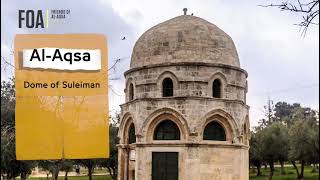
Tour of Solomon's Dome, Jerusalem - LoveAqsa
000042
40
246
1556076802
1787918826
Wisdom of Solomon - Nouman Ali Khan
003989
41
376
1561032102
1788195145
With the Prophets: Solomon - Ahsan Hanif (GLM)
002249
42