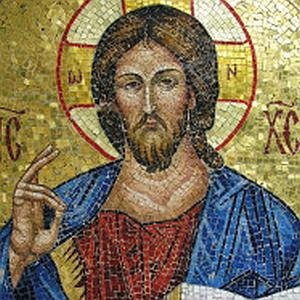
Church Fathers


The Early Church Fathers were often used by Roman Catholic, Eastern Orthodox and other Christian denominations to substantiate their traditions and doctrinal teachings.

The Church Fathers showed great leadership in the early Church, especially in defending, expounding and developing Christian Catholic doctrines. For the first two centuries, most of these men were bishops, although in later years certain priests and deacons became recognised as Fathers.
 |  Wikipedia: Church_Fathers


Church Fathers - Treatise, Letters, Texts & Epistles

Barnabas | 70 - 130 AD

  1. Epistle of Barnabas

Clement of Rome | 95 - 97 AD

  1. First Epistle
  2. Second Epistle
  3. Two Epistles Concerning Virginity
  4. Recognitions
  5. Clementine Homilies

Ignatius of Antioch | 110 - 110 AD

  1. Epistle to the Ephesians
  2. Epistle to the Magnesians
  3. Epistle to the Trallians
  4. Epistle to the Romans
  5. Epistle to the Philadelphians
  6. Epistle to the Smyrnaeans
  7. Epistle to Polycarp
  8. The Martyrdom of Ignatius
  9. The Spurious Epistles

Polycarp | 110 - 150 AD

  1. Epistle to the Philippians
  2. The Martyrdom of Polycarp

Hermas | 115 - 140 AD

  1. The Pastor (or "The Shepherd")

Didache | 120 - 150 AD

  1. The Didache

Papias of Hierapolis | 130 - 140 AD

  1. Fragments

Irenaeous | 130 - 202 AD

  1. Adversus haereses
  2. Fragments from the Lost Writings of Irenaeus

Diognetus | 150 - 150 AD

  1. Epistle to Diognetus

Justin Martyr | 150 - 155 AD

  1. First Apology
  2. Second Apology
  3. Dialogue with Trypho
  4. Hortatory Address to the Greeks
  5. On the Sole Government of God
  6. Fragments of the Lost Work on the Resurrection
  7. Miscellaneous Fragments from Lost Writings
  8. Martyrdom of Justin, Chariton, and other Roman Martyrs
  9. Discourse to the Greeks

Clement of Alexandria | 150 - 215 AD

  1. Who is the Rich Man That Shall Be Saved?
  2. Exhortation to the Heathen
  3. The Instructor
  4. The Stromata, or Miscellanies
  5. Fragments

Tertullian | 150 - 220 AD

  1. The Apology
  2. On Idolatry
  3. De Spectaculis (The Shows)
  4. De Corona (The Chaplet)
  5. To Scapula
  6. Ad Nationes
  7. An Answer to the Jews
  8. The Soul's Testimony
  9. A Treatise on the Soul
  10. The Prescription Against Heretics
  11. Against Marcion
  12. Against Hermogenes
  13. Against the Valentinians
  14. On the Flesh of Christ
  15. On the Resurrection of the Flesh
  16. Against Praxeas
  17. Scorpiace
  18. Appendix (Against All Heresies)
  19. On Repentance
  20. On Baptism
  21. On Prayer
  22. Ad Martyras
  23. The Martyrdom of Perpetua and Felicity
  24. Of Patience
  25. On the Pallium
  26. On the Apparel of Women
  27. On the Veiling of Virgins
  28. To His Wife
  29. On Exhortation to Chastity
  30. On Monogamy
  31. On Modesty
  32. On Fasting
  33. De Fuga in Persecutione

Origen | 185 - 254 AD

  1. De Principiis
  2. Africanus to Origen
  3. Origen to Africanus
  4. Origen to Gregory
  5. Against Celsus
  6. Letter of Origen to Gregory
  7. Commentary on the Gospel of John
  8. Commentary on the Gospel of Matthew

Cyril of Jerusalem | 315 - 386 AD

  1. Catechetical Lectures

Eusebius of Caesarea | 325 - 340 AD

  1. Church History
  2. Life of Constantine
  3. Oration of Constantine "to the Assembly of the Saints"
  4. Oration in Praise of Constantine
  5. Letter on the Council of Nicaea

Athanasius of Alexandria | 367 - 367 AD

  1. Against the Heathen
  2. On the Incarnation of the Word
  3. Deposition of Arius
  4. Statement of Faith
  5. On Luke 10:22 (Matthew 11:27)
  6. Circular Letter
  7. Apologia Contra Arianos
  8. De Decretis
  9. De Sententia Dionysii
  10. Vita S. Antoni (Life of St. Anthony)
  11. Ad Episcopus Aegypti et Libyae
  12. Apologia ad Constantium
  13. Apologia de Fuga
  14. Historia Arianorum
  15. Four Discourses Against the Arians
  16. De Synodis
  17. Tomus ad Antiochenos
  18. Ad Afros Epistola Synodica
  19. Historia Acephala
  20. Letters

Augustine of Hippo | 400 - 400 AD

  1. Confessions
  2. Letters
  3. City of God
  4. Christian Doctrine
  5. On the Holy Trinity
  6. The Enchiridion
  7. On the Catechising of the Uninstructed
  8. On Faith and the Creed
  9. Concerning Faith of Things Not Seen
  10. On the Profit of Believing
  11. On the Creed: A Sermon to Catechumens
  12. On Continence
  13. On the Good of Marriage
  14. On Holy Virginity
  15. On the Good of Widowhood
  16. On Lying
  17. To Consentius: Against Lying
  18. On the Work of Monks
  19. On Patience
  20. On Care to be Had For the Dead
  21. On the Morals of the Catholic Church
  22. On the Morals of the Manichaeans
  23. On Two Souls, Against the Manichaeans
  24. Acts or Disputation Against Fortunatus the Manichaean
  25. Against the Epistle of Manichaeus Called Fundamental
  26. Reply to Faustus the Manichaean
  27. Concerning the Nature of Good, Against the Manichaeans
  28. On Baptism, Against the Donatists
  29. Answer to Letters of Petilian, Bishop of Cirta
  30. Merits and Remission of Sin, and Infant Baptism
  31. On the Spirit and the Letter
  32. On Nature and Grace
  33. On Man's Perfection in Righteousness
  34. On the Proceedings of Pelagius
  35. On the Grace of Christ, and on Original Sin
  36. On Marriage and Concupiscence
  37. On the Soul and its Origin
  38. Against Two Letters of the Pelagians
  39. On Grace and Free Will
  40. On Rebuke and Grace
  41. The Predestination of the Saints/Gift of Perseverance
  42. Our Lord's Sermon on the Mount
  43. The Harmony of the Gospels
  44. Sermons on Selected Lessons of the New Testament
  45. Tractates on the Gospel of John
  46. Homilies on the First Epistle of John
  47. Soliloquies
  48. The Enarrations, or Expositions, on the Psalms


210-church-fathers
Author: Guest   •   Updated: 05 Sep 2026   •   100 views   |   5 hrs ago

Explore More

What is Church Father?
The Church Fathers, Early Church Fathers, Christian Fathers, or Fathers of the Church are ancient and influential Christian theologians and writers. There is no definitive list. The era of these scholars who set the theological and scholarly foundations of Christianity largely ended by AD 700. In

the past, the Church Fathers were regarded as authoritative, and more restrictive definitions were used which sought to limit the list to authors treated as such.
SUBSCRIBE

Receive the latest news and updates by email - Subscribe Now!
About  |  Q&A  |  Contact Us    •    Terms  |  Privacy  |  Disclaimer  |  Sitemap
Connect:      Facebook  |    Twitter  |    Youtube
MuslimProphets.com is an educational website on the Prophets of God: David, Noah, Abraham, Moses, Jesus and Muhammad, who established the Abrahamic faiths of Judaism, Christianity and Islam.

MuslimProphets.com explores contemporary social themes through Scripture, Evidences, Photo, Video, Maps, Current Affairs, Debate and 'alternative' Views held by Theologians, Apologists, Scholars and Street Preachers.

In accordance with Islamic etiquette, all prophet names should be followed with 'Peace Be Upon Him (PBUH)'. This is omitted to minimise text.

DISCLAIMER
The historical information provided on this website is for educational and informational purposes only.
History is an ongoing interpretation of past events. Historical accounts are shaped by the perspectives, biases, and cultural influences of their time; therefore, no content on this website should be taken as absolute, 100% factual truth. We encourage readers to approach historical narratives with a critical mind.

All website content is available in the public domain. While all information is gathered from sources believed to be reliable, its absolute accuracy cannot be guaranteed.

EXTERNAL LINKS & SEO
External links are provided as a convenience and for informational purposes only. They do not constitute an endorsement or approval of any products, services, or opinions of any organization or individual. Title and text links may be edited for external SEO, internal site structure, and keyword search purposes. We bear no responsibility for the accuracy, legality, or content found on any external website or its subsequent links.

MEDIA & SOURCE ATTRIBUTIONS
Unless otherwise indicated, all images and content are licensed under a Creative Commons Attribution License distributed by Wikipedia, Wikimedia Commons, Pixabay, Unsplash, and similar platforms. While every effort is made to accurately source all media, contact us if you believe your copyright has been infringed so we can address and resolve the matter promptly.

All videos are hosted on and viewable via YouTube servers. Video titles are generated based on the original video title, the overall content theme (including actual dialogue and transcripts), and AI-based recommendations optimized for SEO, keyword density, and internal search functions. Video titles do not represent the views held by the YouTube video uploader, or any associated individual, organisation, or business.

All Torah, Psalms, and Old/New Testament Bible quotes are from the King James Version (KJV) Holy Bible, which is in the public domain.
All Quran quotes are from the Taqi-ud-Din al-Hilali / Muhsin Khan English Quran translation.

CORRECTIONS
If you spot a mistake, error, or omission of information, please contact us so we can review and correct it.