The Christianity we know today is a result of what men agreed at the Council of Nicaea in 325 AD
Christian bishops and priests arrived at a doctrinal compromise which became known as 'The Nicene Creed'. This was the foundation for understanding who Jesus was, set the foundations for Church rules, and the agreed Canons became reference points on which all future Christian laws were modelled.1Emperor Constantine 272 – 337 AD
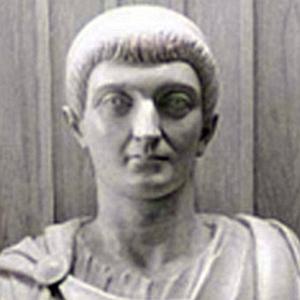 Constantine the Great (Latin: Flavius Valerius Aurelius Constantinus Augustus; Greek: Κωνσταντῖνος ὁ Μέγας; also known as Constantine I was a Roman Emperor of Illyrian origin from 306 to 337 AD.
2Constantine the Pagan
Constantine was a devotee of Mithras (or Sol Invictus), the unconquered Sun God.However before the Milvian Bridge battle he and his army saw a [Christian] cross of light in the sky above the sun with words in Greek that are generally translated into Latin as In hoc signo vinces ('In this sign conquer').
Even after this divine intervention, Constantine remained a pagan throughout his life. He refused to fully embrace Christianity. Instead, he continued in his pagan beliefs and practices. As Rome expanded, Constantine promoted a mixture of Christian values and paganism - the "Christianization" of pagan beliefs.
For the first time, pagan beliefs were given new 'Christian identities' and duly accepted by the Church.
According to historians, it is likely that Constantine remained a pagan God worshipper throughout his reign up until his death when he asked to be baptized as he lay on his death bed.
3 Jews and Judaism were Rejected
It is known Jesus was a Jew who held a strictly monotheist view of God. The Orthodox Jewish view of God put Jews in direct conflict with the Roman pagans who worshipped a pantheon of Gods, and even later Christians, who believed Jesus was equal or very close to the Father.
He [Constantine] detested Judaism
When Jesus became God p.75
Rise of Christianity, Frend p.499
When Jesus became God p.75
Rise of Christianity, Frend p.499
For young militants like Athanasius, Judaism was an offensive, anti-Christian faith.
When Jesus Became God, Harcourt, 1999 p.74
When Jesus Became God, Harcourt, 1999 p.74
4Constantine seeks Christian unity
Constantine was more concerned with unity than religious truth.
The Roman Empire was showing signs of weakening, fragmenting and division. Constantine saw Christianity as the religion that could unite it. He wanted the great rift between the influential Alexander of Alexandria and Eastern Christianity to be healed.
5Council of Nicaea (325 AD)
The 'Arian Controversy' - Was Jesus of the exact same substance as God the Father, or of a similar substance.
The Nicaea Council was called by Constantine at Nicaea (now known as İznik, in modern-day Turkey) in the early summer of 325 AD. It was the first ever worldwide gathering of the Church and would act as the format for future Councils.
6 318 Bishops attend Nicaea
Although 1800 Bishops are invited, between 250 to 318 attend.Notable names attending include Eusebius of Nicomedia, Eusebius of Caesarea, Nicholas of Myra, Hilary of Poitiers, Jerome, Dionysius Exiguus, Rufinus and Athanasius of Alexandria.
How Many Bishops Attend Nicaea?
| BISHOPS PRESENT | ACCORDING TO |
| 318 | Liturgies of Eastern Orthodox Church and Coptic Orthodox Church of Alexandria | 318 | Evagrius, Hilary of Poitiers, Jerome, Dionysius Exiguus and Rufinus | 300 | Athanasius of Alexandria (present) | 300 | Socrates Scholastic | 270 | Eustathius of Antioch | 250 | Eusebius of Caesarea | 200 | Modern Bible scholars |
7 Council of Nicaea - The 'Arian Controversy'
Jesus Is Equal To The Father |
Jesus Is NOT Equal To The Father |
| ATHANASIUS (296-373 AD) Orthodox - 98 Bishops Athanasius was a Christian Trinitarian theologian and bishop of Alexandria, Egypt, where he spent his entire life contesting Arianism. |
ARIUS (Egypt, 256 AD) Arian - 20 Bishops Arius was a parish priest in Alexandria. He studied under Lucian of Antioch, founder of school of Antioch. EUSEBIUS (260-339 AD) Arian/Orthodox - 200 Bishops Eusebius was a Greek historian of Christianity, exegete and Christian polemicist. Eusebius led approximately 200 Bishops at Nicaea and clearly held the block vote at the council. |
ESSENCE
Jesus was made of the same substance, of one nature, or consubstantial (Homoousios) with the Father. |
ESSENCE
Jesus is made of an entirely different substance of essence (Heteros) to the Father. Jesus was made out of nothing. Jesus was made by the Father from a similar substance (Homoi ousios) to Himself. |
DIVINITY
Jesus is absolutely equal to the Father. |
DIVINITY
Jesus is not equal to the Father. Jesus is not the Father. He is subordinate to Him, but is above all the rest of creation. Jesus could be called 'Divine'. |
PRE-EXIST
Jesus always existed alongside the Father. |
PRE-EXIST
Jesus did not always exist. He was created by the Father. |
WORSHIP
Jesus is absolute God and must be worshipped just as the Father is worshipped. |
WORSHIP
Jesus must not be worshipped as the Father. |
8 Bishop Hosius
 Bishop Hosius of Cordova was appointed by Constantine to be president of the Church Council. He was also the personal religious advisor to Constantine.
 Being a Trinitarian Christian himself, Bishop Hosius was biased and favoured Athanasius as it legitimised his own arguments for Trinity in the Godhead.
Constantine was present as an observer, but he did not vote. Constantine organized the Council along the lines of the Roman Senate. Hosius presided over its deliberations.
Carroll, 11
Carroll, 11
9 Constantine advised by Hosius
The most influential person at the Nicene Council was Bishop Hosius.Hosius presided over most of the Council sessions. He was the representative for the Pope (the Bishop of Rome) and the most trusted and influential advisor to Emperor Constantine. Hosius convinced Constantine to decide (against the large majority of bishops present) in favor of the Athanasius view - Jesus is equal to God.
Constantine had no understanding whatsoever of the questions that were being asked in Greek Theology
A Short History of Christian Doctrine, Lohse, Fortress Press, 1985 p. 51
A Short History of Christian Doctrine, Lohse, Fortress Press, 1985 p. 51
10Constantine claims Jesus Is God
With disagreements persisting, Constantine with Hosius' approval backed Athanasius.It was forcefully put to the vast majority of bishops present: sign the Nicene Creed or be exiled and treated as heretics.. To no surprise, the majority of bishops fearing Constantine's threat voted overwhelmingly in favor of Athanasius (estimated at 316 votes to 2) and signed the Nicene Creed.
This established the Christian doctrine that Jesus was of the same nature and essence/substance as the Father.
The Emperor himself presided over the critical session [at Nicaea], and it was he [Constantine] who proposed the reconciling word, Homoousios (Greek for 'of one essence') to describe Christ's relationship to the Father (though it was probably Hosius of Cordova, who suggested it to him)
Eerdman's Handbook to the History of Christianity, 1977 p.134
Eerdman's Handbook to the History of Christianity, 1977 p.134
'Consubstantial' (Homoousios) had been introduced to Christian theology by Gnostics who believed that the heavenly powers shared in the divine fullness. It's use in the Creed of Nicaea must have resulted largely from Constantine's intimidation or overawing persuasion
Eerdman's Handbook to the History of Christianity, 1977 p.159-160
Eerdman's Handbook to the History of Christianity, 1977 p.159-160
11Athanthius WINS: Jesus Is Equal To The Father
It is agreed, Jesus and the Father are of the same substance (Homoousios) and co-eternal.History teaches us that the majority of bishops' had insisted on a non-Trinitarian view of God. The severity of threats, determination and influence of Emperor Constantine eventually persuaded the bishops after months of stormy debates to vote in favour of the minority unfavoured view.
The decisions of Nicaea were really the work of a minority, and they were misunderstood and disliked by many [even those] who were not adherents of Arius. In particular the terms ['out of the substance' - exousia] and homoousios ['of the same substance'] aroused opposition, on the grounds that they were unscriptural, novel, ... and erroneous metaphysically.
Documents of the Christian Church, 2nd ed., Bettenson, 1967, Oxford University Press. p.41
Documents of the Christian Church, 2nd ed., Bettenson, 1967, Oxford University Press. p.41
A large majority of the bishops of Asia appeared to support or favor his [Arius'] cause; and their measures were conducted by Eusebius of Caesarea, the most learned of the Christian prelates
The Decline and Fall of the Roman Empire, Gibbon, p. 374, Dell (Laurel edition)
The Decline and Fall of the Roman Empire, Gibbon, p. 374, Dell (Laurel edition)
12Nicene Creed
The Nicene Creed defined Jesus Christ:- 'God from God, Light from Light, true God from true God' confirmed Jesus' absolute divinity. When all light sources were natural, the essence of light was considered to be identical regardless of its form.
- 'Begotten, not made' he always existed alongside the Father, and confirming it by stating his co-eternal role in Creation. Jesus was with God before the creation of the Heavens, Earth and mankind.
- 'From the substance of the Father' in opposition to Arianism.
13Rome controls Catholic Church
The Nicaea Council set the template for future Christian councils which considered a Rome of influence.Nicaea was the first ever worldwide gathering of the Church. It provided the 'template format' for all future Church Council gatherings with a Roman Emperor infuencing and steering the final decision.
Constantine in convoking and presiding over the council signaled a measure of imperial control over the Church
Richard Kieckhefer, (1989). "Papacy." Dictionary of the Middle Ages
Richard Kieckhefer, (1989). "Papacy." Dictionary of the Middle Ages
That an Emperor should invoke a Council should not be considered unusual since in Hellenistic thought he was given by God supreme power in things material and spiritual
Davis 1987, 56
Davis 1987, 56
14History is written by the Victors
Constantine orders all evidence relating to Nicaea Council and Arius' books and writings be destroyed. Today, the majority of Christians believe Jesus Christ claimed to be a God, was always with the Father, and is equal to the Father.
- What remains today are the biased Nicene accounts of the Athanasians, since Arian accounts, records and doctrinal evidences were destroyed on the orders of Constantine.
- No historical record of the disagreements at Nicaea exist; the signatures of the opposing bishops are simply absent from the creed.
- The number of Bishops who attended Nicaea is assumed to be 318, but this figure is disputed and unreliable as no official records exist to verify who actually attended and voted.
Constantine banished Arius, ordered the death penalty for those who did not conform, and commanded the burning of the books composed by Arius.
Kenneth Latourette (Christian Historian). Christianity Through the Ages, 1965, Harper Chapel Books. pp. 50-51
Kenneth Latourette (Christian Historian). Christianity Through the Ages, 1965, Harper Chapel Books. pp. 50-51
CREDIT
https://en.wikipedia.org/wiki/First_Council_of_Nicaea
http://www.newworldencyclopedia.org/entry/First_Council_of_Nicaea#cite_note-dictionary-1
https://www.livescience.com/2410-council-nicea-changed-world.html
https://answersintorah.com/2017/05/23/the-council-of-nicea-and-the-start-of-the-false-christianity/
http://www.bbc.co.uk/news/magazine-35120965
http://orthodoxyinfo.org/StAthanasius.html
106-constantine-nicaea-history
| Author: Guest • Updated: 13 Aug 2026 • 22,010 views | 14 hrs ago |
Explore More
Council of Nicaea Christianity Constantine NicaeaSearch Google Search Explore Topics
 What was the Council of Nicaea?
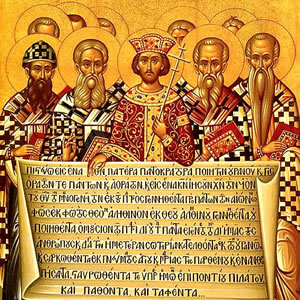
The First Council of Nicaea was a council of Christian bishops convened in the Bithynian city of Nicaea (now ?znik, Bursa province, Turkey) by the Roman Emperor Constantine I in 325 AD. Its main accomplishments were settlement of the Christological issue of the divine nature of God the Son and his relationship to God the Father, the construction of the first part of the Nicene Creed, establishing uniform observance of the date of Easter, and promulgation of early canon law.
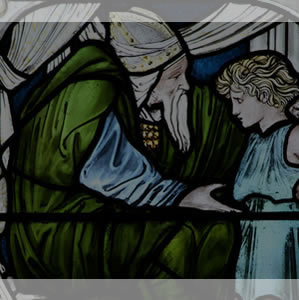 What is Christianity?
Christianity is a global religion centered on the life and teachings of Jesus Christ, who followers believe is the Son of God. It's a monotheistic faith, meaning Christians believe in one God who exists in three co-equal persons: God the Father, God the Son (Jesus Christ), and the Holy Spirit. Christianity is based on the Bible, with the Old Testament and New Testament serving as sacred texts.
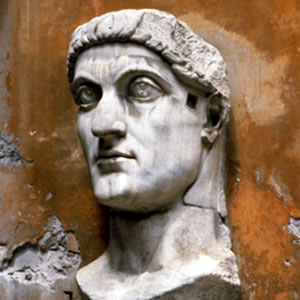 Who was Constantine?
Constantine the Great (27 February 272 AD-22 May 337 AD) was a Roman Emperor who ruled between 306 and 337 AD. Born on the territory now known as Nis, located in Serbia, he was the son of Flavius Valerius Constantius, a Roman Army officer of Illyrian origins. His mother Helena was Greek. His father became Caesar, the deputy emperor in the west, in 293 AD. Constantine was sent east, where he rose through the ranks to become a military tribune under Emperors Diocletian and Galerius. Constantine was the first Roman emperor to convert to Christianity. Although he lived most of his life as a pagan, he joined the Christian faith on his deathbed, being baptised by Eusebius of Nicomedia. He played an influential role in the proclamation of the Edict of Milan in 313, which declared religious tolerance for Christianity in the Roman empire. He called the First Council of Nicaea in 325 AD that produced the statement of Christian belief known as the Nicene Creed.
Where is Nicaea?Nicaea or Nicea was an ancient city in northwestern Anatolia. It is primarily known as the site of the First and Second Councils of Nicaea (the first and seventh Ecumenical councils in the early history of the Christian Church), the Nicene Creed (which comes from the First Council), and as the capital city of the Empire of Nicaea following the Fourth Crusade in 1204, until the recapture of Constantinople by the Byzantines in 1261.