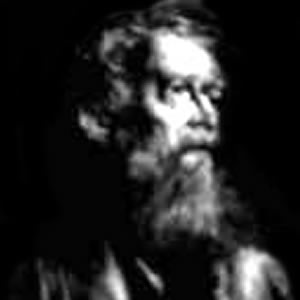
HEBREW: Yonah
ARAMAIC: Yunan
ARABIC: Yunus
AGE: 70 Years
BIRTH: 820 BC
DEATH: 750 BC
GENDER: Male
BORN IN: Israel, Lower Galilee
LIVED IN: Israel / Iraq, Mosul
DIED IN: Iraq, Mosul (Jonah's Mosque) or Hebron, Halhul, Beit Ummar or Israel, Mashhad
SCRIPTURE: Book of Jonah
34,848 views
Last view: 3 hrs ago
Born around 820 BC in Gath-hepher, he was commanded by God to warn the city's 120,000 residents of an impending divine punishment due to their widespread wickedness. Overwhelmed by the task, Jonah tried to flee from his mission by boarding a ship heading in the opposite direction. A massive storm hit the vessel, and Jonah was cast into the sea, where he was miraculously swallowed whole by a giant whale. Inside the whale's belly for three days and nights, Jonah sincerely repented, and God caused the whale to spit him safely onto dry land. Jonah then returned to Nineveh, where the entire population listened to his warning and was saved. He lived to around 80 years old and died around 740 BC.
| INTRODUCTION |
| 1. Prophet Jonah in Judaism, Christianity, and Islam |
| 2. Family Tree of Jonah and His Relations to Abrahamic Prophets |
| HISTORICAL CONTEXT |
| 3. Describe the World and Society Jonah Came Into |
| 4. Why Did God Send Jonah? |
| KEY LIFE EVENTS |
| 5. Chronological Timeline of Jonah's Life and Ministry |
| 6. Did Jonah Perform Miracles? 3 miracles |
| GEOGRAPHY & EVIDENCE |
| 7. On Google Maps: Birth, Life, and Death Locations of Jonah 7 locations |
| 8. Photograpic Evidence for Jonah 17 photos / 1 albums |
| SCRIPTURE & NEWS |
| 9. Is Jonah Mentioned in Current News Today? 4 news |
| 10. Frequently Asked Questions About Jonah 7 faqs |
| EXPLORE FURTHER |
| 11. Revealed Scripture That Mention Jonah 74 verse |
| 12. YouTube Videos to Learn More About Jonah 25 videos |
Prophet Jonah in Judaism, Christianity, and Islam
Judaism
Viewed as a Latter Prophet whose book contains a vital theological message about repentance, divine forgiveness, and the scope of God's mercy.
Christianity
Seen as a prophet of the Old Testament. His three days inside the belly of the fish are historically viewed in Christian theology as a prophetic prefiguring (or "sign") of Jesus Christ's burial and resurrection.
Islam
Revered as a major prophet of Allah. The Quran features his story of repentance, and he is honored for successfully preaching to the people of Nineveh.
Family Tree of Jonah and His Relations to Abrahamic Prophets
Describe the World and Society Jonah Came Into
The Environment
The vast Neo-Assyrian Empire, centered in the massive, highly fortified, and architecturally imposing capital city of Nineveh (modern-day Iraq), contrasted with stormy international waters.The Society
A hyper-militaristic, cosmopolitan, and aggressively imperialist superpower that ruled through ruthless physical terror, massive administrative infrastructure, and state-mandated pagan cults.The Social Climate
Marked by widespread violence, moral decay, systemic corruption, and deep international anxiety, as neighboring nations lived in constant dread of Assyria's brutal military expansion.Why Did God Send Jonah?
1. To warn the great city of Nineveh of impending destruction
God commissioned Jonah to travel directly to Nineveh to preach against its massive wickedness and warn its citizens of immediate divine judgment.2. To prompt a unique, historical city-wide repentance
Jonah was sent to trigger a complete spiritual turnaround, successfully causing over a hundred thousand citizens to fast, wear sackcloth, and abandon their evil paths.3. To show that God's mercy extends to all nations
Jonah's mission to a non-Israelite, pagan superpower proved that God desires repentance and extends compassion beyond a single chosen community.4. To serve as a prophetic sign through his time in the fish
Jonah's swallowing and miraculous three-day preservation inside a great fish served as a powerful testament of divine deliverance and a prophetic archetype of resurrection.5. To model the power of desperate prayer and praise in darkness
From the depths of the ocean, Jonah's sincere confession, repentance, and glorification of the Creator established a timeless blueprint for seeking divine mercy.6. To expose human impatience compared to divine compassion
Through Jonah's initial flight and subsequent frustration over Nineveh's pardon, God used his life to teach humanity that divine mercy is sovereign and slow to anger.Chronological Timeline of Jonah's Life and Ministry
Did Jonah Perform Miracles?
- Surviving completely alive inside the stomach of a specially prepared giant fish for three days and nights
- The supernatural growth of a leafy vine overnight to provide him with shade from the intense sun
- A worm supernaturally destroying the protective vine overnight to teach him a lesson on compassion
On Google Maps: Birth, Life, and Death Locations of Jonah | 7 locations
Lived In :Gath-hepher, Israel / Kingdom of Israel northern territories, Israel / West Bank, Palestine
Travelled To :Jaffa, Israel / Mediterranean Sea (International waters) / Nineveh (Mosul region), Iraq
Died In :Nineveh (Mosul), Iraq (Traditional tomb site at Nabi Yunis) / Gath-hepher, Israel (Alternative historical tradition)
Photographic Evidence for Jonah | 17 photos
-
 1. Prophet Jonah: Tomb of Jonah, in Syria. The image shows the traditional Tomb of Jonah (Nabi Yunus), located in [...] ON MAP
 -
 2. Prophet Jonah: The shrine where Jonah is buried. The image shows the interior shrine room of the Tomb of Jonah [...] ON MAP
 -
 Photo: M.Alzaraa | CC BY-SA 4.05. Prophet Jonah: The Mediterranean Sea (En Route to Tarshish): Jonah was thrown [...] ON MAP
 -
 Photo: Hassny Adel | CC BY-SA 4.06. Prophet Jonah: Nineveh / Mosul (Upper Tigris River Basin, Iraq): Jonah travelled [...] ON MAP
 -
 Photo: Levi Clancy | CC07. Prophet Jonah: Nabi Yunus Mosque / Tomb of Jonah (Mosul, Iraq): Traditional [...] ON MAP
 -
 Photo: Baraa Zm | CC BY-SA 4.08. Prophet Jonah: Halhul / Mount Nabi Yunus (West Bank): This alternative secondary [...] ON MAP


Photo Album for Jonah (1)
| Album 1. Tomb of Jonah 'The Glory of Kingdoms', Nineveh, Iraq | 9 photos |
Is Jonah Mentioned in Current News Today? | 4 news
Frequently Asked Questions About Jonah | 7 faqs
1.Was Prophet Jonah involved in any Battles or Wars?
Unknown
2.Who was Prophet Jonah in religious and historical tradition?
Jonah (known as Yunus in Islam) was a 8th-century BC prophet sent by God to preach repentance to the residents of Nineveh (near modern-day Mosul, Iraq), a vast city struggling with moral corruption.
3.Why did Jonah attempt to flee from his divine mission?
Overwhelmed by the magnitude of the task and expecting the wicked city to face immediate divine punishment, Jonah attempted to flee in the opposite direction on a ship heading toward Tarshish instead of traveling to Nineveh.
4.What happened to Jonah inside the whale (or giant fish)?
A severe storm struck Jonah's ship, and the crew threw him into the sea to appease the waters. He was swallowed whole by a massive sea creature. Trapped in the dark belly of the whale for three days and nights, Jonah prayed fervently and repented, prompting God to command the creature to safely deposit him onto dry land.
5.What was the outcome of Jonah's mission to Nineveh?
After his rescue, Jonah went to Nineveh and delivered God's warning. Unlike many other ancient populations, the entire city of over 120,000 residents sincerely repented, fasted, and reformed their behavior, causing God to spare them from destruction.
6.How is Prophet Jonah viewed across different faith traditions?
Judaism: His story is read annually on Yom Kippur during the Mincha (afternoon) service to emphasize the power of sincere repentance and divine forgiveness.
Christianity: Jesus references the 'Sign of Jonah' in the New Testament Gospels, comparing Jonah's three days in the whale's belly to His own three days in the tomb before resurrection.
Islam: Revered as Yunus (and Dhu'n-Nun, 'Companion of the Fish') in the Quran, where an entire chapter (Surah Yunus) is named after him, celebrating his heartfelt prayer of repentance.
7.Did Prophet Jonah have a Wife?
Unknown
Revealed Scripture That Mention Jonah | 74 texts
The Prophet said, "One should not say that I am better than Jonah (i.e. Yunus) bin Matta." So, he mentioned his father Matta. The Prophet mentioned the night of his Ascension and said, "The prophet Moses was brown, a tall person as if from the people of the tribe of Shanu'a. Jesus was a curly-haired man of moderate height." He also mentioned Malik, the gate-keeper of the (Hell) Fire, and Ad-Dajjal.
The Prophet said, "None of you should say that I am better than Yunus (i.e. Jonah)." Musadded added, "Jonah bin Matta."
The Prophet said, "None has the right to say that I am better than Jonah bin Matta."
The Prophet said, "Whoever says that I am better than Jonah bin Matta, is a liar."
The Prophet said, "Nobody has the rights to say that I am better than Jonah bin Matta."
The Prophet said, "Nobody has the right to say that I am better than Jonah bin Matta."
Allah's Apostle said, "Nobody has the right to be better than (Jonah) bin Matta."
The Prophet said, "He who says that I am better than Jonah bin Matta, tells a lie.'
The Prophet said that his Lord said: "It does not befit a slave that he should say that he is better than Jonah (Yunus) bin Matta.
The Messenger of Allah (Peach be upon him) used to prostrate and sleep (in prostration) and produce puffing sounds (during sleep). Then he would stand and pray and would not perform ablution. I said to him: you prayed but did not perform ablution though you slept (in prostration). He replied: Ablution is necessary for one who sleeps while he is lying down. Uthman and Hannad added: For when he lies down, his joints are relaxed.
Abu Dawud said: The statement "ablution is necessary for one who sleeps while one is lying down" is a munkar (rejected) tradition. It has been narrated only by Yazid Abu Khalid al-Dalani, on the authority of Qatadah. And its earlier part has been narrated by a group (of narrators) from Ibn 'Abbas; they did not mention anything about it. He (Ibn 'Abbas) said: The Prophet (Peach be upon him) was protected (during his sleep). 'Aishah reported: The Prophet (Peach be upon him) said: My eyes sleep, but my heart does not sleep. Shu'bah said: Qatadah heard from Abu'l-'Aliyah only four traditions: the tradition about Jonah son of Matthew, the tradition reported by Ibn 'Umar about prayer, the tradition stating that the judges are three, and the tradition narrated by Ibn 'Abbas saying: (This tradition) has been narrated to me by reliable persons ; 'Umar is one of them, and the most reliable of them in my opinion is 'Umar. Abu Dawud said: I asked Ahmad b. Hanbal about the tradition narrated by Yazid al-Dalani. He rebuked me out of respect for him. Then he said: Yazid al-Dalani does not add anything to what has been narrated by the teachers of Qatadah. He did not care of this tradition (due to its weakness).
It is not fitting for a servent to say that I (The Prophet) is better than Jonah son of Matta.
It is not fitting for a prophet to say : I am better than Jonah son of matta.
In the story of Prophet Yunus we learn that he was sent by Allah to a people that had forgotten Allah's orders and did many things which Allah had forbidden. But Yunus soon discovered that the people did not want to listen to him. He lost patience with them and left the town in anger. Afterwards, Yunus decided to go across the sea, and boarded a ship for the voyage. But when the ship was in the middle of the ocean, Yunus suffered a great misfortune. He was thrown overboard and swallowed up by a whale.
Almighty Allah recounted: " And, verily, Jonah was one of the Messengers. When he ran to the laden ship, he agreed to cast lots and he was among the losers, Then a big fish swallowed him and he had done an act worthy of blame. Had he not been of them who glorify Allah, he would have indeed remained inside its belly (the fish) till the Day of Resurrection. But We cast him forth on the naked shore while he was sick and We caused a plant of gourd to grow over him. And We sent him to a hundred thousand people or even more, and they believed; so We gave them enjoyment for a while. (Ch 37:139-148 Quran).
Prophet Jonah (Yunus) also known as Dhan-Nun. About his people Almighty Allah said: "Was there any town community that believed after seeing the punishment, and its Faith at that moment, saved it from the punishment? (the answer is none)-except the people of Jonah; when they believed, We removed from them the torment of disgrace in the life of the present world, and permitted them to enjoy for a while." (Ch 10:98 Quran)
The inhabitants of the town of Nineveh were idolaters who lived a shameless life. Prophet Jonah was sent to teach them the worship of Allah. The people disliked his interference in their way of worship, so they argued. "We and our forefathers have worshiped these gods for many years and no harm has come to us."
Ibn Abbas narrated: "The Muhammad said: 'One should not say I am better than Jonah Ibn Matta.'" (Sahih Bukhari).
Try as he might to convince them of the foolishness of idolatry and of the goodness of Allah's laws, the ignored him. He warned them that if they kept on with their foolishness, Allah's punishment would soon follow. Instead of fearing Allah, they told Jonah that they were not afraid of his threats. "Let it happen," they told him. Jonah was disheartened. "in that case, I will leave you to your misery!" so saying, he left Nineveh, fearing that Allah's anger would soon follow.
"Remember Dhan Nun (Jonah), when he went off in anger, and imagined that We shall not punish him (the calamities which had befallen him)! (ch 21:87)
Hardly had he left the city when the skies began to change color and looked as if they were on fire. The people were filled with fear by this sight. They recalled the destruction of the people of 'Ad, Thamud and Noah. Was theirs to be a similar fate? Slowly faith penetrated their hearts. They all gathered on the mountain and started to beseech Allah for His mercy and forgiveness. The mountains echoed with their cries. It was a momentous hour, filled with sincere repentance.
Allah removed His wrath and showered His blessings upon them once again. When the threatening storm was lifted, they prayed for the return of Jonah so that he could guide them.
Meanwhile, Jonah had boarded a small ship in the company of other passengers. It sailed all day in calm waters with a good wind blowing at the sails. When night came, the sea suddenly changed. A horrible storm blew as if it were going to split the ship into pieces. The waves looked wild. They rose up as high as mountains then plunged down like valleys, tossing the ship and sweeping over the deck.
Behind the ship, a large whale was splitting the water and opening its mouth. A command had been issued from Almighty Allah to one of the greatest whales of the sea to surface. It obeyed. The whale hurried to the surface of the sea and followed the ship as it had been commanded.
The tempest continued and the chief crewman asked the crew to lighten the ship's heavy load. They threw their baggage overboard, but this was not enough. Their safety lay in reducing the weight further, so they decided among themselves to lighten their load by removing at least one person.
The captain directed: We will make lots with all of the travelers' names. The one whose name is drawn will be thrown into the sea." Jonah knew this was one of the seamen's traditions when facing a tempest. It was a strange polytheistic tradition, but it was practiced at that time. Jonah's affliction and crisis began.
Here was the prophet, subjected to polytheistic rules that considered the sea and the wind to have gods that riot. The captain had to please these gods. Jonah reluctantly participated in the lot, and his name was added to the other travelers' names. The lot was drawn and "Jonah" appeared.
Since they knew him to be the most honorable among them, they did not wish to throw him into the angry sea. Therefore, they decided to draw a second lot. Again Jonah's name was drawn. They gave him a final chance and drew a third lot. Unfortunately for Jonah, his name came up again.
Jonah realized that Allah's hand was in all this, for he had abandoned his mission without Allah's consent. The matter was over, and it was decided that Jonah should throw himself into the water. Jonah stood at the edge of the ship looking at the furious sea. It was night and there was no moon. The stars were hidden behind a black fog. But before he could be thrown overboard, Jonah kept mentioning Allah's name as he jumped into the raging sea and disappeared beneath the huge waves.
The whale found Jonah floating on the waves before it. It swallowed Jonah into its furious stomach and shut its ivory teeth on him as if they were white bolts locking the door of his prison. The whale dived to the bottom of the sea, the sea that runs in the abyss of darkness.
Three layers of darkness enveloped him, one above the other; the darkness of the whale's stomach, the darkness of the bottom of the sea, the darkness of the night. Jonah imaged himself to be dead, but his senses became alert when he found he could move. He knew that he was alive and imprisoned in the midst of three layers of darkness. His heart was moved by remembering Allah. His tongue released soon after saying:
" La ilaha illa Anta (none has the right to be worshipped but You (O Allah), Glorified (and Exalted) be You (above all that evil they associate with You), Truly, I have been of the wrong doers." (Ch 21:87 Quran)
Jonah continued praying to Allah, repeating this invocation. Fishes, whales, seaweeds, and all the creatures that lived in the sea heard the voice of Jonah praying, heard the celebration of Allah's praises issuing from the whale's stomach. All these creatures gathered around the whale and began to celebrate the praises of Allah in their turn, each in its own way and in its own language.
The whale also participated in celebrating the praises of Allah and understood that it had swallowed a prophet. Therefore it felt afraid; however, it said to itself; "Why should I be afraid? Allah commanded me to swallow him."
Allah Almighty saw the sincere repentance of Jonah and heard his invocation in the whale's stomach. Allah commanded the whale to surface and eject Jonah onto an island. The whale obeyed and swam to the farthest side of the ocean. Allah commanded it to rise towards the warm, refreshing sun and the pleasant earth.
The whale ejected Jonah onto a remote island. His body was inflamed because of the acids inside the whale's stomach. He was ill, and when the sun rose, its ray burned his inflamed body so that he was on the verge of screaming for the pain. However, he endured the pain and continued to repeat his invocation to Allah.
Almighty Allah caused a vine to grow to considerable length over him for protection. Then Allah Exalted caused Jonah to recover and forgave him. Allah told Jonah that if it had not been for his praying to Him, he would have stayed in the whale's stomach till the Day of Judgment.
Gradually he regained his strength and found his way to his hometown, Nineveh. He was pleasantly surprised to notice the change that had taken place there. The entire population turned out to welcome him. They informed him that they had turned to believe in Allah. Together they led a prayer of thanksgiving to their Merciful Lord.
YouTube Videos to Learn More About Jonah | 25 videos

331
1493856000
1792776257
Bible Project: Jonah
000541
1

321
1545161286
1792750750
How could a Big Whale swallow Jonah for 3 days? - Abu Layth
000296
2

651
1531739730
1792778849
Jesus died and raised on 3rd day. Yet, Jonah was alive in the Whale? - Paul William vs Christian 1/2
001201
3

637
1531739662
1792520639
Jesus died and raised on 3rd day. Yet, Jonah was alive in the Whale? - Paul William vs Christian 2/2
002069
4
317
1452384000
1792726008
Job and Jonah - Mufti Menk
002878
5

485
1509665847
1792782124
Jonah (Lives of the Prophets) - Hasan Ali
003785
6

254
1585175866
1792750747
Jonah - Bible Cartoon
001617
7
64
1785893057
1792750934
Jonah and the Great Fish | Epic Bible Animation
001195
8

136
1782956159
1792762803
Jonah and the Great Fish | The Bible (2026) | Bible In Nutshell
000140
9

78
1785773835
1792763407
Jonah and The Whale - Away from God to be swallowed by a Giant Fish | Red Lamb Stories
000837
10

85
1786016778
1792760863
Jonah and The Whale - The Prophet Who Defied God | PixArk Studios
001516
11

151
1584010836
1792750782
Jonah and the Whale Ride - Abdur-Rahman Ibn Yusuf
002203
12

451
1750940571
1792750730
Jonah and the Whale | Bible In Nutshell
000186
13

172
1783029496
1792771411
Jonah and the Whale | Bible Movies (2026) | Bible In Nutshell
000170
14

257
1516838256
1792750898
Jonah and Whale - Geethanjali Kids
000709
15

261
1542717441
1792750794
Jonah in the Whale - Mufti Menk
000668
16

64
1785716251
1792750916
Jonah Inside a Giant Fish | JudahSketch Animation
001264
17

469
1549213114
1792485832
Life of Jonah - Yousaf Jahangir (GLMCC)
000383
18
489
1615499331
1792405114
Powerful Prophets: Jacob and Jonah - Robert Barron 2/2
002382
19

629
1570625276
1792734529
Prophet Jonah
000793
20
![Video: Prophet Jonah [Eaten By The Whale] - IslamicCinema](https://img.youtube.com/vi/VlGav7eV3l8/mqdefault.jpg)
759
1529160799
1792694775
Prophet Jonah [Eaten By The Whale] - IslamicCinema
000689
21

841
1513217063
1792755740
Prophet Jonah: God's Grace Extends to All Nations - Beyond Today
003837
22

542
1570127026
1792759490
Stories of Prophets: Job, Ezekiel, Hunthala & Jonah - Shady Al-Suleiman
002602
23

743
1482192000
1792388264
Story of Prophet Jonah - Iqra Cartoon
000729
24

150
1545084272
1792750725
Why was Jonah swallowed by a Whale? - Mohamed Salah
000269
25