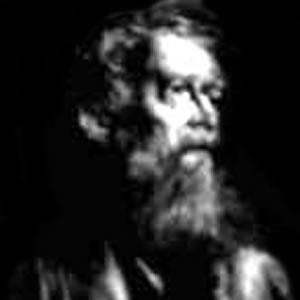
HEBREW: Sheth
ARAMAIC: Shith
ARABIC: Sheeth
AGE: 912 Years
BIRTH: 3874 BC
DEATH: 2962 BC
GENDER: Male
BORN IN: Iraq / Levant
LIVED IN: Iraq / Levant
DIED IN: Lebanon (Al-Nabi Shayth, Ansar Village) or West Bank
SCRIPTURE: Scrolls of Seth
61,447 views
Last view: 37 mins ago
God granted him to his grieving parents as a special blessing and a "substitute" for Abel's spiritual purity. As Adam grew older, he appointed Seth as his spiritual successor, passing down the divine teachings and laws of the Creator. Seth spent his long life trying to keep his family separate from the corrupt, lawless descendants of his brother Cain, preaching monotheism, high moral standards, and the importance of regular prayer. According to historical traditions, he was blessed with deep wisdom and received multiple divine scrolls containing guidance for early humanity. Seth lived to 912 years old and passed away around 2962 BC, leaving behind a legacy as a faithful guardian of the primordial faith.
| INTRODUCTION |
| 1. Prophet Seth in Judaism, Christianity, and Islam |
| 2. Family Tree of Seth and His Relations to Abrahamic Prophets |
| HISTORICAL CONTEXT |
| 3. Describe the World and Society Seth Came Into |
| 4. Why Did God Send Seth? |
| KEY LIFE EVENTS |
| 5. Chronological Timeline of Seth's Life and Ministry |
| 6. Did Seth Perform Miracles? 1 miracles |
| GEOGRAPHY & EVIDENCE |
| 7. On Google Maps: Birth, Life, and Death Locations of Seth 5 locations |
| 8. Photograpic Evidence for Seth 8 photos / 1 albums |
| SCRIPTURE & NEWS |
| 9. Is Seth Mentioned in Current News Today? 3 news |
| 10. Frequently Asked Questions About Seth 13 faqs |
| EXPLORE FURTHER |
| 11. Revealed Scripture That Mention Seth 21 verse |
| 12. YouTube Videos to Learn More About Seth 9 videos |
Prophet Seth in Judaism, Christianity, and Islam
Judaism
Revered in Jewish tradition as the righteous third son of Adam and Eve, he is viewed as the ancestor of humanity who maintained true faith after the tragedy of Abel.
Christianity
He is listed in the New Testament as a direct ancestor of Jesus, serving as part of the faithful lineage of humanity.
Islam
He is highly respected as the third son of Adam and a prophet who received divine scriptures and led humanity with justice.
Family Tree of Seth and His Relations to Abrahamic Prophets
Describe the World and Society Seth Came Into
The Environment
The vast, raw, and sparsely populated early Earth outside the Garden of Eden following the tragic exile of humanity.The Society
An early human populace entirely confined to the expanding, immediate family lineages and tribal offshoots of Adam and Eve.The Social Climate
Deeply fractured by the spiritual trauma of humanity's initial fall and the shock of history's first homicide, creating a tense atmosphere where Seth's specific lineage was tasked with reviving the pure, faithful worship of God amidst a growing worldly population.Why Did God Send Seth?
1. To serve as a divine replacement for the murdered Abel
God granted Seth to Adam and Eve as a comforting gift and a "righteous seed" to replace Abel following his tragic murder by Cain.2. To initiate structured corporate worship and prayer on Earth
Seth's lineage marked a dramatic spiritual shift in early human history, establishing the formal practice of mankind publicly calling upon the name of the Lord.3. To succeed Adam as vicegerent and govern early humanity
Following Adam's death, Seth was commissioned to take over leadership of the early human population, governing them with absolute justice and unity.4. To receive and transmit fifty divine scrolls of revelation
In authoritative prophetic traditions and classical commentaries, Seth was sent to receive fifty distinct sacred tablets to teach God's laws to his descendants.5. To preserve the pure ancestral bloodline leading to future prophets
Seth was placed in history to anchor the monotheistic family lineage that would survive the Great Flood via his descendant Noah, eventually leading to Abraham and Jesus.Chronological Timeline of Seth's Life and Ministry
Did Seth Perform Miracles?
- Unknown
On Google Maps: Birth, Life, and Death Locations of Seth | 5 locations
Lived In :Southern Levant region, Israel / Palestine / Mecca region (According to Islamic tradition), Saudi Arabia
Travelled To :Pre-flood regional settlements, Israel / Palestine / Mecca and surrounding plains, Saudi Arabia
Died In :Southern Levant region, Israel / Palestine / Al-Nabi Shayth (Alternative Islamic historical tradition), Lebanon
Photographic Evidence for Seth | 8 photos
-
 1. Prophet Seth: Tomb of Seth is located within one of the main mosques in the village of Al-Nabi Shayth in the [...] ON MAP
-
 Photo: Aziz1005 | Public domain2. Prophet Seth: Land of Eden Border (Traditional Mesopotamian Region / [...] ON MAP
-
 Photo: Ayman75 at en.wikipedia | Public domain4. Prophet Seth: Nabi Chit Valley / Bekaa Valley (Lebanon): According to ancient [...] ON MAP
-
 Photo: Baalbek1371 | CC BY-SA 4.05. Prophet Seth: Seth Shrine ('Maqam Al-Nabi Shayth') in Al-Nabi Shayth village [...] ON MAP
-
 Photo: Baalbek1371 | CC BY-SA 4.06. Prophet Seth: Seth Shrine ('Maqam Al-Nabi Shayth') in Al-Nabi Shayth village [...] ON MAP

Photo Album for Seth (1)
| Album 1. Prophet Seth Shrine in Seth Prophet Town in Baalbek, Lebanon | 2 photos |
Is Seth Mentioned in Current News Today? | 3 news
Frequently Asked Questions About Seth | 13 faqs
1.What are some interesting historical facts about Prophet Seth?
- Adam's third son
- Lived for 912 years
- Seth knew Noah for 34 years before he died
2.Who was Prophet Seth in religious and historical tradition?
Seth (known as Sheeth in Islamic tradition) was the third son of Adam and Eve, born after the tragic murder of Abel. He was chosen by God as a righteous prophet, patriarch, and successor to Adam to lead early humanity in spiritual devotion.
3.What does the name 'Seth' mean, and why was his birth significant?
The name Seth means 'granted', 'appointed', or 'substituted'. Eve named him Seth because God granted him to her as a divine gift and replacement for the righteous Abel. His lineage carried forward the sacred monotheistic tradition, separating his godly descendants from the corrupt lineage of Cain.
4.What scriptures or divine scrolls were given to Prophet Seth?
According to Islamic tradition (notably recorded by scholars like Ibn Kathir and in Hadith literature), Seth received 50 divine scrolls (Suhuf). These scriptures contained moral guidance, religious laws, rituals for worship, and instructions on early human civilization and agriculture.
5.How long did Prophet Seth live, and what was his legacy?
According to biblical and traditional accounts, Seth lived for 912 years. He established early religious order, preserved divine knowledge, and became the direct ancestor of major pre-flood figures, including Enoch (Idris), Methuselah, and Noah (Nuh).
6.How is Prophet Seth viewed across different religious traditions?
Judaism & Christianity: Detailed in the Book of Genesis as a key patriarch whose lineage ('the sons of God') preserved righteousness prior to the Great Flood.
Islam: Honored as the prophet Sheeth, a pivotal receiver of early revelation who governed humanity with justice after the passing of Adam.
Gnosticism: Revered in ancient Sethian Gnostic traditions as a divine illuminator and heavenly progenitor of the spiritual realm.
7.Did Prophet Seth have a Wife?
1 wife . Azura (Book of Jubilees).
8.Who was Prophet Seth, and what does his name mean?
Seth was the third son of Adam and Eve, born after the murder of Abel. His name originates from Hebrew (Sheth) and Arabic (Sheeth), meaning 'granted', 'placed', or 'appointed'. His mother, Eve, named him Seth because God granted him as a divine gift and spiritual successor to replace Abel.
9.Is Prophet Seth mentioned in the Quran?
No, Prophet Seth is not mentioned by name in the Quran. However, he is prominent in Islamic tradition, Hadith literature, and historical accounts by classical scholars such as Ibn Kathir. According to Islamic tradition, he was a revered prophet who received 50 divine scrolls (Suhuf) from God.
10.What scripture or revelations did Prophet Seth receive?
Islamic tradition holds that Prophet Seth received 50 sacred scrolls containing divine guidance, moral teachings, and laws to lead early humanity after Adam passed away.
11.How long did Prophet Seth live, and where did he live?
According to Genesis and classical traditions, Seth lived for 912 years. Traditional accounts place his life and ministry in the ancient Levant/Mesopotamia region, with various traditions linking his tomb to the Bekaa Valley in Lebanon (Al-Nabi Shayth) or the West Bank.
12.What was Prophet Seth's core role in human history?
Seth's main legacy was preserving the monotheistic, God-fearing lineage of early humanity. While the line of Cain strayed, Seth's descendants maintained moral purity and established the direct ancestral line leading to major prophets like Noah, Abraham, Moses, Jesus, and Muhammad.
13.Was Prophet Seth involved in any Battles or Wars?
Unknown
Revealed Scripture That Mention Seth | 21 texts
The story of Adam, the first man, the first human being. God created Adam from a handful of soil containing portions from all its varieties on Earth. Angels were sent to earth to collect the soil that was to become Adam. It was red, white, brown, and black; it was soft and malleable, hard and gritty; it came from the mountains and the valleys; from infertile deserts and lush fertile plains and all the natural varieties in between. The descendants of Adam were destined to be as diverse as the handful of soil from which their ancestor was created; all have different appearances, attributes and qualities
Years and years passed, Adam grew old and his children spread all over the earth. Muhammad Ibn Ishaq related that when Adam's death drew near, he appointed his son Seth to be his successor and taught him the hours of the day and night along with their appropriate acts of worship. He also foretold to him the floor that would come.
Abu Dhar narrated that Muhammad (ﷺ) said: "Allah sent down 104 psalms, of which 50 were sent down to Seth."
Abdullah Ibn Al Imam Ahmad Ibn Hanbal narrated that Ubai Ibn Kab said: "When Adam's death was near, he said to his children: "O my children, indeed I feel an appetite for the fruits of Paradise."
So they went away searching for what Adam had requested. They met with the angels, who had with them his shroud and what he was to be embalmed with. They said to them: "O Children of Adam, what are you searching for? What do you want? Where are you going?"
They said: "Our father is sick and has an appetite for the fruits of Paradise."
The angels said to them: "Go back, for your father is going to meet his end soon."
So they returned (with the angels) and when Eve saw them she recognized them. She tried to hide herself behind Adam. He said to her. "Leave me alone. I came before you; do not go between me and the angels of my Lord." So they took his soul, embalmed and wrapped him, dug the grave and laid him in it. They prayed on him and put him in his grave, saying: "O Children of Adam, this is your tradition at the time of death.""
Before his death Adam reassured his children that Allah would not leave man alone on the earth, but would sent His prophets to guide them. The prophets would have different names, traits and miracles, but they would be united in one thing; the call to worship Allah alone. This was Adam's bequest to his children. Adam finished speaking and closed his eyes. Then the angels entered his room and surrounded him. When he recognized the Angel of Death among them, his heart smiled peacefully.
After Adam's death, his soth Seth (Shiith) took over the responsibilities of prophethood, according to a hadith narrated by Abu Dhar. Abu Dhar narrated that Muhammad (ﷺ) said: "Allah sent down one hundred and four psalms, of which fifty were sent down to Seth." (Sahih al Bukhari) When the time of his death came Seth's son Anoush succeeded him. He in turn, was succeeded by his son Qinan, who was succeeded by Mahlabeel. The Persians claim that Mahlabeel was the King of the Seven Regions, that he was the first one to cut down trees to build cities and large forts and that he built the cities of Babylonia. He reigned for a period of forty years. When he died his duties were taken ov er by his son Yard, who on his death, bequeathed them to his son Khonoukh, who is Enoch according to the majority of the scholars.
YouTube Videos to Learn More About Seth | 9 videos

377
1438041600
1792782722
Adam, Eve and Seth - Stories from the Bible
001488
1

50
1789815466
1792733974
Cain, Abel & Seth, Sons of Adam and Eve (2026): The Movie that Shocked the World | PixArk Studios
001879
2

849
1482192000
1792741257
Did Adam & Eve's Children Commit Incest? - Shabir Ally
000248
3

665
1529161173
1792773014
Prophet Seth - IslamicCinema
000828
4

515
1452384000
1792755799
Seth - Mufti Menk
002044
5

63
1784941552
1792728281
Seth - The True Heir of Adam's Blessing
001886
6

476
1424217600
1792742860
Seth: Music & Adultery Begins - Merciful Servant
000763
7

490
1570127005
1792659447
Stories of Prophets: Seth, Enoch & Noah - Shady Al-Suleiman
003404
8

102
1570473464
1792728373
The Story of Cain, Abel & Seth
001073
9