The argument that Paul, not Jesus, founded Christianity rests on his dramatic transformation on the road to Damascus, Syria. By stepping outside traditional Jewish boundaries, preaching to non-Jews, and sidelining Mosaic law, Paul effectively re-engineered a local Jewish messianic movement into a distinct, universal global religion centered on the resurrected Christ.
Jesus' Crucifixion | 30 AD
30 AD
Carrying his own cross, he [Jesus] went out to the place of the Skull (Golgotha). There they crucified him, and with him two others - one on each side and Jesus in the middle.
JOHN 19:17-18
Saul of Tarsus | 32 AD
Saul was a Pharisee Jew. He was not a disciple, follower, or someone who met Jesus during his earthly life.
Saul persecuted and delivered Christians to the authorities to be jailed or killed.
32 AD
Saul persecuted and delivered Christians to the authorities to be jailed or killed.
Road to Damascus | 35 AD
Saul was on his way to persecute the Christians in Damascus, Syria. Suddenly, a bright light flashed. Saul fell to the ground and was convinced he had seen and spoken to a risen, spiritual Jesus Christ.
Saul converted to Christianity and became known as Paul.
35 AD
Saul converted to Christianity and became known as Paul.
And as he journeyed, he came near Damascus: and suddenly there shined round about him a light from heaven: And he fell to the earth, and heard a voice saying unto him, Saul, Saul, why persecutest thou me? And he said, Who art thou, Lord? And the Lord said, I am Jesus whom thou persecutest.
I want you to know, brothers and sisters, that the gospel I preached is not of human origin. I did not receive it from any man, nor was I taught it; rather, I received it by revelation from Jesus Christ ... But when God, who set me apart from my mother's womb and called me by his grace, was pleased to reveal his Son in me so that I might preach him among the Gentiles, my immediate response was not to consult any human being.
ACTS 9:3-5
I want you to know, brothers and sisters, that the gospel I preached is not of human origin. I did not receive it from any man, nor was I taught it; rather, I received it by revelation from Jesus Christ ... But when God, who set me apart from my mother's womb and called me by his grace, was pleased to reveal his Son in me so that I might preach him among the Gentiles, my immediate response was not to consult any human being.
GALATIANS 1:11-16
1 Thessalonians | 52 AD
In 52 AD, Paul wrote his first letter, 1 Thessalonians; 17 years after his Jesus vision.
52 AD
Dark Age | 52 AD
The information 'Dark Age' is the 22 year period during which Christianity has no recorded texts, gospels or evidences of its existence.
The period starts from Jesus' Crucifixion in 30 AD and lasts to the writing of Paul's first letter in 52 AD.
52 AD
The period starts from Jesus' Crucifixion in 30 AD and lasts to the writing of Paul's first letter in 52 AD.
Which Bible Canon? | 397 AD
The Church debated over which texts to include and exclude from the Christian Bible.
In 185 AD, Irenaeus, a Church father cited 21 books from the New Testament Bible.
This list was not formally recognized by the Christian Church until 397 AD; 345 years after Paul's first letter.
397 AD
In 185 AD, Irenaeus, a Church father cited 21 books from the New Testament Bible.
This list was not formally recognized by the Christian Church until 397 AD; 345 years after Paul's first letter.
Council of Carthage | 397 AD
Council of Carthage was the first Church council to officially recognize 39 Old and 27 New Testament books which today comprise the Christian Bible.
397 AD
CREDIT
https://www.blueletterbible.org/study/paul/timeline.cfm
https://www.christianitytoday.com/history/issues/issue-47/apostle-paul-and-his-times-christian-history-timeline.html
151-jesus-paul-galatians
| Author: Guest • Updated: 05 Sep 2026 • 19,581 views | 21 mins ago |
Explore More
Apostle Paul Christianity Damascus Syria JESUS
Search Google Search Explore Topics
 Who was Apostle Paul?
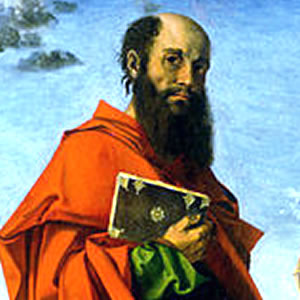
Paul the Apostle (Latin: Paulus), commonly known as Saint Paul and also known by his Jewish name Saul of Tarsus was an apostle (though not one of the Twelve Apostles) who taught the gospel of Christ to the first century world. Paul is generally considered one of the most important figures of the Apostolic Age and in the mid-30s to the mid-50s AD he founded several churches in Asia Minor and Europe. He took advantage of his status as both a Jew and a Roman citizen to minister to both Jewish and Roman audiences. According to writings in the New Testament and prior to his conversion, Paul was dedicated to persecuting the early disciples of Jesus in the area of Jerusalem. In Acts, Paul was traveling on the road from Jerusalem to Damascus on a mission to 'arrest them and bring them back to Jerusalem' when the resurrected Jesus appeared to him in a great light. He was struck blind, but after three days his sight was restored by Ananias of Damascus and Paul began to preach that Jesus of Nazareth is the Jewish Messiah and the Son of God.
 What is Christianity?
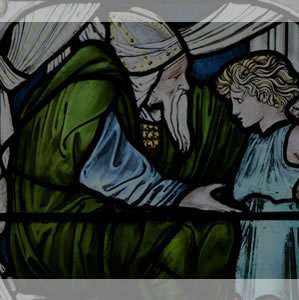
Christianity is a global religion centered on the life and teachings of Jesus Christ, who followers believe is the Son of God. It's a monotheistic faith, meaning Christians believe in one God who exists in three co-equal persons: God the Father, God the Son (Jesus Christ), and the Holy Spirit. Christianity is based on the Bible, with the Old Testament and New Testament serving as sacred texts.
 Where is Damascus?
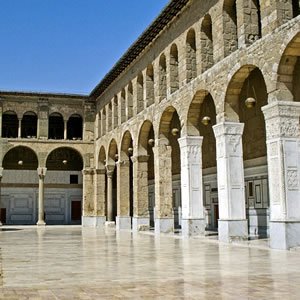
Damascus is the capital of the Syrian Arab Republic. It is also the country's largest city, following the decline in population of Aleppo due to the battle for the city. In addition to being one of the oldest continuously inhabited cities in the world, Damascus is a major cultural center of the Levant and the Arab world. The city has an estimated population of 1,711,000 as of 2009.
 What is Syria?
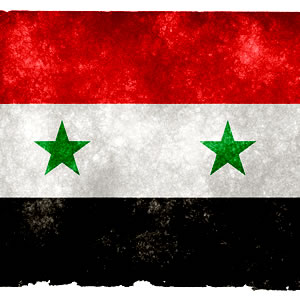
Syria, officially the Syrian Arab Republic is a country in Western Asia, bordering Lebanon to the southwest, the Mediterranean Sea to the west, Turkey to the north, Iraq to the east, Jordan to the south, and Israel to the southwest. A country of fertile plains, high mountains, and deserts, Syria is home to diverse ethnic and religious groups, including Syrian Arabs, Greeks, Armenians, Assyrians, Kurds, Circassians, Mandeans and Turkemens. Religious groups include Sunnis, Christians, Alawites, Druze, Isma'ilis, Mandeans, Shiites, Salafis, Yazidis, and Jews. Sunnis make up the largest religious group in Syria.