Why Is Swine Pork Forbidden in Judaism, Christianity and Islam? | ReligionForBreakfast

1304 views  ·  Last viewed: 1 hr ago
Uploaded: 28 Jul 2021   (5 years ago)  ·  Shared: 05 Aug 2021

Video Description (from Youtube)

Go to https://bit.ly/noom_religion and take your free 30-second quiz! Thank you #noom for sponsoring today’s video! Join our Patreon community!: https://www.patreon.com/religionforbreakfast One-time

donations here!: https://www.paypal.me/religionforbreakfast
Check out my favorite religious studies books by following this affiliate link to my Amazon page: https://www.amazon.com/shop/religionforbreakfast

Credits:
Executive Producers: Daniel Cuevas, Maritza
Co-Writers: Bailey Benson and Andrew Henry
Editor: Mark Henry

Bibliography
Hesse, B. and Wapnish, P. 1997. Can Pig Remains Be Used for Ethnic Diagnosis in the Ancient Near East? In The Archaeology of Israel: Constructing the Past, Interpreting the Present, edited by N.A. Silberman and D.B. Small, pp. 238-270.

Hesse, B. and Wapnish, P. 1998.Pig Use and Abuse in the Ancient Levant: Ethnoreligious Boundary-Building and Swine. In Ancestors for the Pigs, edited by S. Nelson, pp. 123-135.

Price, M.D. 2021. Evolution of a Taboo: Pigs and People in the Ancient Near East. Oxford.

Sapir-Hen, L., Bar-Oz, G., Gadot, Y., and Finkelstein, I. 2013. Pig Husbandry in Iron Age Israel and Judah: New Insights Regarding the Origin of the “Taboo.” Zeitschrift des Deutschen Palastina-Vereins 129 (1): 1-20.

Zeder, M.A. 2009. The Neolithic Macro-(R)evolution: Macroevolutionary Theory and the Study of Culture change. Journal of Archaeological Research 17:1-63.

Zeder, M.A. 2012. The Broad Spectrum Revolution at 40: Resource Diversity, Intensification, and an Alternative to Optimal Foraging Explanations. Journal of Anthropological Archaeology 31: 241-264.

Zeder, M.A. 2015. Core Questions in Domestication Research. Proceedings of the National Academy of Sciences 112: 3191-3198.

Who are ReligionForBreakfast?

ReligionForBreakfast is an educational channel dedicated to the academic, nonsectarian study of religion. We strive to raise the level of conversation about religion on YouTube by exploring surprising facts about humanity's beliefs and rituals through an anthropological, sociological, and archaeological lens. Here at RFB we respect everyone: religious, non-religious, and everyone in between.
What is Christianity?

Christianity is a global religion centered on the life and teachings of Jesus Christ, who followers believe is the Son of God. It's a monotheistic faith, meaning Christians believe in one God who exists in three co-equal persons: God the Father, God the Son (Jesus Christ), and the Holy Spirit. Christianity is based on the Bible, with the Old Testament and New Testament serving as sacred texts.
What is Judaism?

Judaism encompasses the religion, philosophy, culture and way of life of the Jewish people. Judaism is a monotheistic religion, with the Torah as its foundational text (part of the larger text known as the Tanakh or Hebrew Bible), and supplemental oral tradition represented by later texts such as the Midrash and the Talmud. Judaism is considered by religious Jews to be the expression of the covenantal relationship that God established with the Children of Israel. <br><br> Judaism includes a wide corpus of texts, practices, theological positions, and forms of organization. Within Judaism there are a variety of movements, most of which emerged from Rabbinic Judaism, which holds that God revealed his laws and commandments to Moses on Mount Sinai in the form of both the Written and Oral Torah. <br><br> The Jews are an ethnoreligious group and include those born Jewish and converts to Judaism. In 2012, the world Jewish population was estimated at about 14 million, or roughly 0.2% of

the total world population. About 42% of all Jews reside in Israel and about 42% reside in the United States and Canada, with most of the remainder living in Europe.
What is Islam?

One of the major religions of the world, Islam literally translates to "submission," as a follower of Islam (Muslims) devotes their life to that of their God. The religion began with the teachings of Muhammad in the 7th century. The theology of Islam is based on the Qur'an, which was given to Muhammad by God. Some of the major fundamental principles of Islam include the Five Pillars, which hope to unite all Muslims into a community. Two different factions of Muslims exist - the majority are known as Sunni, with a small percentage known as Shi'a - both predominantly reside throughout the Middle East.<br><br> <i class="fa fa-calendar"></i> Muhammad died in 632 AD and the religion of Islam formally started after his death. The Quran was formally compiled and finalised in 650 AD, prior to which it was 'memorised' and written across many parchments.
What is Swine?

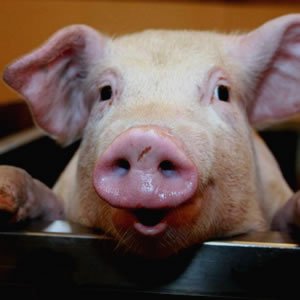
The domestic pig, often called swine, hog, or pig. It is a domesticated large, even-toed ungulate. It is variously considered a subspecies of the wild boar or a distinct species. The domestic pig's head-plus-body-length ranges from 0.9 to 1.8 m (35 to 71 in), and the adult can weigh between 50 and 350 kg (110 and 770 lb).
DISCLAIMER
All videos are shared for educational and information purposes only. All videos are hosted and viewable on Youtube servers. Video titles are generated using the original video title; overall content theme including actual dialogue and speech (Transcript); and A.I-based recommendations with a focus on SEO, keyword density, and internal search functions. The video title does not represent the views held by the Youtube video uploader, or any individual, organisation or business.

If you spot any mistake, omission or give feedback, kindly contact us with details

Latest videos  •  6,043 videos  •  0 viewed/24 hour

SUBSCRIBE

Receive the latest news and updates by email - Subscribe Now!
About  |  Q&A  |  Contact Us    •    Terms  |  Privacy  |  Disclaimer  |  Sitemap
Connect:      Facebook  |    Twitter  |    Youtube
MuslimProphets.com is an educational website on the Prophets of God: David, Noah, Abraham, Moses, Jesus and Muhammad, who established the Abrahamic faiths of Judaism, Christianity and Islam.

MuslimProphets.com explores contemporary social themes through Scripture, Evidences, Photo, Video, Maps, Current Affairs, Debate and 'alternative' Views held by Theologians, Apologists, Scholars and Street Preachers.

In accordance with Islamic etiquette, all prophet names should be followed with 'Peace Be Upon Him (PBUH)'. This is omitted to minimise text.

DISCLAIMER
The historical information provided on this website is for educational and informational purposes only.

History is an ongoing interpretation of past events. Historical accounts are shaped by the perspectives, biases, and cultural influences of their time; therefore, no content on this website should be taken as absolute, 100% factual truth. We encourage readers to approach historical narratives with a critical mind.

All website content is available in the public domain. While all information is gathered from sources believed to be reliable, its absolute accuracy cannot be guaranteed.

EXTERNAL LINKS & SEO
External links are provided as a convenience and for informational purposes only. They do not constitute an endorsement or approval of any products, services, or opinions of any organization or individual. Title and text links may be edited for external SEO, internal site structure, and keyword search purposes. We bear no responsibility for the accuracy, legality, or content found on any external website or its subsequent links.

MEDIA & SOURCE ATTRIBUTIONS
Unless otherwise indicated, all images and content are licensed under a Creative Commons Attribution License distributed by Wikipedia, Wikimedia Commons, Pixabay, Unsplash, and similar platforms. While every effort is made to accurately source all media, contact us if you believe your copyright has been infringed so we can address and resolve the matter promptly.

All Torah, Psalms, and Old/New Testament Bible quotes are from the King James Version (KJV) Holy Bible, which is in the public domain.
All Quran quotes are from the Taqi-ud-Din al-Hilali / Muhsin Khan English Quran translation.

CORRECTIONS
If you spot a mistake, error, or omission of information, please contact us so we can review and correct it.