| Catholic Origins |
| Before Catholic Christianity, Jesus and his disciples were practicing Jews observing a form of Judaism complete with all traditional Jewish rituals, scripture, and customs. |
| Early Christians were entirely Jewish; Christianity originated in 1st-century Judea as a sect of Jewish followers of Jesus, led by his apostles and disciples. |
| Early Followers of Jesus were first called "Christians" in Antioch around 40 AD, as recorded in the New Testament Acts of the Apostles.
And when he had found him, he brought him unto Antioch. And it came to pass, that a whole year they assembled themselves with the church, and taught much people. And the disciples were called Christians first in Antioch.
[Acts 11:26] |
| Despite intermittent Roman persecution, the faith grew from fewer than 1,000 adherents in 30 AD to over half of the Roman Empire's population by 350 AD, roughly 30 to 35 million adherents. |
| Today, Roman Catholicism stands as Christianity's largest church, comprising approximately 1.1 billion of the estimated 2 billion Christians worldwide. |
| Early Catholic Church |
| The word catholic comes from the Greek 'katholikos', meaning "Universal". This word was used to describe the entire undivided body of believers in the Early Christian Church, functioning literally as "Orthodox Christian". |
| Saint Ignatius of Antioch wrote the earliest surviving recorded use of "the Catholic Church" around 107 AD to distinguish orthodox Christian communities from early schismatic groups. |
| Saint Augustine in his 5th-century anti-Donatist writings wrote of "the Catholic Church" 240 times across his works. |
| Saint Peter is identified as the first Bishop of Rome, establishing an unbroken line of popes continuing to the present day, according to Catholic tradition. |
| Authority of Catholic Church |
| Rome designed the framework of Catholicism, establishing the primary foundation of modern Christianity." |
| According to Catholic Church history, the early Church Fathers referred to the Church as "the Catholic Church", in recognition of the historical Christian Church as Roman Catholicism the true faith centered on Peter. |
| According to Catholics, Jesus established the Church on Peter the rock, gave him the Keys of Heaven, and promised that the gates of hell would not prevail against it. This led to the Catholic doctrine on the unbroken lineage of Popes makes all true Christians fundamentally Catholic. |
| The New Testament defines the Church as the single Body of God.
And he is the head of the body, the church; he is the beginning and the firstborn from among the dead, so that in everything he might have the supremacy.
[Colossians 1:18] And I tell you that you are Peter, and on this rock I will build my church [ekklesia], and the gates of Hades will not overcome it. [Matthew 16:18] |
| Imperial 'Catholic' Rome |
| Catholic Creeds such as the Apostles' Creed, the Nicene Creed, and the Athanasian Creed further give rise to core Christian doctrines including the Trinity, creation, and the life, death, and resurrection of Jesus Christ. |
| Edict of Milan (313 AD): Emperor Constantine I legalized Christian worship across the Roman Empire, restoring confiscated church properties and ending state persecutions. |
| First Council of Nicaea (325 AD): Constantine convened over 300 bishops in Nicaea who together agreed on the 'Nicene Creed' and affirmed the divinity of Jesus. |
| Official State Religion (380 AD): Emperor Theodosius I issued the Edict of Thessalonica, establishing Nicene Catholic Christianity as the sole official religion of the Roman Empire. |
| In 445 AD, the Roman Church solidified its role as the hub of universal Christianity, with the Pope holding supreme authority to appoint bishops and archbishops across the Christianized world. |
| Today, Catholicism stands as the first majorly organized church of Christianity, tracing back to the Roman adoption of Christianity, and remains the most practiced form of Christianity worldwide. |
| The Catholic Bible |
| The Catholic Church assembled the first Holy Bible of Christianity, combining New Testament texts and the Old Testament, using the Septuagint (LXX) - a Greek translation of Jewish scriptures rather than direct Hebrew texts. |
| Rome led the initative to formally define and codify the 27-book New Testament canon (Council of Rome in 382 AD; Synod of Hippo in 393 AD; and Carthage in 397 AD). |
| The Catholic Church compiled existing New Testament writings alongside Old Testament scriptures into unified codices (Bibles), such as Saint Jerome's Latin Vulgate, 382 AD. |
| Rome together with the Catholic Church took responsibility for funding, building churches, training ministers, copying and distributing the New Testament Bible across the Western Roman Empire. |
| Catholic vs Protestants |
| The Catholic-Protestant split happened 500 years ago |
| The Great Schism (1054 AD): Cultural and theological divisions caused a split into two divisions: Western Roman Catholic Church and Eastern Orthodox Church. |
| Martin Luther initiated the Protestant Reformation in 1517 AD when he posted his Ninety-five Theses in Wittenberg, Germany. From 1517 to the present day, the Protestant movement has existed for 500 years. |
| Martin Luther is recognized by historians as the primary catalyst who sparked the break from the Roman Catholic Church, leading to the Protestant movement, and thereafter Lutheranism, Reformed, Anabaptist, Anglican, and other denominations. |
77-roman-catholic-christianity
| Author: Guest • Updated: 29 Aug 2026 • 2,033 views | 12 hrs ago |
Explore More
Catholic Church RomanSearch Google Search Explore Topics
 What is Catholic?
The Catholic Church, also known as the Roman Catholic Church. This is the largest Christian church, with approximately 1.3 billion baptised Catholics worldwide, as of 2016. As one of the oldest religious institutions in the world, it has played a prominent role in the history and development of Western civilisation. The church is headed by the Bishop of Rome, known as the Pope. Its central administration, the Holy See, is in the Vatican City, an enclave within Rome, Italy. Catholic theology is based on the Nicene Creed.
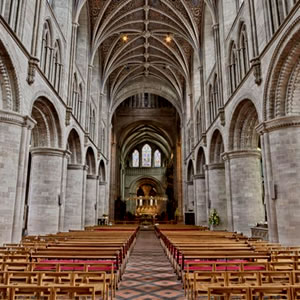 What is the Church?
A church is a building used for Christian worship services and Christian activities. The earliest identified Christian church is a house church founded between 233 AD and 256 AD. The word church also describes a body or assembly of Christian believers, while "the Church" refers to the worldwide Christian religious community.
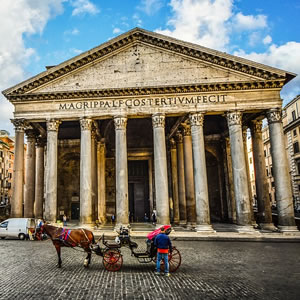 What is Roman?
In historiography, ancient Rome is Roman civilization. From the founding of the city of Rome in the 8th century BC to the collapse of the Western Roman Empire in the 5th century AD, encompassing the Roman Kingdom, Roman Republic and Roman Empire until the fall of the western empire. The civilization began as an Italic settlement in the Italian peninsula, dating from the 8th century BC, that grew into the city of Rome and which subsequently gave its name to the empire over which it ruled and to the widespread civilisation the empire developed. The Roman empire expanded to become one of the largest empires in the ancient world, though still ruled from the city, with an estimated 50 to 90 million inhabitants (roughly 20% of the world's population) and covering 5.0 million square kilometres at its height in AD 117.