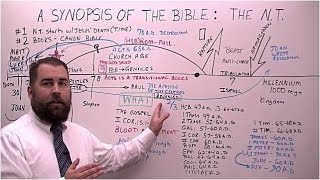
Dating the Old Testament, Hebrew Bible and Torah with Dead Sea Scrolls reveals between 303 to 1303 years of missing history.
The Old Testament is based primarily upon the Hebrew Bible, a collection of ancient religious writings by the Israelites believed by Jews and Christians to be the sacred word of God.
The Dead Sea Scrolls (DSS) are the oldest, surviving manuscripts for the Old Testament. The table below lists the Old Testament books, year of authorship, and Dead Sea Scroll (Manuscript) dating.
1. GENESIS | 1283 YEAR GAP. 1
| DATING |
| Traditional: 2 1400 BC |
| Manuscript: 3 Dead Sea Scroll 356 BC-122 AD |
| Difference (Years): 4 1044-1522 Years |
1 GAP is number of years from Moses to Dead Sea Scroll manuscript. For simplicity, median year is displayed in place of year range
2 TRADITIONAL dating is widely acknowledged by Jews and Christians
3 MANUSCRIPT is earliest complete copy of text (i.e. Dead Sea Scroll)
4 DIFFERENCE shows the range in years during which the text did not exist. The calculations are shown below:
Lower Range: 1400-356=1044 yr
Upper Range: 1400+122=1522 yr
Median:(1044+1522)/2=1283 yr
2. EXODUS | 1283 YEAR GAP
| DATING |
| Traditional: 1400 BC |
| Manuscript: Dead Sea Scroll 356 BC-122 AD |
| Difference (Years): 1044-1522 Years |
3. LEVITICUS | 1283 YEAR GAP
| DATING |
| Traditional: 1400 BC |
| Manuscript: Dead Sea Scroll 356 BC-122 AD |
| Difference (Years): 1044-1522 Years |
4. NUMBERS | 1283 YEAR GAP
| DATING |
| Traditional: 1400 BC |
| Manuscript: Dead Sea Scroll 356 BC-122 AD |
| Difference (Years): 1044-1522 Years |
5. DEUTERONOMY | 1293 YEAR GAP
| DATING |
| Traditional: 1410 BC |
| Manuscript: Dead Sea Scroll 356 BC-122 AD |
| Difference (Years): 1054-1532 Years |
6. JOSHUA | 1303 YEAR GAP
| DATING |
| Traditional: 1420 BC |
| Manuscript: Dead Sea Scroll 356 BC-122 AD |
| Difference (Years): 1064-1542 Years |
7. JUDGES | 906 YEAR GAP
| DATING |
| Traditional: 1023 BC |
| Manuscript: Dead Sea Scroll 356 BC-122 AD |
| Difference (Years): 667-1145 Years |
8. RUTH | 854 YEAR GAP
| DATING |
| Traditional: 971 BC |
| Manuscript: Dead Sea Scroll 356 BC-122 AD |
| Difference (Years): 615-1093 Years |
9. 1 SAMUEL | 921 YEAR GAP
| DATING |
| Traditional: 1038 BC |
| Manuscript: Dead Sea Scroll 356 BC-122 AD |
| Difference (Years): 682-1160 Years |
10. 2 SAMUEL | 843 YEAR GAP
| DATING |
| Traditional: 960 BC |
| Manuscript: Dead Sea Scroll 356 BC-122 AD |
| Difference (Years): 604-1082 Years |
11. 1 KINGS | 433 YEAR GAP
| DATING |
| Traditional: 550 BC |
| Manuscript: Dead Sea Scroll 356 BC-122 AD |
| Difference (Years): 194-672 Years |
12. 2 KINGS | 433 YEAR GAP
| DATING |
| Traditional: 550 BC |
| Manuscript: Dead Sea Scroll 356 BC-122 AD |
| Difference (Years): 194-672 Years |
13. 1 CHRONICLES | 321 YEAR GAP
| DATING |
| Traditional: 438 BC |
| Manuscript: Dead Sea Scroll 356 BC-122 AD |
| Difference (Years): 82-560 Years |
14. 2 CHRONICLES | 321 YEAR GAP
| DATING |
| Traditional: 438 BC |
| Manuscript: Dead Sea Scroll 356 BC-122 AD |
| Difference (Years): 82-560 Years |
15. EZRA | 333 YEAR GAP
| DATING |
| Traditional: 450 BC |
| Manuscript: Dead Sea Scroll 356 BC-122 AD |
| Difference (Years): 94-572 Years |
16. NEHEMIAH | 316 YEAR GAP
| DATING |
| Traditional: 433 BC |
| Manuscript: Dead Sea Scroll 356 BC-122 AD |
| Difference (Years): 77-555 Years |
17. ESTHER | 288 YEAR GAP
| DATING |
| Traditional: 405 BC |
| Manuscript: Dead Sea Scroll 356 BC-122 AD |
| Difference (Years): 49-527 Years |
18. JOB | 1078 YEAR GAP
| DATING |
| Traditional: 1195 BC |
| Manuscript: Dead Sea Scroll 356 BC-122 AD |
| Difference (Years): 839-1317 Years |
19. PSALMS | 651 YEAR GAP
| DATING |
| Traditional: 768 BC |
| Manuscript: Dead Sea Scroll 356 BC-122 AD |
| Difference (Years): 412-890 Years |
20. PROVERBS | 783 YEAR GAP
| DATING |
| Traditional: 900 BC |
| Manuscript: Dead Sea Scroll 356 BC-122 AD |
| Difference (Years): 544-1022 Years |
21. ECCLESIASTES (APOCRYPHA) | 818 YEAR GAP
| DATING |
| Traditional: 935 BC |
| Manuscript: Dead Sea Scroll 356 BC-122 AD |
| Difference (Years): 579-1057 Years |
22. SONG OF SOLOMON | 848 YEAR GAP
| DATING |
| Traditional: 965 BC |
| Manuscript: Dead Sea Scroll 356 BC-122 AD |
| Difference (Years): 609-1087 Years |
23. ISAIAH | 574 YEAR GAP
| DATING |
| Traditional: 691 BC |
| Manuscript: Dead Sea Scroll 356 BC-122 AD |
| Difference (Years): 335-813 Years |
24. JEREMIAH | 488 YEAR GAP
| DATING |
| Traditional: 605 BC |
| Manuscript: Dead Sea Scroll 356 BC-122 AD |
| Difference (Years): 249-727 Years |
25. LAMENTATIONS | 464 YEAR GAP
| DATING |
| Traditional: 581 BC |
| Manuscript: Dead Sea Scroll 356 BC-122 AD |
| Difference (Years): 225-703 Years |
26. EZEKIEL | 462 YEAR GAP
| DATING |
| Traditional: 579 BC |
| Manuscript: Dead Sea Scroll 356 BC-122 AD |
| Difference (Years): 223-701 Years |
27. DANIEL | 418 YEAR GAP
| DATING |
| Traditional: 535 BC |
| Manuscript: Dead Sea Scroll 356 BC-122 AD |
| Difference (Years): 179-657 Years |
28. HOSEA | 623 YEAR GAP
| DATING |
| Traditional: 740 BC |
| Manuscript: Dead Sea Scroll 356 BC-122 AD |
| Difference (Years): 384-862 Years |
29. JOEL | 701 YEAR GAP
| DATING |
| Traditional: 818 BC |
| Manuscript: Dead Sea Scroll 356 BC-122 AD |
| Difference (Years): 462-940 Years |
30. AMOS | 640 YEAR GAP
| DATING |
| Traditional: 757 BC |
| Manuscript: Dead Sea Scroll 356 BC-122 AD |
| Difference (Years): 401-879 Years |
31. OBADIAH | 727 YEAR GAP
| DATING |
| Traditional: 844 BC |
| Manuscript: Dead Sea Scroll 356 BC-122 AD |
| Difference (Years): 488-966 Years |
32. JONAH | 659 YEAR GAP
| DATING |
| Traditional: 776 BC |
| Manuscript: Dead Sea Scroll 356 BC-122 AD |
| Difference (Years): 420-898 Years |
33. MICAH | 601 YEAR GAP
| DATING |
| Traditional: 718 BC |
| Manuscript: Dead Sea Scroll 356 BC-122 AD |
| Difference (Years): 362-840 Years |
34. NAHUM | 521 YEAR GAP
| DATING |
| Traditional: 638 BC |
| Manuscript: Dead Sea Scroll 356 BC-122 AD |
| Difference (Years): 282-760 Years |
35. HABAKKUK | 491 YEAR GAP
| DATING |
| Traditional: 608 BC |
| Manuscript: Dead Sea Scroll 356 BC-122 AD |
| Difference (Years): 252-730 Years |
36. ZEPHANIAH | 613 YEAR GAP
| DATING |
| Traditional: 730 BC |
| Manuscript: Dead Sea Scroll 356 BC-122 AD |
| Difference (Years): 374-852 Years |
37. HAGGAI | 403 YEAR GAP
| DATING |
| Traditional: 520 BC |
| Manuscript: Dead Sea Scroll 356 BC-122 AD |
| Difference (Years): 164-642 Years |
38. ZECHARIAH | 378 YEAR GAP
| DATING |
| Traditional: 495 BC |
| Manuscript: Dead Sea Scroll 356 BC-122 AD |
| Difference (Years): 139-617 Years |
39. MALACHI | 303 YEAR GAP
| DATING |
| Traditional: 420 BC |
| Manuscript: Dead Sea Scroll 356 BC-122 AD |
| Difference (Years): 64-542 Years |
QURAN 0 YEAR GAP
The Birmingham Quran manuscript is a parchment on which two leaves of an early Quranic manuscript are written. In 2015 the manuscript, which is held in the UK by the University of Birmingham, was radiocarbon dated to between 568 and 645 AD with 95.4% accuracy.
The test was carried out in a laboratory at the University of Oxford. The result places the leaves close to the time of the Prophet Muhammad, who is generally thought to have lived between 570 and 632 AD.

The tests carried out on the parchment of the Birmingham folios yield the strong probability that the animal from which it was taken was alive during the lifetime of the Prophet Muhammad or shortly afterwards.
These portions must have been in a form that is very close to the form of the Quran read today, supporting the view that the
[Quran] text has undergone little or no alteration and that it can be dated to a point very close to the time it was believed to be revealed.
David Thomas, Professor of Christianity and Islam. University of Birmingham
CREDIT
https://callingchristians.com/2017/04/05/a-brief-insight-into-the-new-testaments-prototyping
https://www.birmingham.ac.uk/news/latest/2015/07/quran-manuscript-22-07-15.aspx
https://en.wikipedia.org/wiki/Birmingham_Quran_manuscript
https://en.wikipedia.org/wiki/Dating_the_Bible
140-bibleot-manuscript-dating
| Author: Guest
•
Updated:
14 Aug 2026
•
20,189 views | 54 mins ago |
Explore More
Dead Sea Scrolls Old Testament
 MOSES
Search
Google Search
Explore Topics
MOSES
Search
Google Search
Explore Topics
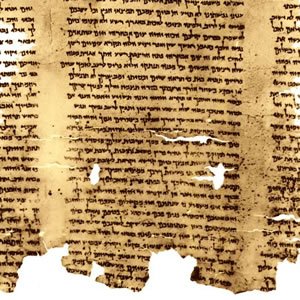 What is Dead Sea Scrolls?
Dead Sea Scrolls (also Qumran Caves Scrolls) are ancient Jewish religious, mostly Hebrew, manuscripts. They were found in the Qumran Caves in the West Bank near the Dead Sea. Many thousands of written fragments have been discovered in the Dead Sea area. They represent the remnants of larger manuscripts damaged by natural causes or through human interference, with the vast majority only holding small scraps of text. However, a small number of well-preserved, almost intact manuscripts have survived - fewer than a dozen among those from the Qumran Caves.
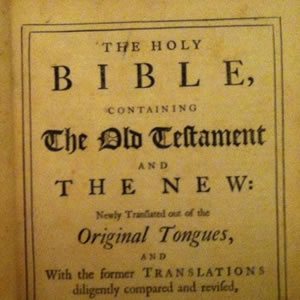 What is Old Testament?
The Old Testament (OT) is the first part of Christian Bibles. This is based primarily upon the Hebrew Bible (or Tanakh), a collection of ancient religious writings by the Israelites believed by most Christians and religious Jews to be the sacred Word of God. The second part of the Christian Bible is the New Testament.
The books that comprise the Old Testament canon, as well as their order and names, differ between Christian denominations. The Catholic canon comprises 46 books, and the canons of the Eastern Orthodox and Oriental Orthodox Churches comprise up to 51 books and the most common Protestant canon comprises 39 books.

![Video: Prophet Adam [The First Human]](https://img.youtube.com/vi/NhbHHN-Y1fM/mqdefault.jpg)