Jesus Christ, a Christian God of many faces.
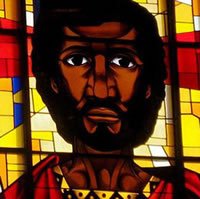
Even though there is no physical description of Jesus in the New Testament. Christians have always been creative when it comes to drawing God with their own hands, in various images, artwork, statues and idols.The conventional image of a bearded Jesus with long hair emerged around 300 AD, and became established after the 6th century. Before 300 AD, the Early Christian Church considered illustrating Jesus Christ as controversial so avoided it.
 
|
Jesus Christ is a Hindu God in IndiaChristians in India worship Jesus Christ, who is often pictured bearing a striking resemblance to popular Hindu Gods, such as Shiva, Krishna, Vishnu etc. 1Image of Jesus Christ and Krishna the Hindu God holding hands depicts unity, and closeness between Christianity and Hinduism. Perfect for missionary activity! |
Christianity teaches worship of Jesus Christ through imagery
It is known, the creators of Jesus' artwork were appreciative of local cultures and adapted their version of God to fit in with local customs, ethnicity, racial characteristics and social expectations.Below are 99 images of Jesus Christ that Christians adorn their homes with, and subsequently worship.
(hover over image for country of origin)




To view the development of Jesus' image in the first 400 years, click here Jesus - God with No Face
Islam forbids the drawing of Jesus, or any other Prophet
Islam strictly forbids drawing images or illustrations of any Prophet of God. As it involves detracting from their status and showing disrespect to them. It is a transgression against their dignity and undermines the Prophets as the best of God's creation. 2CREDIT
http://www.beliefnet.com
https://en.wikipedia.org/wiki/Depiction_of_Jesus
1 https://www.metmuseum.org/toah/hd/gods/hd_gods.htm
2 https://islamqa.info/en/181704
138-jesus-different-faces
| Author: Guest • Updated: 16 Sep 2026 • 26,240 views | 3 hrs ago |
Explore More
Evolution Church JESUS
JESUS
Search Google Search Explore Topics
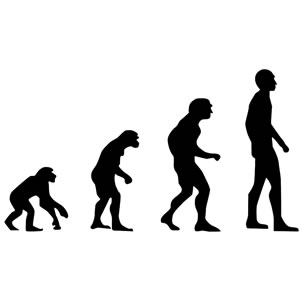 What is Evolution?
Evolution is change in the heritable characteristics of biological populations over successive generations. Evolutionary processes give rise to bio-diversity at every level of biological organisation, including the levels of species, individual organisms, and molecules. In the mid-19th century, Charles Darwin formulated the scientific theory of evolution by natural selection, published in his book On the Origin of Species (1859). Evolution by natural selection is a process first demonstrated by the observation that often, more offspring are produced than can possibly survive.
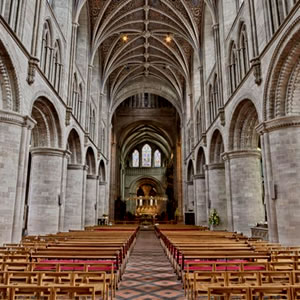 What is the Church?
A church is a building used for Christian worship services and Christian activities. The earliest identified Christian church is a house church founded between 233 AD and 256 AD. The word church also describes a body or assembly of Christian believers, while "the Church" refers to the worldwide Christian religious community.