Uploaded: 07 Jul 2019 (7 years ago) · Shared: 09 Jul 2019
Duration: 26:40
Video Description
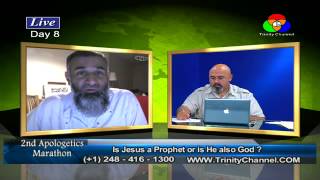
Explore the deep historical roots and spiritual significance of Mecca's most sacred landmarks with Mufti Abu Layth. In this insightful video, Abu Layth examines the early history, symbolism, and origins of the Black Stone alongside the ancient rites of Safa and Marwa. By examining pre-Islamic Arabian practices and their transformation within Islamic guidance, this discussion offers a compelling look at how early traditions evolved into core pillars of modern Islamic faith.
Understanding these sacred symbols provides valuable context for anyone interested in comparative religion, Abrahamic heritage, and meaningful spiritual reminders shared across Islam, Judaism, and Christianity. Whether you are seeking a deeper theological perspective or exploring the historical connection between ancient rituals and contemporary worship, this video delivers a respectful, balanced, and engaging exploration. Tune in to discover how faith, history, and sacred rites intersect in shaping profound religious identity today.
Explore More
Abu Layth Pre-Islam Islam Kabah PaganSearch Google Search Explore Topics
 Who is Abu Layth?
Mufti Abu Layth carried out preliminary Arabic and Islamic Studies as a teenager in the UK in 1997. He went onto study Islam in Damascus, Syria. Abu Layth presents traditional Islam on a contemporary platform.
 What is Pre-Islam?
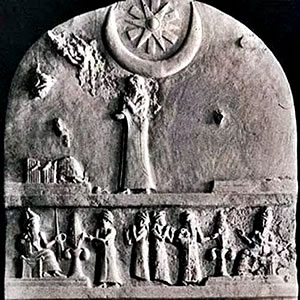
Pre-Islam refers to the period in history before the emergence and widespread adoption of Islam. It specifically denotes the time before the Prophet Muhammad's revelations and the establishment of Islamic faith, culture, and civilization.
 What is Islam?
One of the major religions of the world, Islam literally translates to "submission," as a follower of Islam (Muslims) devotes their life to that of their God. The religion began with the teachings of Muhammad in the 7th century. The theology of Islam is based on the Qur'an, which was given to Muhammad by God. Some of the major fundamental principles of Islam include the Five Pillars, which hope to unite all Muslims into a community. Two different factions of Muslims exist - the majority are known as Sunni, with a small percentage known as Shi'a - both predominantly reside throughout the Middle East. Muhammad died in 632 AD and the religion of Islam formally started after his death. The Quran was formally compiled and finalised in 650 AD, prior to which it was 'memorised' and written across many parchments.
 What is Kabah?
The Black Stone (al-Hajaru al-Aswad, "Black Stone") is a rock set into the eastern corner of the Kaaba, the ancient building located in the center of the Grand Mosque in Mecca, Saudi Arabia. It is revered by Muslims as an Islamic relic which, according to Muslim tradition, dates back to the time of Adam and Eve. The stone was venerated at the Kaaba in pre-Islamic pagan times. According to Islamic tradition, it was set intact into the Kaaba's wall by the prophet Muhammad in 605 CE, five years before his first revelation. Since then it has been broken into fragments and is now cemented into a silver frame in the side of the Kaaba. Muslim pilgrims circle the Kaaba as a part of the tawaf ritual during the hajj and many try to stop and kiss the Black Stone, emulating the kiss that Islamic tradition records that it received from Muhammad. Muslims do not worship the Black Stone.
 What is Pagan?
Paganism is a term first used in the fourth century by early Christians. It was applied on populations of the Roman Empire who practiced polytheism, either because they were increasingly rural and provincial relative to the Christian population or because they were not milites Christi (soldiers of Christ). Alternate terms in Christian texts for the same group were hellene, gentile, and heathen. Pagan and paganism were pejorative terms for the same polytheistic group, implying its inferiority. Paganism has broadly connoted the "religion of the peasantry", and for much of its history was a derogatory term. Both during and after the Middle Ages, pagan was a pejorative term that was applied to any non-Abrahamic or unfamiliar religion, and the term presumed a belief in false god(s).