1211 views
·
Last viewed: 6 hrs ago
Uploaded: 04 Apr 2012 (15 years ago) · Shared: 29 Sep 2017
Duration: 45:17
Uploaded: 04 Apr 2012 (15 years ago) · Shared: 29 Sep 2017
Duration: 45:17
Youtube Description
The Early Middle Ages, 284--1000 (HIST 210) Professor Freedman examines how Christianity came to be the official religion of the Roman Empire. Thisprocess began seriously in 312, when the emperor Constantine converted after a divinely inspired victory at the Battle of the Milvian Bridge. Constantine's conversion would have seemed foolish as a political strategy since Christianity represented a completely different system of values from that of the Roman state, but not only did it prove to be a brilliant storke in aid of Constantine's quest for power, it fundamentally changed the character of the Empire and that of the early Church. Constantine also moved his capitol to a new city he founded in the East, named Constantinople, opening the possibility of a Roman Empire without Rome. Professor Freedman ends the lecture with a comparison of Diocletian and Constantine.
00:00 - Chapter 1. Introduction
07:03 - Chapter 2. Constantine's Rise to Power
10:12 - Chapter 3. The Battle of the Milvian Bridge and Constantine's Conversion
17:01 - Chapter 4. Constantine as a Christian Emperor
23:50 - Chapter 5. The City of Constantinople
31:32 - Chapter 6. Constantine intervenes in Church Doctrine
39:38 - Chapter 7. Constantine and Diocletian
Complete course materials are available at the Yale Online website: online.yale.edu
This course was recorded in Fall 2011.
Explore More
Paul Freedman Constantine Church RomanSearch Google Search Explore Topics
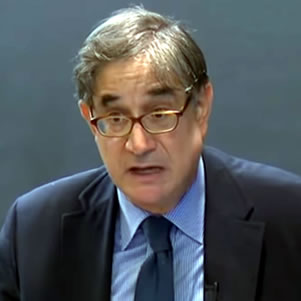 Who is Paul Freedman?
Paul Freedman is the Chester D Tripp Professor of History at Yale University. He specializes in medieval social history, the history of Spain, the study of medieval peasantry, and medieval cuisine.
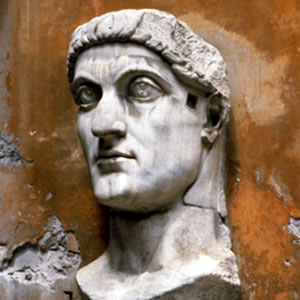 Who was Constantine?
Constantine the Great (27 February 272 AD-22 May 337 AD) was a Roman Emperor who ruled between 306 and 337 AD. Born on the territory now known as Nis, located in Serbia, he was the son of Flavius Valerius Constantius, a Roman Army officer of Illyrian origins. His mother Helena was Greek. His father became Caesar, the deputy emperor in the west, in 293 AD. Constantine was sent east, where he rose through the ranks to become a military tribune under Emperors Diocletian and Galerius. Constantine was the first Roman emperor to convert to Christianity. Although he lived most of his life as a pagan, he joined the Christian faith on his deathbed, being baptised by Eusebius of Nicomedia. He played an influential role in the proclamation of the Edict of Milan in 313, which declared religious tolerance for Christianity in the Roman empire. He called the First Council of Nicaea in 325 AD that produced the statement of Christian belief known as the Nicene Creed.
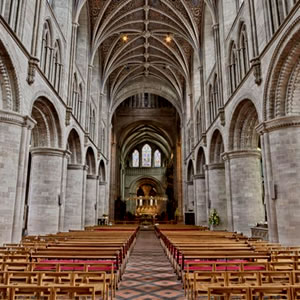 What is the Church?
A church is a building used for Christian worship services and Christian activities. The earliest identified Christian church is a house church founded between 233 AD and 256 AD. The word church also describes a body or assembly of Christian believers, while "the Church" refers to the worldwide Christian religious community.
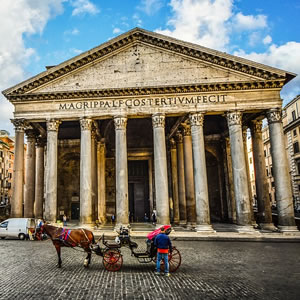 What is Roman?
In historiography, ancient Rome is Roman civilization. From the founding of the city of Rome in the 8th century BC to the collapse of the Western Roman Empire in the 5th century AD, encompassing the Roman Kingdom, Roman Republic and Roman Empire until the fall of the western empire. The civilization began as an Italic settlement in the Italian peninsula, dating from the 8th century BC, that grew into the city of Rome and which subsequently gave its name to the empire over which it ruled and to the widespread civilisation the empire developed. The Roman empire expanded to become one of the largest empires in the ancient world, though still ruled from the city, with an estimated 50 to 90 million inhabitants (roughly 20% of the world's population) and covering 5.0 million square kilometres at its height in AD 117.