673 views
·
Last viewed: 10 hrs ago
Uploaded: 04 Apr 2012 (15 years ago) · Shared: 29 Sep 2017
Duration: 48:37
Uploaded: 04 Apr 2012 (15 years ago) · Shared: 29 Sep 2017
Duration: 48:37
Youtube Description
The Early Middle Ages, 284--1000 (HIST 210) Professor Freedman outlines the problems facing the Roman Empire in the third century. The PersianSassanid dynasty in the East and various Germanic tribes in the West threatened the Empire as never before. Internally, the Empire struggled with the problem of succession, an economy wracked by inflation, and the decline of the local elite which had once held it together. Having considered these issues, Professor Freedman then moves on to the reforms enacted under Diocletian to stabilize the Empire. He attempted to solve the problem of succession by setting up a system of joint rule called the Tetrarchy, to stabilize the economy through tax reform, and to protect the frontiers through militarization. Although many of his policies failed--some within his lifetime--Diocletian nevertheless saved the Roman Empire from collapse.
00:00 - Chapter 1. Introduction and Logistics
01:35 - Chapter 2. Third Century Crisis and Barbarian Invasions
10:10 - Chapter 3. The Problem of Succession
17:36 - Chapter 4. The Problem of Inflation
22:48 - Chapter 5. The Ruin of The Local Elite
26:08 - Chapter 6. Diocletian and his Reforms
Complete course materials are available at the Yale Online website: online.yale.edu
This course was recorded in Fall 2011.
Explore More
Paul Freedman Roman ISISSearch Google Search Explore Topics
 Who is Paul Freedman?
Paul Freedman is the Chester D Tripp Professor of History at Yale University. He specializes in medieval social history, the history of Spain, the study of medieval peasantry, and medieval cuisine.
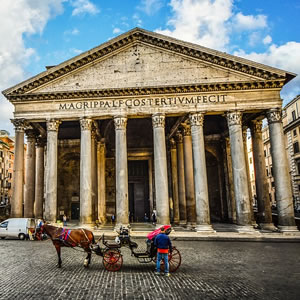 What is Roman?
In historiography, ancient Rome is Roman civilization. From the founding of the city of Rome in the 8th century BC to the collapse of the Western Roman Empire in the 5th century AD, encompassing the Roman Kingdom, Roman Republic and Roman Empire until the fall of the western empire. The civilization began as an Italic settlement in the Italian peninsula, dating from the 8th century BC, that grew into the city of Rome and which subsequently gave its name to the empire over which it ruled and to the widespread civilisation the empire developed. The Roman empire expanded to become one of the largest empires in the ancient world, though still ruled from the city, with an estimated 50 to 90 million inhabitants (roughly 20% of the world's population) and covering 5.0 million square kilometres at its height in AD 117.
 What is ISIS?
The Islamic State of Iraq and Syria (ISIS, Daesh, and other names) is a Salafi jihadist terrorist organisation. It is a former unrecognised proto-state that follows a fundamentalist, Salafi doctrine of Sunni Islam. ISIS gained global prominence in early 2014 when it drove Iraqi government forces out of key cities in its Western Iraq offensive, followed by its capture of Mosul and the Sinjar massacre.