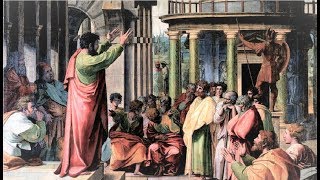
Video Description:
In this insightful video, Dr. Ahmad Al-Jallad and Dr. Gabriel Reynolds delve into the ancient religious practices of pre-Islamic Arabia, exploring the nature of Arabian paganism through the lens of its own adherents. Dr. Al-Jallad, a leading expert in ancient Semitic languages, guides viewers through the 'pagan' Safaitic inscriptions, shedding light on the devotional practices and beliefs of these early Arabian communities. This discussion offers a unique perspective on the spiritual landscape that existed before the advent of Islam, providing valuable context for understanding the early history and religious development in the region. Whether you are interested in Islamic studies, early religious traditions, or the cultural heritage of the Arabian Peninsula, this clip from a longer interview is a must-watch.
Explore More
 Who is Gabriel Reynolds?
Gabriel Reynolds is an American academic and historian of religion who serves as professor of Islamic Studies and Theology at the University of Notre Dame. His scholarship focuses on World Religions and World Church, History of Christianity, Quranic
Studies, Islamic Origins, and Muslim-Christian relations. Gabriel Said Reynolds obtained his PhD in Islamic Studies at Yale University.The 'Exploring the Quran and the Bible' Youtube channel is dedicated to thoughtful, cutting-edge, and respectful conversations with leading scholars worldwide on the Bible or the Quran.
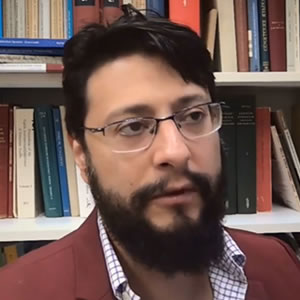 Who is Ahmad Al-Jallad?
Ahmad Al-Jallad is a Jordanian-American philologist, epigraphist, and a historian of language. Some of the areas he has contributed to include Quranic studies and the history of Arabic, including recent work he has done on pre-Islamic Arabian
inscriptions written in Safaitic and Paleo-Arabic.
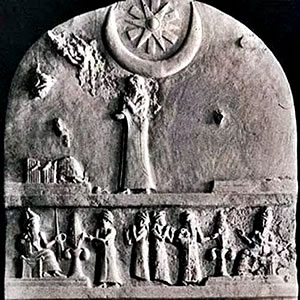 What is Pre-Islam?
Pre-Islam refers to the period in history before the emergence and widespread adoption of Islam. It specifically denotes the time before the Prophet Muhammad's revelations and the establishment of Islamic faith, culture, and civilization.
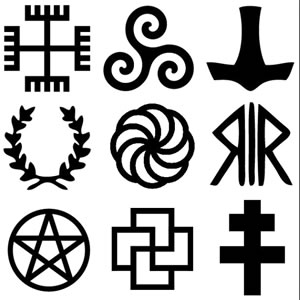 What is Pagan?
Paganism is a term first used in the fourth century by early Christians. It was applied on populations of the Roman Empire who practiced polytheism, either because they were increasingly rural and provincial relative to the Christian population or
because they were not milites Christi (soldiers of Christ). Alternate terms in Christian texts for the same group were hellene, gentile, and heathen. Pagan and paganism were pejorative terms for the same polytheistic group, implying its inferiority. Paganism has broadly connoted the "religion of the peasantry", and for much of its history was a derogatory term. Both during and after the Middle Ages, pagan was a pejorative term that was applied to any non-Abrahamic or unfamiliar religion, and the term presumed a belief in false god(s).
Who is GOD?In monotheism and henotheism, God is conceived as the Supreme Being and principal object of faith. The concept of God as described by theologians commonly includes the attributes of omniscience (infinite knowledge), omnipotence (unlimited power)
omnipresence (present everywhere), omnibenevolence (perfect goodness), divine simplicity, and eternal and necessary existence.
In theism, God is the creator and sustainer of the universe
In deism, God is the creator, but not the sustainer, of the universe
Monotheism is the belief in the existence of one God or in the oneness of God
In pantheism, God is the universe itself
In atheism, God is purported not to exist, while deemed unknown or unknowable within the context of agnosticism.