Uploaded: 17 Dec 2018 (8 years ago) · Shared: 21 Aug 2019
Duration: 2:14
Video Description
In this insightful video, Kegan Chandler explores the fascinating intersection of philosophy and theology at the Council of Nicaea. Constantine, a pivotal figure in early Christian history,引用了异教哲学家柏拉图的观点,来为“同质论”(Homoousios)辩护,这一概念在基督教教义中具有深远影响。视频深入剖析了这一历史事件,不仅揭示了古代哲学对宗教思想的影响,还探讨了跨文化和宗教对话的深远意义。对于对早期基督教历史、哲学与宗教相互作用感兴趣的观众,以及寻求精神启示的穆斯林、基督徒和犹太教徒,这是一段不容错过的内容。
In this insightful video, Kegan Chandler delves into the fascinating intersection of philosophy and theology at the Council of Nicaea. Constantine, a pivotal figure in early Christian history,引用了异教哲学家柏拉图的观点,to justify the concept of "Homoousios" ('same substance'), which has had a profound impact on Christian doctrine. The video provides a deep analysis of this historical event, revealing the influence of ancient philosophy on religious thought and the significance of cross-cultural and interfaith dialogue. This content is essential for anyone interested in early Christian history, the interaction between philosophy and religion, and those seeking spiritual insights from Islam, Christianity, and Judaism.
In this insightful video, Kegan Chandler explores the fascinating intersection of philosophy and theology at the Council
Explore More
Council of Nicaea Kegan Chandler Constantine Homoousios Nicaea Pagan Philo ONSSearch Google Search Explore Topics
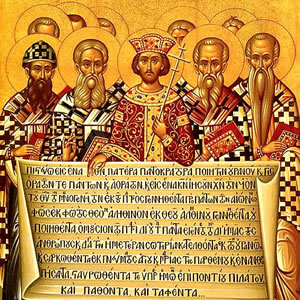 What was the Council of Nicaea?
The First Council of Nicaea was a council of Christian bishops convened in the Bithynian city of Nicaea (now ?znik, Bursa province, Turkey) by the Roman Emperor Constantine I in 325 AD. Its main accomplishments were settlement of the Christological issue of the divine nature of God the Son and his relationship to God the Father, the construction of the first part of the Nicene Creed, establishing uniform observance of the date of Easter, and promulgation of early canon law.
 Who is Kegan Chandler?
Kegan Chandler is a Christian author and researcher of Early Christianity, pagan religion, and Gnosticism. He is an adjunct professor at Atlanta Bible College. Chandler holds a Master of Theology from Campbellsville University's School of Theology, where he studied Church History and Theology, and is a graduate of SCAD University, where he studied Graeco-Roman drama, medieval literature, and dramatic writing. He is the author of the forthcoming book 'Constantine and the Divine Mind' (Wipf and Stock, TBD), and 'The God of Jesus in Light of Christian Dogma' (Restoration Fellowship, 2016). He is also an award-winning screenwriter, and currently writes for his blog on Church history. Chandler also sits on the board of directors of the Unitarian Christian Alliance (formed 2019), and New Life Ministries of America, Inc., a small non-profit which has been producing Christian literature and financing overseas missions since 1994.
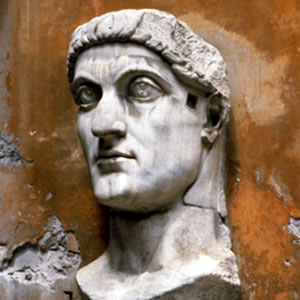 Who was Constantine?
Constantine the Great (27 February 272 AD-22 May 337 AD) was a Roman Emperor who ruled between 306 and 337 AD. Born on the territory now known as Nis, located in Serbia, he was the son of Flavius Valerius Constantius, a Roman Army officer of Illyrian origins. His mother Helena was Greek. His father became Caesar, the deputy emperor in the west, in 293 AD. Constantine was sent east, where he rose through the ranks to become a military tribune under Emperors Diocletian and Galerius. Constantine was the first Roman emperor to convert to Christianity. Although he lived most of his life as a pagan, he joined the Christian faith on his deathbed, being baptised by Eusebius of Nicomedia. He played an influential role in the proclamation of the Edict of Milan in 313, which declared religious tolerance for Christianity in the Roman empire. He called the First Council of Nicaea in 325 AD that produced the statement of Christian belief known as the Nicene Creed.
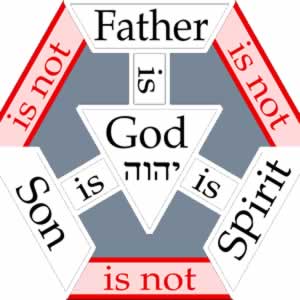 What is Homoousios?
Homoousios or Homoousion ('same in being, same in essence') is a Christian theological term. Homoousios is most notably used in the Nicene Creed in 325 AD, for describing Jesus (God the Son) as "same in being" or "same in essence" with God the Father. The same term was later also applied to the Holy Spirit in order to designate him as being "same in essence" with the Father and the Son. Those notions became cornerstones of theology in Nicene Christianity, and also represent one of the most important theological concepts within the Trinitarian doctrinal understanding of God.
Where is Nicaea?Nicaea or Nicea was an ancient city in northwestern Anatolia. It is primarily known as the site of the First and Second Councils of Nicaea (the first and seventh Ecumenical councils in the early history of the Christian Church), the Nicene Creed (which comes from the First Council), and as the capital city of the Empire of Nicaea following the Fourth Crusade in 1204, until the recapture of Constantinople by the Byzantines in 1261.
 What is Pagan?
Paganism is a term first used in the fourth century by early Christians. It was applied on populations of the Roman Empire who practiced polytheism, either because they were increasingly rural and provincial relative to the Christian population or because they were not milites Christi (soldiers of Christ). Alternate terms in Christian texts for the same group were hellene, gentile, and heathen. Pagan and paganism were pejorative terms for the same polytheistic group, implying its inferiority. Paganism has broadly connoted the "religion of the peasantry", and for much of its history was a derogatory term. Both during and after the Middle Ages, pagan was a pejorative term that was applied to any non-Abrahamic or unfamiliar religion, and the term presumed a belief in false god(s).
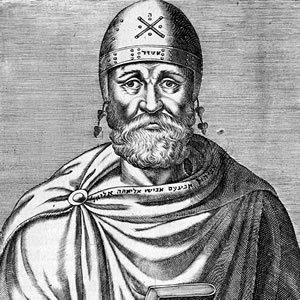 Who was Philo?
Philo of Alexandria (20 BC-50 AD) was a Hellenistic Jewish philosopher who lived in Alexandria, in the Roman province of Egypt. Philo used philosophical allegory to harmonize Jewish scripture, mainly the Torah, with Greek philosophy. His method followed the practices of both Jewish exegesis and Stoic philosophy. His allegorical exegesis was important for some Christian Church Fathers, but he had very little reception history within the Rabbinic Judaism. He adopted allegorical instead of literal interpretations of the Hebrew Bible. Some scholars hold that his concept of the Logos as God's creative principle influenced early Christology.
 Who are ONS?
The Office for National Statistics (ONS) is the official national statistical institute of the United Kingdom.