Uploaded: 09 Oct 2013 (13 years ago) · Shared: 05 Aug 2017
Duration: 32:00
Video Description
Explore the fascinating intersections of faith, symbolism, and early history in this thought-provoking examination of Christian origins. Delving into the rich tapestry of ancient texts, this discussion examines how figurative language and historical milestones—from ancient Egyptian parallels like Horus to the pivotal reign of Emperor Constantine—shaped early theological perspectives. By questioning strictly literal interpretations of the Bible, the video invites viewers to reflect on the deeper allegorical meanings embedded within traditional scriptures.
Designed for seekers of truth and students of comparative religion, this engaging dialogue encourages open-minded reflection on how culture and history influence modern belief systems. Whether exploring the symbolism of the twelve stars or the evolution of Church traditions, this video offers unique insights for anyone interested in scriptural interpretation, religious history, and the enduring human search for divine connection beyond rigid institutional
Explore More
Constantine Sun God Horus GODSearch Google Search Explore Topics
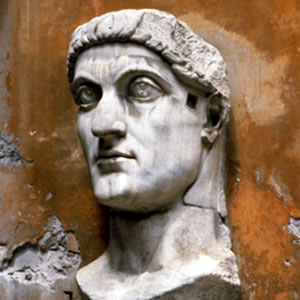 Who was Constantine?
Constantine the Great (27 February 272 AD-22 May 337 AD) was a Roman Emperor who ruled between 306 and 337 AD. Born on the territory now known as Nis, located in Serbia, he was the son of Flavius Valerius Constantius, a Roman Army officer of Illyrian origins. His mother Helena was Greek. His father became Caesar, the deputy emperor in the west, in 293 AD. Constantine was sent east, where he rose through the ranks to become a military tribune under Emperors Diocletian and Galerius. Constantine was the first Roman emperor to convert to Christianity. Although he lived most of his life as a pagan, he joined the Christian faith on his deathbed, being baptised by Eusebius of Nicomedia. He played an influential role in the proclamation of the Edict of Milan in 313, which declared religious tolerance for Christianity in the Roman empire. He called the First Council of Nicaea in 325 AD that produced the statement of Christian belief known as the Nicene Creed.
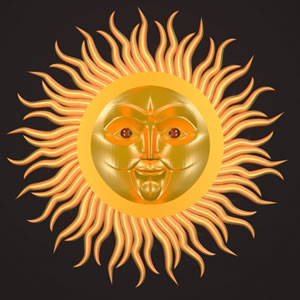 What is Sun God?
A solar deity (also sun god or sun goddess) is a sky deity. The diety represents the Sun, or an aspect of it, usually by its perceived power and strength. Solar deities and sun worship can be found throughout most of recorded history in various forms. The Sun is sometimes referred to by its Latin name Sol or by its Greek name Helios.
 Who was Horus?
Horus is one of the most significant ancient Egyptian deities. He was worshipped from at least the late prehistoric Egypt until the Ptolemaic Kingdom and Roman Egypt. Different forms of Horus are recorded in history and these are treated as distinct gods by Egyptologists. He was most often depicted as a falcon, most likely a lanner falcon or peregrine falcon, or as a man with a falcon head. The most commonly encountered family relationship describes Horus as the son of Isis and Osiris, and he plays a key role in the Osiris myth as Osiris's heir and the rival to Set, the murderer of Osiris.
 Who is GOD?
In monotheism and henotheism, God is conceived as the Supreme Being and principal object of faith. The concept of God as described by theologians commonly includes the attributes of omniscience (infinite knowledge), omnipotence (unlimited power), omnipresence (present everywhere), omnibenevolence (perfect goodness), divine simplicity, and eternal and necessary existence. In theism, God is the creator and sustainer of the universe In deism, God is the creator, but not the sustainer, of the universe Monotheism is the belief in the existence of one God or in the oneness of God In pantheism, God is the universe itself In atheism, God is purported not to exist, while deemed unknown or unknowable within the context of agnosticism.