Uploaded: 17 Dec 2018 (8 years ago) · Shared: 21 Aug 2019
Duration: 1:17
Video Description
In this insightful podcast episode, guest Kegan Chandler delves into the early history of the Christian Church to explore how Emperor Constantine influenced foundational theological definitions. Examining the pivotal Council of Nicaea in 325 AD, Chandler addresses why Constantine proposed the controversial Greek term homoousios, translated as "same essence," to define the nature of Christ. By bridging his own religious background with emerging Christian faith traditions, the Roman emperor helped shape key doctrines that defined orthodoxy and unified a divided empire.
Chandler shares compelling historical research regarding how diverse theological perspectives, from subordinationism to monarchianism, navigated this crucial decision. This engaging discussion offers valuable historical insights for scholars and believers seeking to understand the complex evolution of early Church history, imperial politics, and Christian doctrine.
Explore More
Kegan Chandler Christianity Constantine PaganSearch Google Search Explore Topics
 Who is Kegan Chandler?
Kegan Chandler is a Christian author and researcher of Early Christianity, pagan religion, and Gnosticism. He is an adjunct professor at Atlanta Bible College. Chandler holds a Master of Theology from Campbellsville University's School of Theology, where he studied Church History and Theology, and is a graduate of SCAD University, where he studied Graeco-Roman drama, medieval literature, and dramatic writing. He is the author of the forthcoming book 'Constantine and the Divine Mind' (Wipf and Stock, TBD), and 'The God of Jesus in Light of Christian Dogma' (Restoration Fellowship, 2016). He is also an award-winning screenwriter, and currently writes for his blog on Church history. Chandler also sits on the board of directors of the Unitarian Christian Alliance (formed 2019), and New Life Ministries of America, Inc., a small non-profit which has been producing Christian literature and financing overseas missions since 1994.
 What is Christianity?
Christianity is a global religion centered on the life and teachings of Jesus Christ, who followers believe is the Son of God. It's a monotheistic faith, meaning Christians believe in one God who exists in three co-equal persons: God the Father, God the Son (Jesus Christ), and the Holy Spirit. Christianity is based on the Bible, with the Old Testament and New Testament serving as sacred texts.
 Who was Constantine?
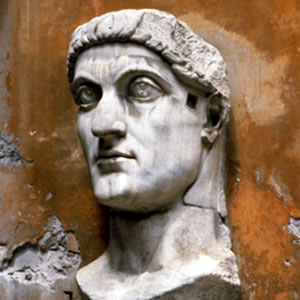
Constantine the Great (27 February 272 AD-22 May 337 AD) was a Roman Emperor who ruled between 306 and 337 AD. Born on the territory now known as Nis, located in Serbia, he was the son of Flavius Valerius Constantius, a Roman Army officer of Illyrian origins. His mother Helena was Greek. His father became Caesar, the deputy emperor in the west, in 293 AD. Constantine was sent east, where he rose through the ranks to become a military tribune under Emperors Diocletian and Galerius. Constantine was the first Roman emperor to convert to Christianity. Although he lived most of his life as a pagan, he joined the Christian faith on his deathbed, being baptised by Eusebius of Nicomedia. He played an influential role in the proclamation of the Edict of Milan in 313, which declared religious tolerance for Christianity in the Roman empire. He called the First Council of Nicaea in 325 AD that produced the statement of Christian belief known as the Nicene Creed.
 What is Pagan?
Paganism is a term first used in the fourth century by early Christians. It was applied on populations of the Roman Empire who practiced polytheism, either because they were increasingly rural and provincial relative to the Christian population or because they were not milites Christi (soldiers of Christ). Alternate terms in Christian texts for the same group were hellene, gentile, and heathen. Pagan and paganism were pejorative terms for the same polytheistic group, implying its inferiority. Paganism has broadly connoted the "religion of the peasantry", and for much of its history was a derogatory term. Both during and after the Middle Ages, pagan was a pejorative term that was applied to any non-Abrahamic or unfamiliar religion, and the term presumed a belief in false god(s).