Youtube Description:
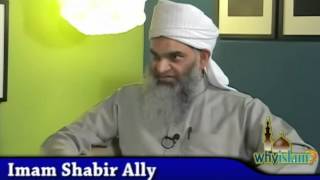
Dr. Shabir Ally and Dr. Safiyyah Ally respond to a viewer's question about whether prophets in Islam are sinless. Dr. Shabir explains that Islamic tradition holds to the doctrine of isma, meaning that prophets are divinely protected from major sins or moral failures that would compromise their role as trustworthy messengers and moral exemplars. While prophets may make minor mistakes, as seen in the Quranic account of the Prophet Muhammad (peace be upon him) and the blind man, these are not considered serious sins but human lapses that God corrects. Dr. Shabir contrasts this with the biblical portrayal of prophets, which includes major moral failings, and notes that the Islamic view maintains a high moral standard for prophets while acknowledging their humanity. This perspective also reflects Islam’s view of human beings as essentially good and capable of repentance, rather than inherently sinful.
If you enjoy this video, please support our work financially by:
Visiting our website OR
Subscribing monthly at Patreon.com/QuranSpeaks
► DONATE:
► SUBSCRIBE:
Dr. Shabir Ally and Dr. Safiyyah Ally respond to a viewer's question about whether prophets in Islam are sinless. Dr. Shabir explains that Islamic tradition holds to the doctrine of isma, meaning that prophets are divinely protected from major sins or moral failures that would compromise their role as trustworthy messengers and moral exemplars. While prophets may make minor mistakes, as seen in the Quranic account of the Prophet Muhammad (peace be upon him) and the blind man, these are not considered serious sins but human lapses that God corrects. Dr. Shabir contrasts this with the biblical portrayal of prophets, which includes major moral failings, and notes that the Islamic view maintains a high moral standard for prophets while acknowledging their humanity. This perspective also reflects Islam’s view of human beings as essentially good and capable of repentance, rather than inherently sinful.
If you enjoy this video, please support our work financially by:
Visiting our website OR
Subscribing monthly at Patreon.com/QuranSpeaks
► DONATE:
► SUBSCRIBE:
Explore More
 Who is Shabir Ally?
Shabir Ally is a Canadian Muslim preacher who serves as the president of the Islamic Information & Dawah Centre International in Toronto, Ontario, Canada. Ally is known for promoting a contextual interpretation of the Quranic verses, but seeks to
find their justification in similar expressions within the Christian Bible. He has debated William Lane Craig, David Wood, Nabeel Qureshi, Michael Licona and John Dominic Crossan. He has also debated apologists James White and Jay Smith.
 What is a Prophet?
In religion, a prophet is an individual who is regarded as being in contact with a divine being and is said to speak on that entity's behalf. They claim to be serving as an intermediary with humanity by delivering messages or teachings from the
supernatural source to other people. The message that the prophet conveys is called a prophecy. In Islam, all prophetic messengers are prophets (such as Adam, Noah, Abraham, Moses, Jesus, and Muhammad) though not all prophets are prophetic messengers. The primary distinction is that a prophet is required to demonstrate God's law through his actions, character, and behavior without necessarily calling people to follow him, while a prophetic messenger is required to pronounce God's law (i.e. revelation) and call his people to submit and follow him.
 What is Sin?
In Abrahamic contexts, sin is the act of violating God's will. Sin can also be viewed as anything that violates the ideal relationship between an individual and God; or as any diversion from the ideal order for human living. To sin has been defined
as "to miss the mark".
Sins fall in a spectrum from minor errors to deadly misdeeds. Catholicism regards the least corrupt sins as venial sins which are part of human living and carry immediate consequences on earth, and, if unrepented for, more painful purgation, assuming the person is destined to heaven, as it is written in the formation letter "Purgatory", "most of the early Fathers of the Church speak of a cleansing fire, though we cannot tell whether this means actual or spiritual fire."
Conversely, sins of great evil are mortal sins which bring the consequence of hell if they are not addressed either through an act of perfect contrition or going to confession about them.