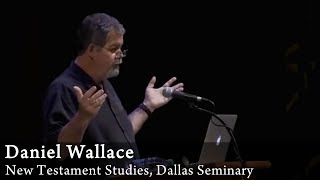
763 views
·
Last viewed: 1 day ago
Uploaded: 29 Sep 2013 (13 years ago) · Shared: 07 Jun 2017
Duration: 43:52
Uploaded: 29 Sep 2013 (13 years ago) · Shared: 07 Jun 2017
Duration: 43:52
Youtube Description
Dr. Dale Tuggy of State University of New York (SUNY, Fredonia) presents an illuminating analysis of the Theology/ Christology of four key writers ofthe 150 CE -- 250 CE period. Dr. Tuggy demonstrates that they were 'unitarian' in their view of God rather than Trinitarian. The writers considered are Justin Martyr, Irenaeus, Tertullian and Origen. This is a presentation not to be missed by serious students of the history of post-biblical Christian theology. This Christian Video produced by J. Dan Gill of 21st Century Reformation. For other presentations and interviews go to http://www.21stcr.org. To visit Dale Tuggy's blog, go to http://www.trinities.org/blog/
Explore More
Christianity Dale Tuggy UnitarianSearch Google Search Explore Topics
 What is Christianity?
Christianity is a global religion centered on the life and teachings of Jesus Christ, who followers believe is the Son of God. It's a monotheistic faith, meaning Christians believe in one God who exists in three co-equal persons: God the Father, God the Son (Jesus Christ), and the Holy Spirit. Christianity is based on the Bible, with the Old Testament and New Testament serving as sacred texts.
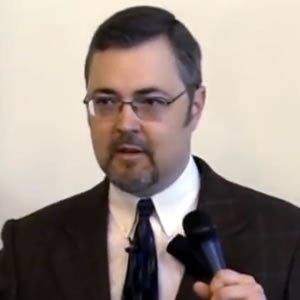 Who is Dale Tuggy?
Dale Tuggy (PhD, Brown University) is Professor of Philosophy at the State University of New York at Fredonia. He has authored about two dozen peer-reviewed articles and book chapters relating to the Trinity and other topics in analytic theology and philosophy of religion. Tuggy takes an interest in World Religions, Philosophy of Religion courses, the history of Philosophy, Eastern philosophies and religions, and Introduction to Philosophy.
 What is Unitarian?
Unitarianism can be viewed as a form of Nontrinitarianism which is a form of Christianity that rejects the mainstream Christian doctrine of the Trinity. The teaching that God is three distinct hypostases or persons who are coeternal, coequal, and indivisibly united in one being, or essence (from the Greek ousia). Certain religious groups that emerged during the Protestant Reformation have historically been known as antitrinitarian, but are not considered Protestant in popular discourse due to their nontrinitarian nature. According to churches that consider the decisions of ecumenical councils final, Trinitarianism was definitively declared to be Christian doctrine at the 4th-century ecumenical councils, that of the First Council of Nicaea (325 AD), which declared the full divinity of the Son, and the First Council of Constantinople (381 AD), which declared the divinity of the Holy Spirit. In terms of number of adherents, nontrinitarian denominations comprise a minority of modern Christianity. The largest nontrinitarian Christian denominations are The Church of Jesus Christ of Latter-day Saints ("Mormons") and Jehovah's Witnesses.