Explore More
Al-Maidah Initiative Polytheism Pre-Islam Moon God Allah Hubal Islam Kabah GODSearch Google Search Explore Topics
 Who are Al-Maidah Initiative?
The Al-Ma'idah Initiative hosts real, honest conversations about Christianity, Islam, worldview and politics. Often interactions between religions are either polemical or engage in syncretism. We want Christians and Muslims to clearly articulate what they believe and where they disagree, all while on friendly terms. Conversation without compromise.
 What is Polytheism?
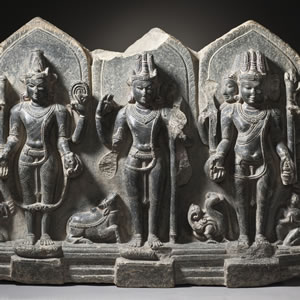
Polytheism is the worship of or belief in multiple deities, usually as a pantheon of gods and goddesses. In most religions which accept polytheism, the different gods and goddesses are representations of forces of nature or ancestral principles, and can be viewed either as autonomous or as aspects or emanations of a creator deity or transcendental absolute principle (monistic theologies), which manifests immanently in nature (panentheistic and pantheistic theologies). Most of the polytheistic deities of ancient religions, with the notable exceptions of the Ancient Egyptian and Hindu deities, were conceived as having physical bodies. Polytheism is a type of theism. Within theism, it contrasts with monotheism, the belief in a singular God, in most cases transcendent. Important polytheistic religions practiced today include Chinese traditional religion, Hinduism, Japanese Shinto, and various neopagan faiths.
 What is Pre-Islam?
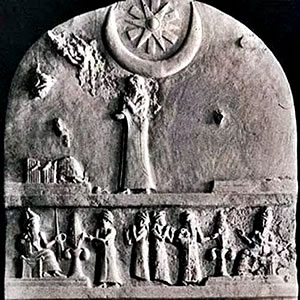
Pre-Islam refers to the period in history before the emergence and widespread adoption of Islam. It specifically denotes the time before the Prophet Muhammad's revelations and the establishment of Islamic faith, culture, and civilization.
 Who is the Moon God?
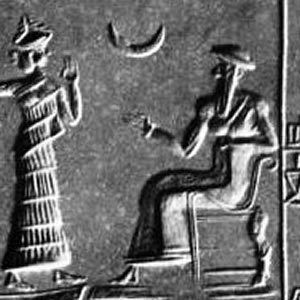
In modern times it is claimed Allah (God in Islam) historically originates as a Moon God. Therefore this Moon God was worshipped in pre-Islamic Arabia originates in early 20th-century scholarship, most prominently advocated by American evangelicals from the 1990s. The idea was proposed by archeologist Hugo Winckler in 1901. It was proliferated in the USA in the 1990s, first via the publication of Robert Morey's pamphlet The Moon-god Allah: In Archeology of the Middle East (1994). Morey argues that "Allah" was the name of a moon god in pre-Islamic Arabic mythology, the implication being that "Allah" as the term for God in Islam implies that Muslims worship a different deity than the Judeo-Christian one. Joseph Lumbard, a professor of classical Islam, has stated the idea is "not only an insult to Muslims but also an insult to Arab Christians who use the name 'Allah' for God."
 Who is Allah?
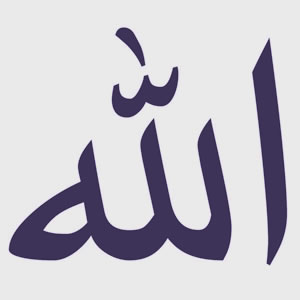
Allah is the Arabic word for God in Abrahamic religions. In the English language, the word generally refers to God in Islam. The word is thought to be derived by contraction from al-ilah, which means 'the god', and is related to El and Elah, the Hebrew and Aramaic words for God. The word Allah has been used by Arabic people of different religions since pre-Islamic times. More specifically, it has been used as a term for God by Muslims (both Arab and non-Arab) and Arab Christians.
Who was Hubal?Hubal was a deity worshipped in pre-Islamic Arabia, particularly by the Quraysh tribe at the Kaaba in Mecca. He was believed to be the head moon-god of the Arab pantheon and was worshipped through rituals involving divination and arrow tossing. The idol of Hubal was one of many in the Kaaba and was eventually destroyed by Muhammad upon his conquest of Mecca.
 What is Islam?
One of the major religions of the world, Islam literally translates to "submission," as a follower of Islam (Muslims) devotes their life to that of their God. The religion began with the teachings of Muhammad in the 7th century. The theology of Islam is based on the Qur'an, which was given to Muhammad by God. Some of the major fundamental principles of Islam include the Five Pillars, which hope to unite all Muslims into a community. Two different factions of Muslims exist - the majority are known as Sunni, with a small percentage known as Shi'a - both predominantly reside throughout the Middle East. Muhammad died in 632 AD and the religion of Islam formally started after his death. The Quran was formally compiled and finalised in 650 AD, prior to which it was 'memorised' and written across many parchments.
 What is Kabah?
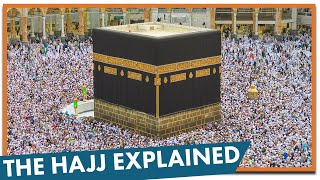
The Black Stone (al-Hajaru al-Aswad, "Black Stone") is a rock set into the eastern corner of the Kaaba, the ancient building located in the center of the Grand Mosque in Mecca, Saudi Arabia. It is revered by Muslims as an Islamic relic which, according to Muslim tradition, dates back to the time of Adam and Eve. The stone was venerated at the Kaaba in pre-Islamic pagan times. According to Islamic tradition, it was set intact into the Kaaba's wall by the prophet Muhammad in 605 CE, five years before his first revelation. Since then it has been broken into fragments and is now cemented into a silver frame in the side of the Kaaba. Muslim pilgrims circle the Kaaba as a part of the tawaf ritual during the hajj and many try to stop and kiss the Black Stone, emulating the kiss that Islamic tradition records that it received from Muhammad. Muslims do not worship the Black Stone.
 Who is GOD?
In monotheism and henotheism, God is conceived as the Supreme Being and principal object of faith. The concept of God as described by theologians commonly includes the attributes of omniscience (infinite knowledge), omnipotence (unlimited power), omnipresence (present everywhere), omnibenevolence (perfect goodness), divine simplicity, and eternal and necessary existence. In theism, God is the creator and sustainer of the universe In deism, God is the creator, but not the sustainer, of the universe Monotheism is the belief in the existence of one God or in the oneness of God In pantheism, God is the universe itself In atheism, God is purported not to exist, while deemed unknown or unknowable within the context of agnosticism.