1709 views
·
Last viewed: 7 mins ago
Uploaded: 20 Mar 2019 (8 years ago) · Shared: 28 Mar 2019
Duration: 7:46
Uploaded: 20 Mar 2019 (8 years ago) · Shared: 28 Mar 2019
Duration: 7:46
Youtube Description
***SHORT CLIP*** The Aqeedah (beliefs) of the Pagan Arabs and Calling Upon Awliya [7 minutes] This clip was taken from the beginning of thefollowing lecture:
'Seerah of the Prophet Muhammad, Part 6: The Birth of the Prophet and Why Arabia?'
This series has been highly recommend by many Muslims. You can watch it as a family, listen to it on your way to work, or play it while doing chores or while at the gym.
Disclaimer: as Dr. Yasir Qadhi (hafidhullah) stated in this talk, we sometimes put people above their place, and give them a status higher than they deserve. This includes Dr. Yasir Qadhi himself as he would agree. It is our belief as Ahlus Sunnah, that no scholar or da'ee is perfect. Therefore, we don't have to agree with every single thing Dr. Yasir Qadhi says or does (i.e. his political stances). But we can respect and appreciate his points when he brings us evidence regarding what the best human being did, the Prophet Muhammad (s), and how the Sahabah understood Islam. And all praise and perfection belongs to Allah subhana wa t'ala, 'You alone we worship, and You alone we ask for help' (Al-Fatihah 1:5).
__________
If you call upon them, they cannot hear your calls. And if they were to hear, they could not respond to you. On the Day of Judgment they will disown your worship ˹of them˺. And no one can inform you ˹O Prophet˺ like the All-Knowledgeable.
[Fatir 35:14]
Muḥammad is no more than a messenger; other messengers have gone before him. If he were to die or to be killed, would you regress into disbelief? Those who do so will not harm Allah whatsoever. And Allah will reward those who are grateful.
[Ale Imran 3:144]
Say (O Muhammad SAW): 'I possess no power of benefit or hurt to myself except as Allah wills. If I had the knowledge of the Ghaib (unseen), I should have secured for myself an abundance of wealth, and no evil should have touched me. I am but a warner, and a bringer of glad tidings unto people who believe.'
[Al'Araf 7:188]
You ˹alone˺ we worship and You ˹alone˺ we ask for help.
[Al Fatihah 1:5]
Or ˹ask them,˺ “Who responds to the distressed when they cry to Him, relieving ˹their˺ affliction, and ˹Who˺ makes you successors in the earth? Is it another god besides Allah? Yet you are hardly mindful!”
[AlNaml 27:62]
In Sunan At-Tirmidhi 3247: An-Nu’man ibn Basheer reported: I heard the Prophet, peace and blessings be upon him, say, “Supplication is worship.” Then the Prophet recited the verse, “Your Lord says: Call upon Me and I will respond to you. Verily, those who disdain My worship will enter Hell in humiliation.” [Ghafir 40:60]
'...so invoke not anyone along with Allah.' [AlJinn 72: 18]
Some Ayaat related to this topic:
AlFatihah 1: 05
AlBaqarah 2:186
AhleImran 3:144
Al'Araf 7:180
Al'Araf 7:188
Yunus 10:18
Yunus 10:33
ArRaad 13:14
AlFurqan 25:68
AlNaml 27:62
AlNaml 27:65
AlNaml 27:80
Saba 34:23
Fatir 35:13
Fatir 35:14
Fatir 35:22
AzZumar 39:03
AzZumar 39:30
Ghafir 40:60
AlAhqaf 46:05
AlAhqaf 46:06
AlJinn 72: 18
Explore More
Yasir Qadhi Polytheism Pre-Islam Moon God Allah Arabs Hubal Islam Pagan GODSearch Google Search Explore Topics
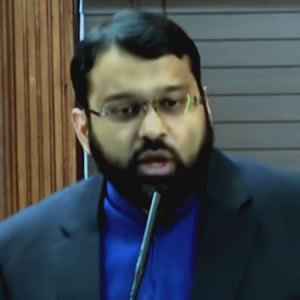 Who is Yasir Qadhi?
Yasir Qadhi is an American Muslim scholar and writer of Pakistani descent. Since 2001, he has served as Dean of Academic Affairs at the Al-Maghrib Institute, an international Islamic educational institution with a center in Houston, Texas. He also teaches in the Religious Studies department at Rhodes College in Memphis, Tennessee, where he resides. Qadhi has written numerous books and lectured widely on Islam and contemporary Muslim issues. A 2011 The New York Times Magazine essay by Andea Elliott described Qadhi as "one of the most influential conservative clerics in American Islam."
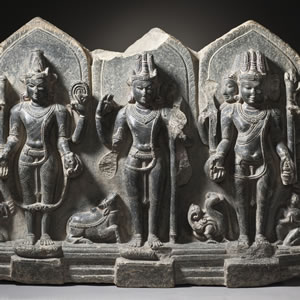 What is Polytheism?
Polytheism is the worship of or belief in multiple deities, usually as a pantheon of gods and goddesses. In most religions which accept polytheism, the different gods and goddesses are representations of forces of nature or ancestral principles, and can be viewed either as autonomous or as aspects or emanations of a creator deity or transcendental absolute principle (monistic theologies), which manifests immanently in nature (panentheistic and pantheistic theologies). Most of the polytheistic deities of ancient religions, with the notable exceptions of the Ancient Egyptian and Hindu deities, were conceived as having physical bodies. Polytheism is a type of theism. Within theism, it contrasts with monotheism, the belief in a singular God, in most cases transcendent. Important polytheistic religions practiced today include Chinese traditional religion, Hinduism, Japanese Shinto, and various neopagan faiths.
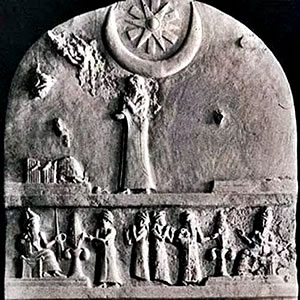 What is Pre-Islam?
Pre-Islam refers to the period in history before the emergence and widespread adoption of Islam. It specifically denotes the time before the Prophet Muhammad's revelations and the establishment of Islamic faith, culture, and civilization.
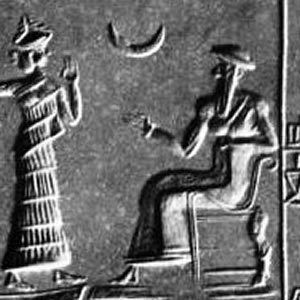 Who is the Moon God?
In modern times it is claimed Allah (God in Islam) historically originates as a Moon God. Therefore this Moon God was worshipped in pre-Islamic Arabia originates in early 20th-century scholarship, most prominently advocated by American evangelicals from the 1990s. The idea was proposed by archeologist Hugo Winckler in 1901. It was proliferated in the USA in the 1990s, first via the publication of Robert Morey's pamphlet The Moon-god Allah: In Archeology of the Middle East (1994). Morey argues that "Allah" was the name of a moon god in pre-Islamic Arabic mythology, the implication being that "Allah" as the term for God in Islam implies that Muslims worship a different deity than the Judeo-Christian one. Joseph Lumbard, a professor of classical Islam, has stated the idea is "not only an insult to Muslims but also an insult to Arab Christians who use the name 'Allah' for God."
 Who is Allah?
Allah is the Arabic word for God in Abrahamic religions. In the English language, the word generally refers to God in Islam. The word is thought to be derived by contraction from al-ilah, which means 'the god', and is related to El and Elah, the Hebrew and Aramaic words for God. The word Allah has been used by Arabic people of different religions since pre-Islamic times. More specifically, it has been used as a term for God by Muslims (both Arab and non-Arab) and Arab Christians.
 Who are Arabs?
Arabs are an ethnic group mainly inhabiting the Arab world in West Asia and North Africa. A significant Arab diaspora is present in various parts of the world. Arabs from Morocco to Iraq share a common bond based on ethnicity, language, culture, history, identity, ancestry, nationalism, geography, unity, and politics which give the region a distinct identity and distinguish it from other parts of the Muslim world. They also have their own customs, literature, music, dance, media, food, clothing, society, sports, architecture, art and, mythology. Arabs have significantly influenced and contributed to human progress in many fields, including science, technology, philosophy, ethics, literature, politics, business, art, music, comedy, theatre, cinema, architecture, food, medicine, and religion. Before Islam, most Arabs followed polytheistic Semitic religion, while some tribes adopted Judaism or Christianity and a few individuals, known as the hanifs, followed a form of monotheism.
Who was Hubal?Hubal was a deity worshipped in pre-Islamic Arabia, particularly by the Quraysh tribe at the Kaaba in Mecca. He was believed to be the head moon-god of the Arab pantheon and was worshipped through rituals involving divination and arrow tossing. The idol of Hubal was one of many in the Kaaba and was eventually destroyed by Muhammad upon his conquest of Mecca.
 What is Islam?
One of the major religions of the world, Islam literally translates to "submission," as a follower of Islam (Muslims) devotes their life to that of their God. The religion began with the teachings of Muhammad in the 7th century. The theology of Islam is based on the Qur'an, which was given to Muhammad by God. Some of the major fundamental principles of Islam include the Five Pillars, which hope to unite all Muslims into a community. Two different factions of Muslims exist - the majority are known as Sunni, with a small percentage known as Shi'a - both predominantly reside throughout the Middle East. Muhammad died in 632 AD and the religion of Islam formally started after his death. The Quran was formally compiled and finalised in 650 AD, prior to which it was 'memorised' and written across many parchments.
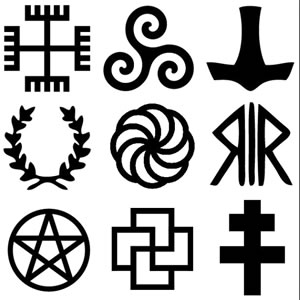 What is Pagan?
Paganism is a term first used in the fourth century by early Christians. It was applied on populations of the Roman Empire who practiced polytheism, either because they were increasingly rural and provincial relative to the Christian population or because they were not milites Christi (soldiers of Christ). Alternate terms in Christian texts for the same group were hellene, gentile, and heathen. Pagan and paganism were pejorative terms for the same polytheistic group, implying its inferiority. Paganism has broadly connoted the "religion of the peasantry", and for much of its history was a derogatory term. Both during and after the Middle Ages, pagan was a pejorative term that was applied to any non-Abrahamic or unfamiliar religion, and the term presumed a belief in false god(s).
 Who is GOD?
In monotheism and henotheism, God is conceived as the Supreme Being and principal object of faith. The concept of God as described by theologians commonly includes the attributes of omniscience (infinite knowledge), omnipotence (unlimited power), omnipresence (present everywhere), omnibenevolence (perfect goodness), divine simplicity, and eternal and necessary existence. In theism, God is the creator and sustainer of the universe In deism, God is the creator, but not the sustainer, of the universe Monotheism is the belief in the existence of one God or in the oneness of God In pantheism, God is the universe itself In atheism, God is purported not to exist, while deemed unknown or unknowable within the context of agnosticism.