554 views
·
Last viewed: 13 hrs ago
Uploaded: 29 Sep 2016 (10 years ago) · Shared: 12 Dec 2017
Duration: 10:12
Uploaded: 29 Sep 2016 (10 years ago) · Shared: 12 Dec 2017
Duration: 10:12
Youtube Description
An engaging conversation between a Christian Pastor and a Muslim Imam, 'Out of Context' is a 14 part Interview series answers pressing questions aboutIslam and gives valuable insight into the spirit of the faith.
In Part 5 of the interview with Dallas-based Pastor Mike Baughman, Imam Omar Suleiman gives the definitive word on the meaning of Sharia law and how it must be distinguished from Islamic penal code. Lamenting the fact that Muslims often have to distance themselves from terms that have been abused because they don’t have sufficient time to explain them, Suleiman begins by noting that linguistically, the word “sharia” in Arabic means “a path leading to water”. It does not refer to law per se, but refers to the idea of divine legislation. It is not synonymous with heads and hands flying off, nor is it synonymous with criminal law. While there is a component of it that is government-based, the main component of it is individual and pertains to personal practice and maintaining one’s religious identity. On the state level, the “hudud” or penal code aspect, is a very small, misunderstood, part of sharia that is purely discretionary. In the first 1,000 years of Islamic history, there was not a single narrated case of stoning, for instance, because the conditions dictated in the Quran for such punishment are so impossible to meet that it becomes impossible to implement it. The horrors propagated by groups such as ISIS are absolutely alien to Islam, just as the concept of “taqeyya” - that Muslims can deliberately deceive others to secretly advance the faith. There is no evidence in neither the Quran nor the tradition of the Prophet to support this notion.
Please visit https://www.bayyinah.org to support our vision.
Explore More
Yaqeen Institute Jonathan Brown Omar Suleiman ShariahSearch Google Search Explore Topics
 Who are Yaqeen Institute? (MEMBER OF YI)
The Yaqeen Institute for Islamic Research is an independent American research institute and think tank founded in 2016, mainly interested in the advanced study of modernity, Islam and Muslim societies. It works to aggregate complex Islamic topics for audiences outside of the field of Islamic academia. Yaqeen Institute was founded by American Islamic scholar Omar Suleiman and is based in Irving, Texas. It has published works have covered a variety of topics at the intersection of Islam, including perennialism, international politics, parenting, and historical preservation of Islamic texts. It works to "pioneer Islamic research in cutting-edge, creative formats."
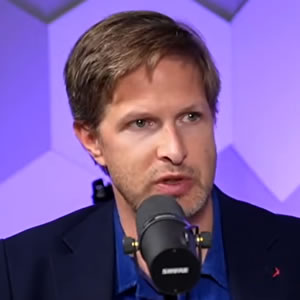 Who is Jonathan Brown? (MEMBER OF YI)
Jonathan Andrew Cleveland Brown (born 1977) is an American scholar of Islamic studies. Since 2012, he has been associate professor at Georgetown University's Edmund A. Walsh School of Foreign Service. He holds the Alwaleed bin Talal Chair of Islamic Civilization at Georgetown University. Brown has also published articles in the fields of Hadith, Islamic law, Salafism, Sufism, and Arabic language.
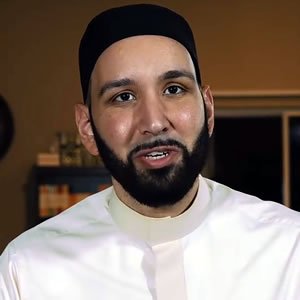 Who is Omar Suleiman? (MEMBER OF YI)
Omar Suleiman (born 1986) is an American Muslim scholar, civil rights activist and speaker. He is the Founder and President of the Yaqeen Institute for Islamic Research professor of Islamic Studies at Southern Methodist University. Suleiman is also the Resident Scholar of the Valley Ranch Islamic Center and the Co-Chair of Faith Forward Dallas at Thanks-Giving Square.
 What is Shariah?
Sharia, Sharia law, or Islamic law is the religious law forming part of the Islamic tradition. It is derived from the religious precepts of Islam, particularly the Quran and the Hadith. In Arabic, the term shariah refers to God's immutable divine law and is contrasted with fiqh, which refers to its human scholarly interpretations. It has been described as "one of the major intellectual achievements of Islam" and its importance in Islam has been compared to that of theology in Christianity. The manner of its application in modern times has been a subject of dispute between Muslim traditionalists and reformists.