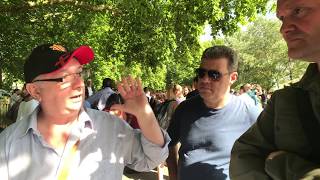
Constantine worshipped Sol Invictus, the pagan Sun God. Christians today worship the same invincible Sun God - Richard Rives

   2:38
749 views  ·  Last viewed: 20 hrs ago
Uploaded: 14 Feb 2017   (10 years ago)  ·  Shared: 03 Sep 2017

Video Description (from Youtube)

Constantine is recognized as “THE FIRST CHRISTIAN EMPEROR.” What most people are not aware of is that while professing Christianity, Constantine maintained his devotion to the sun god Sol Invictus

the all-inclusive title given to the sun gods by the Roman Emperor Aurelian, some thirty years earlier.

Professing Christianity while practicing paganism, Constantine had the authority as the ruler of the empire to define a new Christianity-not the faith once delivered to the saints, but a new version of Christianity, lacking few aspects of pagan ritual.

Examining the evidence, there is no question that the actions of Constantine have had a great deal to do with the fact that many of the precepts found in contemporary Christianity, the Christianity practiced by most today, are actually based in pagan sun worship. These precepts can be traced, without a doubt, to the sun god to which Constantine was committed- To Sol Invictus, the Invincible Sun.

There is no doubt that Constantine considered himself a Christian, and by today’s standards, he would more than qualify. Within the writings of numerous historians, we find, attributed to Constantine, beautiful prayers of honor and devotion to Christ. His Christianity was not, however, the Christianity described in the Bible. He defined his own version of Christianity, which other than sacrifice and the consultation of oracles, contained practically all of the elements of the pagan sun worship that he was familiar with.

In the book of Matthew, Jesus warned that many people who call Him Lord will not enter into the kingdom of heaven - only those who do the will of His Father which is in heaven.

Is the Christianity you practice based on that described in the Bible or the traditions of men that can be traced directly to the pagan sun worship practiced by Constantine? I encourage you to do a little research. You might be surprised by what you learn.

Earnestly contending for the faith once delivered to the saints,
I’m Richard Rives with Just the Facts.

DISCLAIMER
All videos are shared for educational and information purposes only. All videos are hosted and viewable on Youtube servers. Video titles are generated using the original video title; overall content theme including actual dialogue and speech (Transcript); and A.I-based recommendations with a focus on SEO, keyword density, and internal search functions. The video title does not represent the views held by the Youtube video uploader, or any individual, organisation or business.

If you spot any mistake, omission or give feedback, kindly Contact Us with details

Overview & Key Concepts


Who is Richard Rives?


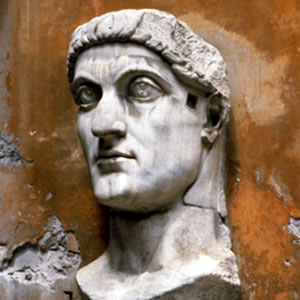
Who was Constantine?

Constantine the Great (27 February 272 AD-22 May 337 AD) was a Roman Emperor who ruled between 306 and 337 AD. Born on the territory now known as Nis

located in Serbia, he was the son of Flavius Valerius Constantius, a Roman Army officer of Illyrian origins. His mother Helena was Greek. His father became Caesar, the deputy emperor in the west, in 293 AD. Constantine was sent east, where he rose through the ranks to become a military tribune under Emperors Diocletian and Galerius. Constantine was the first Roman emperor to convert to Christianity. Although he lived most of his life as a pagan, he joined the Christian faith on his deathbed, being baptised by Eusebius of Nicomedia. He played an influential role in the proclamation of the Edict of Milan in 313, which declared religious tolerance for Christianity in the Roman empire. He called the First Council of Nicaea in 325 AD that produced the statement of Christian belief known as the Nicene Creed.
What is Christian?

Christianity is a global religion centered on the life and teachings of Jesus Christ, who followers believe is the Son of God. It's a monotheistic

faith, meaning Christians believe in one God who exists in three co-equal persons: God the Father, God the Son (Jesus Christ), and the Holy Spirit. Christianity is based on the Bible, with the Old Testament and New Testament serving as sacred texts.

What is Sun God?

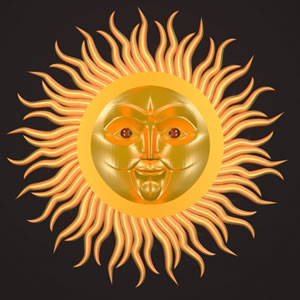
A solar deity (also sun god or sun goddess) is a sky deity. The diety represents the Sun, or an aspect of it, usually by its perceived power and

strength. Solar deities and sun worship can be found throughout most of recorded history in various forms. The Sun is sometimes referred to by its Latin name Sol or by its Greek name Helios.
What is Pagan?

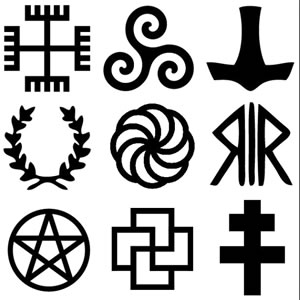
Paganism is a term first used in the fourth century by early Christians. It was applied on populations of the Roman Empire who practiced polytheism

either because they were increasingly rural and provincial relative to the Christian population or because they were not milites Christi (soldiers of Christ). Alternate terms in Christian texts for the same group were hellene, gentile, and heathen. Pagan and paganism were pejorative terms for the same polytheistic group, implying its inferiority. Paganism has broadly connoted the "religion of the peasantry", and for much of its history was a derogatory term. Both during and after the Middle Ages, pagan was a pejorative term that was applied to any non-Abrahamic or unfamiliar religion, and the term presumed a belief in false god(s).

Frequently Asked Questions


1.In 325 AD, did Emperor Constantine burn gospels, writings and religious text?

The books of Arius and his followers, after the first Council of Nicaea (325 C.E.), were burned for heresy by the Roman emperors Constantine, Honorius, and Theodosius I, who published a decree commanding that, 'the doctrine of the Trinity should be embraced by those who would be called catholics; that all others should bear the infamous name of heretics'.


Videos on Constantine (30)

Video: How Christianity Was Invented by Titus Flavius Constantine 2:50:03
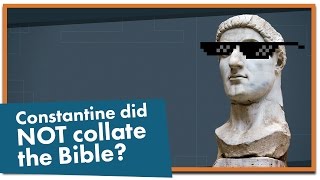
Video: Constantine did not choose the Books of the Bible | ReligionForBreakfast 12:32
Video: Rome and Constantine - Christian History 2/2 48:10
Video: Constantine and Roman Catholicism - Simcha Jacobovici 43:58
Video: Christianity from Judaism to Constantine - Crash Course 11:37
Video: Serapis Christus, Ptolemy and how Constantine created Jesus Christ at the Council of Nicaea - Ray Hagins 51:30
Video: Constantine's Pagan Influence on Christianity - Greg Boyd 5:45
Video: Christianity Before Constantine - Charles Hedrick 51:59
Video: Constantine, Mithras and Paganism of the Church Exposed - Simcha Jacobovici 40:53
Video: The Christian Story: Sun God, Horus, Constantine and 12 Stars 32:00
Video: In 321 AD, Emperor Constantine, a confirmed pagan Sun Worshipper changed the Sabbath from Saturday to Sunday 2:57
Video: Constantine's Sword - James Carroll 2:16
Video: Constantine worshipped Sol Invictus, the pagan Sun God. Christians today worship the same invincible Sun God - Richard Rives 2:38
Video: In 325 AD, Constantine imposed his vision of the Imperial Church on the Early Christians 8:18
Video: Rome: Constantine & The Early Roman Church - Paul Freedman 3/18 45:17
Video: The Deception of Constantine 43:58
Video: Arius, Athanasius & Constantine at Nicaea: Who won the debate? - Richard Rubenstein 55:53
Video: Constantine worshipped the Sun God up until his death - BeyondTV 2:14
Video: Constantine converted to Christianity. Yet remained a blood-thirsty, violent, intolerant Roman Emperor - Doug Michael 2:01
Video: Emperor Constantine was a Pagan who praised Sol Invictus throughout his life - David Fitzgerald 2:28
Video: Emperor Constantine made Christianity the official state religion and forced it on the people - Richard Carrier 0:49
Video: After Nicaea 325 AD, Constantine had Eusebius determine the earliest New Testament canon - Charles Hedrick 1:48
Video: Did Constantine (d. 337 AD) convert to Christianity for political reasons? - Richard Rubenstein 1:58
Video: From 306 AD, Constantine used Christianity to restore power & glory to Rome - Richard Rubenstein 0:48
Video: In 325 AD, the Council of Nicaea defined Jesus as 'Homoousios', of same substance with God - Kegan Chandler 1:17
Video: In 325 AD, the Council of Nicaea defined Jesus as 'Homoousios', of same substance with God - Kegan Chandler 3:21
Video: In 325 AD, the Council of Nicaea defined Jesus as 'Homoousios', of same substance with God - Kegan Chandler 2:14
Video: In 325 AD, the Council of Nicaea defined Jesus as 'Homoousios', of same substance with God - Kegan Chandler 2:29
Video: In 325 AD, the Council of Nicaea defined Jesus as 'Homoousios', of same substance with God - Kegan Chandler 5:51
Video: Emperor Constantine and Augustine influence over the Early Church | Peter Bolland 21:00

EXPLORE TOPICS : SUN GOD | 19 CONSTANTINE | 33 PAGAN | 133 RICHARD RIVES | 2 CHRISTIANITY | 236 CHRISTIAN | 883 GOD | 0

Latest videos  •  6,061 videos  •  0 viewed/24 hour

SUBSCRIBE

Receive the latest news and updates by email - Subscribe Now!
About  |  Q&A  |  Contact Us    •    Terms  |  Privacy  |  Disclaimer  |  Sitemap
Connect:      Facebook  |    Twitter  |    Youtube
MuslimProphets.com is an educational website on the Prophets of God: David, Noah, Abraham, Moses, Jesus and Muhammad, who established the Abrahamic faiths of Judaism, Christianity and Islam. MuslimProphets.com explores contemporary social themes through Scripture, Evidences, Photo, Video, Maps, Current Affairs, Debate and 'alternative' Views held by Theologians, Apologists, Scholars and Street Preachers. Take a Site Tour

In accordance with Islamic etiquette, all prophet names should be followed with 'Peace Be Upon Him (PBUH)'. This is omitted to minimise text.

DISCLAIMER: All website content is for general information and educational purposes only and available in the public domain. Whilst all information comes from sources believed to be reliable, this cannot be guaranteed. External links are provided as a convenience and for informational purposes only. They do not constitute endorsement or approval for any products, services or comments by organizations or individuals. Title and Text links may be edited for external SEO, internal site and keyword search purposes. We bear no responsibility for the accuracy, legality, or content found on any external website or its subsequent links. Unless indicated, all images and content is licensed under a Creative Commons Attribution License distributed by Wikipedia, Wikimedia Commons, Pixabay, Pxhere, Pexels, Unsplash, Flickr and others. All Torah, Psalms, Old and New Testament Bible quotes are from the King James Version (KJV) Holy Bible in the public domain. All Quran quotes are from Taqi-ud-Din al-Hilali/Muhsin Khan English Quran translation.

ALWAYS DO YOUR OWN RESEARCH. If you spot any mistake, error or omission of information, contact us so we can correct it.