Uploaded: 17 Dec 2018 (8 years ago) · Shared: 21 Aug 2019
Duration: 3:21
Video Description
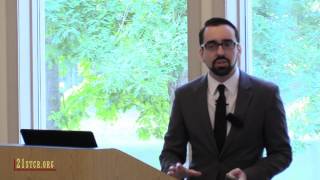
In this insightful video, Kegan Chandler delves into the historical intricacies of early Christian doctrine, focusing on the term "Homoousios" ('same substance') and its insertion by Emperor Constantine. This discussion, rooted in the accounts of Eusebius, sheds light on the significant influence of political power on religious beliefs. For those interested in the early history of Christianity and its intersections with Judaism and Islam, this video offers a nuanced perspective. It explores how theological concepts have shaped and been shaped by historical events, providing valuable insights for followers of all faiths. Whether you are a student of religion, a history enthusiast, or simply curious about the foundations of Christian doctrine, this video is a must-watch.
Explore More
Kegan Chandler Constantine Homoousios EusebiusSearch Google Search Explore Topics
 Who is Kegan Chandler?
Kegan Chandler is a Christian author and researcher of Early Christianity, pagan religion, and Gnosticism. He is an adjunct professor at Atlanta Bible College. Chandler holds a Master of Theology from Campbellsville University's School of Theology, where he studied Church History and Theology, and is a graduate of SCAD University, where he studied Graeco-Roman drama, medieval literature, and dramatic writing. He is the author of the forthcoming book 'Constantine and the Divine Mind' (Wipf and Stock, TBD), and 'The God of Jesus in Light of Christian Dogma' (Restoration Fellowship, 2016). He is also an award-winning screenwriter, and currently writes for his blog on Church history. Chandler also sits on the board of directors of the Unitarian Christian Alliance (formed 2019), and New Life Ministries of America, Inc., a small non-profit which has been producing Christian literature and financing overseas missions since 1994.
 Who was Constantine?
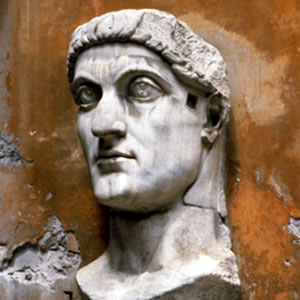
Constantine the Great (27 February 272 AD-22 May 337 AD) was a Roman Emperor who ruled between 306 and 337 AD. Born on the territory now known as Nis, located in Serbia, he was the son of Flavius Valerius Constantius, a Roman Army officer of Illyrian origins. His mother Helena was Greek. His father became Caesar, the deputy emperor in the west, in 293 AD. Constantine was sent east, where he rose through the ranks to become a military tribune under Emperors Diocletian and Galerius. Constantine was the first Roman emperor to convert to Christianity. Although he lived most of his life as a pagan, he joined the Christian faith on his deathbed, being baptised by Eusebius of Nicomedia. He played an influential role in the proclamation of the Edict of Milan in 313, which declared religious tolerance for Christianity in the Roman empire. He called the First Council of Nicaea in 325 AD that produced the statement of Christian belief known as the Nicene Creed.
 What is Homoousios?
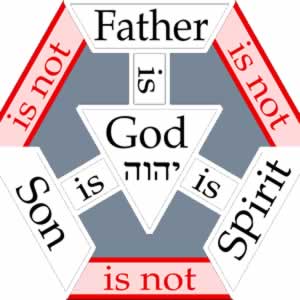
Homoousios or Homoousion ('same in being, same in essence') is a Christian theological term. Homoousios is most notably used in the Nicene Creed in 325 AD, for describing Jesus (God the Son) as "same in being" or "same in essence" with God the Father. The same term was later also applied to the Holy Spirit in order to designate him as being "same in essence" with the Father and the Son. Those notions became cornerstones of theology in Nicene Christianity, and also represent one of the most important theological concepts within the Trinitarian doctrinal understanding of God.
 Who was Eusebius?
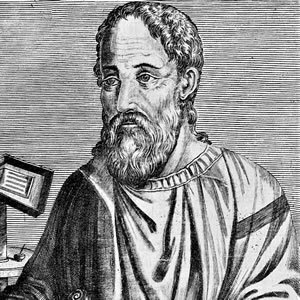
Eusebius of Caesarea (260-340 AD) was a historian of Christianity, exegete, and Christian polemicist. He became the bishop of Caesarea Maritima about 314 AD. Together with Pamphilus, he was a scholar of the Biblical canon and is regarded as an extremely learned Christian of his time. During the Council of Antiochia (325) he was excommunicated for subscribing to the heresy of Arius (Arianism), and thus withdrawn during the First Council of Nicaea where he accepted that the Homoousion referred to the Logos. Never recognized as a saint, he became counselor of Constantine the Great, and with the bishop of Nicomedia he continued to polemicize against Saint Athanasius of Alexandria, Church Fathers, since he was condemned in the First Council of Tyre in 335.