683 views
·
Last viewed: 2 hrs ago
Uploaded: 22 Jun 2025 (1 year ago) · Shared: 23 Jun 2025
Duration: 1:06:50
Uploaded: 22 Jun 2025 (1 year ago) · Shared: 23 Jun 2025
Duration: 1:06:50
Youtube Description
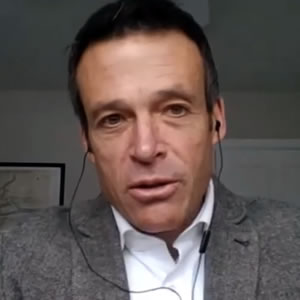
In this interview I sit down with Dr. Ilkka Lindstedt of the University of Helsinki to discuss his recent work on Arabia at the time of Muhammad. DrLindstedt walks us through the 'on the ground' reality of Arabia based on the material, historical, and literary evidence. We discuss things like the advent of Christianity in Arabia, the presence of Judaism, the extent to which Arabia was or was not polytheistic, whether or not there were remnants of polytheism in Arabia, and what that means for the early Islamic movement.
Ilkka Lindstedt is Senior Lecturer in Islamic theology at the Faculty of Theology. He holds a PhD and title of docent in Arabic and Islamic Studies at the University of Helsinki. He specializes in early Islam, Arabic historiography, and Arabic epigraphy.
Links to material discussed in this episode:
https://brill.com/display/title/69380
https://helsinki.academia.edu/IlkkaLindstedt
https://researchportal.helsinki.fi/fi/persons/ilkka-lindstedt/publications/
Explore More
Gabriel Reynolds Pre-Islam Islam GODSearch Google Search Explore Topics
 Who is Gabriel Reynolds?
Gabriel Reynolds is an American academic and historian of religion who serves as professor of Islamic Studies and Theology at the University of Notre Dame. His scholarship focuses on World Religions and World Church, History of Christianity, Quranic Studies, Islamic Origins, and Muslim-Christian relations. Gabriel Said Reynolds obtained his PhD in Islamic Studies at Yale University.The 'Exploring the Quran and the Bible' Youtube channel is dedicated to thoughtful, cutting-edge, and respectful conversations with leading scholars worldwide on the Bible or the Quran.
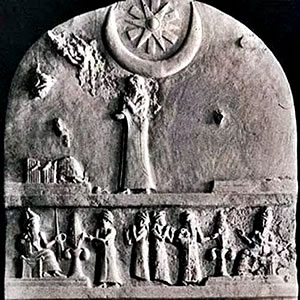 What is Pre-Islam?
Pre-Islam refers to the period in history before the emergence and widespread adoption of Islam. It specifically denotes the time before the Prophet Muhammad's revelations and the establishment of Islamic faith, culture, and civilization.
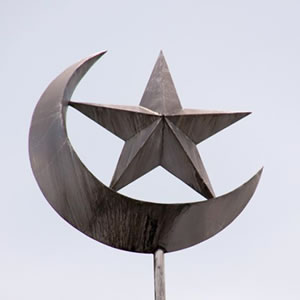 What is Islam?
One of the major religions of the world, Islam literally translates to "submission," as a follower of Islam (Muslims) devotes their life to that of their God. The religion began with the teachings of Muhammad in the 7th century. The theology of Islam is based on the Qur'an, which was given to Muhammad by God. Some of the major fundamental principles of Islam include the Five Pillars, which hope to unite all Muslims into a community. Two different factions of Muslims exist - the majority are known as Sunni, with a small percentage known as Shi'a - both predominantly reside throughout the Middle East. Muhammad died in 632 AD and the religion of Islam formally started after his death. The Quran was formally compiled and finalised in 650 AD, prior to which it was 'memorised' and written across many parchments.
 Who is GOD?
In monotheism and henotheism, God is conceived as the Supreme Being and principal object of faith. The concept of God as described by theologians commonly includes the attributes of omniscience (infinite knowledge), omnipotence (unlimited power), omnipresence (present everywhere), omnibenevolence (perfect goodness), divine simplicity, and eternal and necessary existence. In theism, God is the creator and sustainer of the universe In deism, God is the creator, but not the sustainer, of the universe Monotheism is the belief in the existence of one God or in the oneness of God In pantheism, God is the universe itself In atheism, God is purported not to exist, while deemed unknown or unknowable within the context of agnosticism.