420 views
·
Last viewed: 16 hrs ago
Uploaded: 10 Jul 2018 (8 years ago) · Shared: 11 Jul 2018
Duration: 4:06
Uploaded: 10 Jul 2018 (8 years ago) · Shared: 11 Jul 2018
Duration: 4:06
Youtube Description
Richard Carrier (born December 1, 1969) is an American historian, atheist activist, author, public speaker and blogger. Carrier has a doctorate inancient history from Columbia University where his thesis was on the history of science in antiquity.
Link to Richard Carrier videos:
http://muslimprophets.com/videos.php?search=Richard+Carrier
Link to the original video:
https://www.youtube.com/watch?v=bQmMFQzrEsc
DISCLAIMER
We do NOT own the video materials and all credits belong to the respectful owners. In case of copyright issues, please contact us immediately for further credits or clip delete.
COPYRIGHT
Under Section 107 of the Copyright Act 1976, allowance is made for 'fair use' for purposes such as criticism, comment, news reporting, teaching, scholarship and research. Fair use is a use permitted by copyright statute that might otherwise be infringing. Non-profit, educational or personal use tips the balance in favour of fair use.
Explore More
Yaqeen Institute Richard Carrier Jonathan Brown Omar Suleiman Lazarus SinSearch Google Search Explore Topics
 Who are Yaqeen Institute? (MEMBER OF YI)
The Yaqeen Institute for Islamic Research is an independent American research institute and think tank founded in 2016, mainly interested in the advanced study of modernity, Islam and Muslim societies. It works to aggregate complex Islamic topics for audiences outside of the field of Islamic academia. Yaqeen Institute was founded by American Islamic scholar Omar Suleiman and is based in Irving, Texas. It has published works have covered a variety of topics at the intersection of Islam, including perennialism, international politics, parenting, and historical preservation of Islamic texts. It works to "pioneer Islamic research in cutting-edge, creative formats."
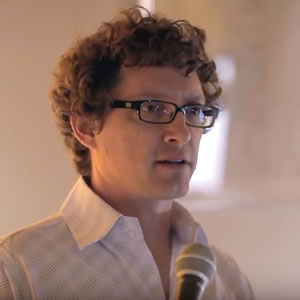 Who is Richard Carrier?
Richard Carrier (born 1969) is an American historian, atheist activist, author, public speaker and blogger. Carrier has a doctorate in ancient history from Columbia University where his thesis was on the history of science in antiquity.
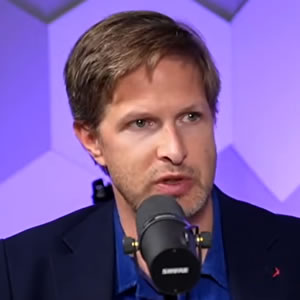 Who is Jonathan Brown? (MEMBER OF YI)
Jonathan Andrew Cleveland Brown (born 1977) is an American scholar of Islamic studies. Since 2012, he has been associate professor at Georgetown University's Edmund A. Walsh School of Foreign Service. He holds the Alwaleed bin Talal Chair of Islamic Civilization at Georgetown University. Brown has also published articles in the fields of Hadith, Islamic law, Salafism, Sufism, and Arabic language.
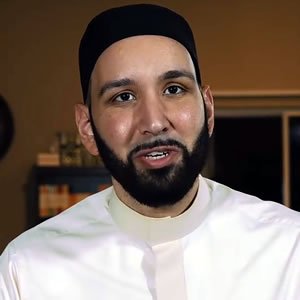 Who is Omar Suleiman? (MEMBER OF YI)
Omar Suleiman (born 1986) is an American Muslim scholar, civil rights activist and speaker. He is the Founder and President of the Yaqeen Institute for Islamic Research professor of Islamic Studies at Southern Methodist University. Suleiman is also the Resident Scholar of the Valley Ranch Islamic Center and the Co-Chair of Faith Forward Dallas at Thanks-Giving Square.
 Who was Lazarus?
Lazarus of Bethany is a figure of the New Testament whose life is restored by Jesus four days after his death. The resurrection is considered one of the miracles of Jesus. In the context of the seven signs in the Gospel of John, the raising of Lazarus at Bethany - today the town of Al-Eizariya in the West Bank, Palestine, which translates to "the place of Lazarus" - is the climactic narrative: exemplifying the power of Jesus "over the last and most irresistible enemy of humanity: Death. A distinct character of the same name is also mentioned in the Gospel of Luke in Jesus' parable of the rich man and Lazarus, in which both eponymous characters die, and the former begs for the latter to comfort him from his torments in hell.
What is Sin?In Abrahamic contexts, sin is the act of violating God's will. Sin can also be viewed as anything that violates the ideal relationship between an individual and God; or as any diversion from the ideal order for human living. To sin has been defined as "to miss the mark". Sins fall in a spectrum from minor errors to deadly misdeeds. Catholicism regards the least corrupt sins as venial sins which are part of human living and carry immediate consequences on earth, and, if unrepented for, more painful purgation, assuming the person is destined to heaven, as it is written in the formation letter "Purgatory", "most of the early Fathers of the Church speak of a cleansing fire, though we cannot tell whether this means actual or spiritual fire." Conversely, sins of great evil are mortal sins which bring the consequence of hell if they are not addressed either through an act of perfect contrition or going to confession about them.