1606 views
·
Last viewed: 12 hrs ago
Uploaded: 16 Jul 2025 (1 year ago) · Shared: 17 Jul 2025
Duration: 13:35
Uploaded: 16 Jul 2025 (1 year ago) · Shared: 17 Jul 2025
Duration: 13:35
Youtube Description
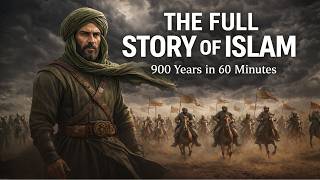
There is a fascinating overlap of prophets in Islam, Christianity, and Judaism. This video dives into the lives and legacies of key figures sharedacross all three Abrahamic faiths — including Adam, Noah, Abraham, Moses, and Solomon, explaining the narrative differences while also highlighting how the various faiths position the importance and relevance of each, their life and prophecy.
Topics Covered:
- How each religion views these prophets
- The similarities and differences in their narratives
- Why these figures are central to all three faiths
- Historical and theological significance
Understanding these shared prophets can help bridge interfaith understanding and highlight our shared spiritual heritage.
Like, comment, and subscribe for more interfaith explorations and religious history!
00:00 The Overlaps
01:02 Selection Method of Prophets
01:58 Adam
04:01 Noah
06:00 Abraham
0 8:02 Moses
09:43 Solomon
11:34 System of Prophet Prioritisation
Historical Commentary:
https://www.youtube.com/watch?v=nmCH8QDN0xg&list=PLyIDWhxEoE43DemA3sxG41RwB_P-UZFBe
Religious Commentary:
https://www.youtube.com/watch?v=RYbnJ2qRaAw&list=PLyIDWhxEoE43n-tVTpqvPwUnuGWVa-0TM
#Prophets #AbrahamicReligions #Interfaith #Islam #Christianity #Judaism #ReligiousHistory #Bible #Quran #Torah #Adam #Noah #Abraham #Moses #Solomon #SharedProphets #Quran #Bible #IslamChristianityJudaism #ReligiousStudies #Faith #InterfaithUnderstanding #holyscripture #religioussynergy
Subscribe: https://bit.ly/3jCXuCw:
TKC Membership:
https://www.youtube.com/channel/UCxOULoJH_oMiHk6zZo4Nwew/join
Instagram: www.instagram.com/tareqkandari
Twitter: www.twitter.com/tareqkandari
Patreon.com/TheKandariChronicles
Explore More
Kandari Chronicles Christianity Judaism Prophet Islam ADAM
NOAH
ABRAHAM
MOSES
SOLOMON
ADAM
NOAH
ABRAHAM
MOSES
SOLOMON
Search Google Search Explore Topics
 Who are Kandari Chronicles?
Committed to sharing knowledge, stories and commentary about the Middle East through video essays about topics such as history, folklore, society. The sharing is not strictly about relaying knowledge, but also about documenting and preserving elements of culture that in today's educational system might be challenged by oversight or struggling with potential gradual irrelevance. The commentary revolves around looking at simple realities or concepts, but with a slight change of perspective; hoping that this minute change of view, will shed new light and provide fresh understandings. A final angle is to introduce old stories but told in a modern way to grab the attention of an audience that is now challenged attention wise and expects content to be packaged in a speedier and more engaging manner.
 What is Christianity?
Christianity is a global religion centered on the life and teachings of Jesus Christ, who followers believe is the Son of God. It's a monotheistic faith, meaning Christians believe in one God who exists in three co-equal persons: God the Father, God the Son (Jesus Christ), and the Holy Spirit. Christianity is based on the Bible, with the Old Testament and New Testament serving as sacred texts.
 What is Judaism?
Judaism encompasses the religion, philosophy, culture and way of life of the Jewish people. Judaism is a monotheistic religion, with the Torah as its foundational text (part of the larger text known as the Tanakh or Hebrew Bible), and supplemental oral tradition represented by later texts such as the Midrash and the Talmud. Judaism is considered by religious Jews to be the expression of the covenantal relationship that God established with the Children of Israel. Judaism includes a wide corpus of texts, practices, theological positions, and forms of organization. Within Judaism there are a variety of movements, most of which emerged from Rabbinic Judaism, which holds that God revealed his laws and commandments to Moses on Mount Sinai in the form of both the Written and Oral Torah. The Jews are an ethnoreligious group and include those born Jewish and converts to Judaism. In 2012, the world Jewish population was estimated at about 14 million, or roughly 0.2% of the total world population. About 42% of all Jews reside in Israel and about 42% reside in the United States and Canada, with most of the remainder living in Europe.
 What is a Prophet?
In religion, a prophet is an individual who is regarded as being in contact with a divine being and is said to speak on that entity's behalf. They claim to be serving as an intermediary with humanity by delivering messages or teachings from the supernatural source to other people. The message that the prophet conveys is called a prophecy. In Islam, all prophetic messengers are prophets (such as Adam, Noah, Abraham, Moses, Jesus, and Muhammad) though not all prophets are prophetic messengers. The primary distinction is that a prophet is required to demonstrate God's law through his actions, character, and behavior without necessarily calling people to follow him, while a prophetic messenger is required to pronounce God's law (i.e. revelation) and call his people to submit and follow him.
 What is Islam?
One of the major religions of the world, Islam literally translates to "submission," as a follower of Islam (Muslims) devotes their life to that of their God. The religion began with the teachings of Muhammad in the 7th century. The theology of Islam is based on the Qur'an, which was given to Muhammad by God. Some of the major fundamental principles of Islam include the Five Pillars, which hope to unite all Muslims into a community. Two different factions of Muslims exist - the majority are known as Sunni, with a small percentage known as Shi'a - both predominantly reside throughout the Middle East. Muhammad died in 632 AD and the religion of Islam formally started after his death. The Quran was formally compiled and finalised in 650 AD, prior to which it was 'memorised' and written across many parchments.