Youtube Description:
This lecture from my book discusses the discovery of the planets by the Sumerians from Mesopotamia. We will also discuss the mythology associated with the planets and how they were presented in art. We will also go through their calculations of the orbits of the planets.
This is a lecture about a chapter of my world history book called:
'In Search of the Sublime - A world history of humanity's relentless pursuit of scientific truth, moral excellence, and enlightenment.'
Read the book for FREE at:
worldhistorybook.com
Or buy it on Amazon:
Kind regards,
Stephan P. Dinkgreve
MSc Theoretical Physics
Amsterdam
This lecture from my book discusses the discovery of the planets by the Sumerians from Mesopotamia. We will also discuss the mythology associated with the planets and how they were presented in art. We will also go through their calculations of the orbits of the planets.
This is a lecture about a chapter of my world history book called:
'In Search of the Sublime - A world history of humanity's relentless pursuit of scientific truth, moral excellence, and enlightenment.'
Read the book for FREE at:
worldhistorybook.com
Or buy it on Amazon:
Kind regards,
Stephan P. Dinkgreve
MSc Theoretical Physics
Amsterdam
Explore More
 Who are Ancient Mesopotamia?
 Who are Stephans History?
Stephan's History of the World. Reclaim the foundational thoughts and deeds of the great ancestors of humanity.
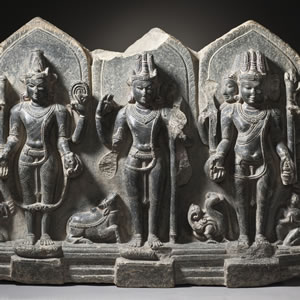 What is The Gods?
Polytheism is the worship of or belief in multiple deities, usually as a pantheon of gods and goddesses. In most religions which accept polytheism, the different gods and goddesses are representations of forces of nature or ancestral principles, and
can be viewed either as autonomous or as aspects or emanations of a creator deity or transcendental absolute principle (monistic theologies), which manifests immanently in nature (panentheistic and pantheistic theologies). Most of the polytheistic deities of ancient religions, with the notable exceptions of the Ancient Egyptian and Hindu deities, were conceived as having physical bodies. Polytheism is a type of theism. Within theism, it contrasts with monotheism, the belief in a singular God, in most cases transcendent. Important polytheistic religions practiced today include Chinese traditional religion, Hinduism, Japanese Shinto, and various neopagan faiths.