Youtube Description:
The Early Middle Ages, 284--1000 (HIST 210)
The Roman Empire in the West collapsed as a political entity in the fifth century although the Eastern part survived the crisis.. Professor Freedman considers this transformation through three main questions: Why did the West fall apart -- because of the external pressure of invasions or the internal problems of institutional decline? Who were these invading barbarians? Finally, does this transformation mark a gradual shift or is it right to regard it as a cataclysmic end of civilization? Professor Freedman, as a moderate catastrophist, argues that this period marked the end of a particular civilization rather than the end of civilization in general.
00:00 - Chapter 1. Introduction
05:43 - Chapter 2. Catastrophe
18:43 - Chapter 3. The Roman Army and the Visigoths
28:25 - Chapter 4. Another Kind of Barbarian: The Huns
34:19 - Chapter 5. Accomodation
38:55 - Chapter 6. Decline
Complete course materials are available at the Yale Online website: online.yale.edu
This course was recorded in Fall 2011.
The Early Middle Ages, 284--1000 (HIST 210)
The Roman Empire in the West collapsed as a political entity in the fifth century although the Eastern part survived the crisis.. Professor Freedman considers this transformation through three main questions: Why did the West fall apart -- because of the external pressure of invasions or the internal problems of institutional decline? Who were these invading barbarians? Finally, does this transformation mark a gradual shift or is it right to regard it as a cataclysmic end of civilization? Professor Freedman, as a moderate catastrophist, argues that this period marked the end of a particular civilization rather than the end of civilization in general.
00:00 - Chapter 1. Introduction
05:43 - Chapter 2. Catastrophe
18:43 - Chapter 3. The Roman Army and the Visigoths
28:25 - Chapter 4. Another Kind of Barbarian: The Huns
34:19 - Chapter 5. Accomodation
38:55 - Chapter 6. Decline
Complete course materials are available at the Yale Online website: online.yale.edu
This course was recorded in Fall 2011.
Explore More
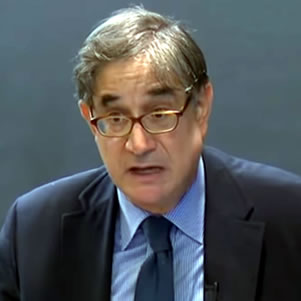 Who is Paul Freedman?
Paul Freedman is the Chester D Tripp Professor of History at Yale University. He specializes in medieval social history, the history of Spain, the study of medieval peasantry, and medieval cuisine.
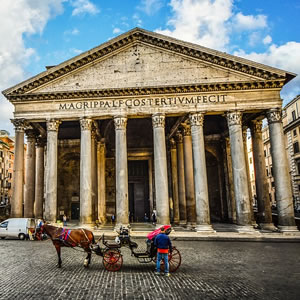 What is Roman?
In historiography, ancient Rome is Roman civilization. From the founding of the city of Rome in the 8th century BC to the collapse of the Western Roman Empire in the 5th century AD, encompassing the Roman Kingdom, Roman Republic and Roman Empire
until the fall of the western empire. The civilization began as an Italic settlement in the Italian peninsula, dating from the 8th century BC, that grew into the city of Rome and which subsequently gave its name to the empire over which it ruled and to the widespread civilisation the empire developed. The Roman empire expanded to become one of the largest empires in the ancient world, though still ruled from the city, with an estimated 50 to 90 million inhabitants (roughly 20% of the world's population) and covering 5.0 million square kilometres at its height in AD 117.
Where is Rome?Rome is the capital city of Italy and a special comune (named Comune di Roma Capitale). Rome also serves as the capital of the Lazio region. With 2,872,800 residents in 1,285 km2 (496.1 sq mi), it is also the country's most populated comune. It is
the fourth-most populous city in the European Union by population within city limits. It is the centre of the Metropolitan City of Rome, which has a population of 4.3 million residents. Rome is located in the central-western portion of the Italian Peninsula, within Lazio (Latium), along the shores of the Tiber. The Vatican City is an independent country inside the city boundaries of Rome, the only existing example of a country within a city: for this reason Rome has been often defined as capital of two states. Rome's history spans 28 centuries. While Roman mythology dates the founding of Rome at around 753 BC, the site has been inhabited for much longer, making it one of the oldest continuously occupied sites in Europe.