598 views
·
Last viewed: 3 days ago
Uploaded: 04 Apr 2012 (15 years ago) · Shared: 29 Sep 2017
Duration: 44:15
Uploaded: 04 Apr 2012 (15 years ago) · Shared: 29 Sep 2017
Duration: 44:15
Youtube Description
The Early Middle Ages, 284--1000 (HIST 210) In this lecture, Professor Freedman considers the importance of the British Isles in the early MiddleAges, both in their own right and as an example of a post-Roman frontier society. In the wake of the fifth century Roman withdrawal, England experienced 'radical economic simplification.' However, England's conversion to Christianity beginning at the end of the sixth century brought about a flourishing written culture and Latin learning. Ireland experienced a similar cultural flowering, although it had converted to Christianity centuries earlier. It had never been colonized by the Romans, and the Irish Church was less hierarchical, more decentralized, and placed less importance on bishops than did the Roman. The conversion of England under the competeing influences of Rome and ireland was thus not just a conflict between Christianity and paganism, but also between two administrative styles of Christianity. Professor Freedman ends the lecture with a few remarks on the cultural accomplishments of the British Isles.
00:00 - Chapter 1. Introduction to the British Isles
22:32 - Chapter 2. The Conversion of England
36:30 - Chapter 3. The Conversion of Ireland and the Irish Church
45:34 - Chapter 4. Closing Remarks
Complete course materials are available at the Yale Online website: online.yale.edu
This course was recorded in Fall 2011.
Explore More
Paul Freedman Ireland RomanSearch Google Search Explore Topics
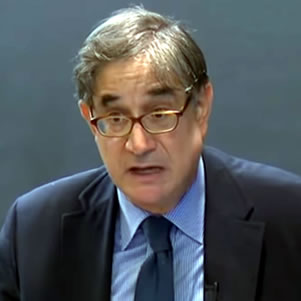 Who is Paul Freedman?
Paul Freedman is the Chester D Tripp Professor of History at Yale University. He specializes in medieval social history, the history of Spain, the study of medieval peasantry, and medieval cuisine.
 What is Ireland?
Ireland is an island in the North Atlantic. It is separated from Great Britain to its east by the North Channel, the Irish Sea, and St George's Channel. Ireland is the second-largest island of the British Isles, the third-largest in Europe, and the twentieth-largest on Earth. Geopolitically, Ireland is divided between the Republic of Ireland (officially named Ireland), which covers five-sixths of the island, and Northern Ireland, which is part of the United Kingdom. In 2011, the population of Ireland was about 6.6 million, ranking it the second-most populous island in Europe after Great Britain. As of 2016, 4.8 million live in the Republic of Ireland, and 1.8 million live in Northern Ireland.
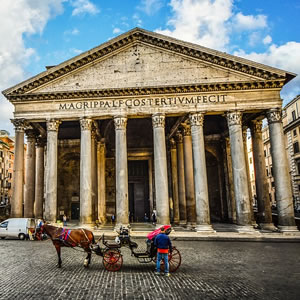 What is Roman?
In historiography, ancient Rome is Roman civilization. From the founding of the city of Rome in the 8th century BC to the collapse of the Western Roman Empire in the 5th century AD, encompassing the Roman Kingdom, Roman Republic and Roman Empire until the fall of the western empire. The civilization began as an Italic settlement in the Italian peninsula, dating from the 8th century BC, that grew into the city of Rome and which subsequently gave its name to the empire over which it ruled and to the widespread civilisation the empire developed. The Roman empire expanded to become one of the largest empires in the ancient world, though still ruled from the city, with an estimated 50 to 90 million inhabitants (roughly 20% of the world's population) and covering 5.0 million square kilometres at its height in AD 117.