587 views
·
Last viewed: 2 days ago
Uploaded: 04 Apr 2012 (15 years ago) · Shared: 29 Sep 2017
Duration: 47:10
Uploaded: 04 Apr 2012 (15 years ago) · Shared: 29 Sep 2017
Duration: 47:10
Youtube Description
The Early Middle Ages, 284--1000 (HIST 210) Professor Freedman focuses on the question of how the Eastern Roman (Byzantine) Empire survived, whilethe West collapsed in the fifth century. He begins with a brief overview of Procopius' Secret History, a work which presents a highly critical account of the reign of the emperor Justinian. The more urbanized, economically stronger, and geographically more stable Eastern Empire was able to survive while the West was dismantled by barbarian tribes. Yet under pressure from its old enemy, Persia, and new threats, the Slavs and Avars in the West and Arabs in the East, the Eastern Empire experienced a decline in the seventh century. Against the background of this political instability, Professor Freedman also discusses the Christological controversies of Nestorianism and Monophysitism which plagued the Church in the East. Beginning in the late seventh century, Iconoclasm also added to the pressures facing the Eastern Church and Empire.
00:00 - Chapter 1. Introduction
05:11 - Chapter 2. Procopius' Secret History
07:36 - Chapter 3. Circumstances of the Survival of the East
11:56 - Chapter 4. Christological Controversies -- Nestorianism and Monophysitism
26:48 - Chapter 5. The Rise of Islam, the Persian Threat, and Barbarian Invasions
39:25 - Chapter 6. Iconoclasm
45:35 - Chapter 7. Conclusion
Complete course materials are available at the Yale Online website: online.yale.edu
This course was recorded in Fall 2011.
Explore More
Paul Freedman RomanSearch Google Search Explore Topics
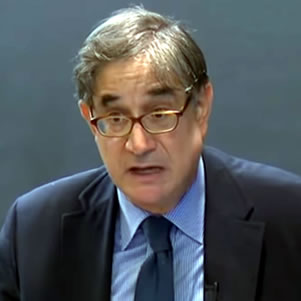 Who is Paul Freedman?
Paul Freedman is the Chester D Tripp Professor of History at Yale University. He specializes in medieval social history, the history of Spain, the study of medieval peasantry, and medieval cuisine.
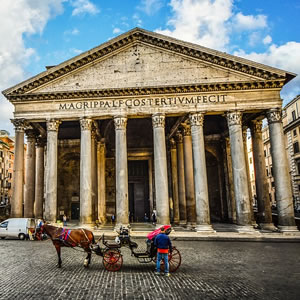 What is Roman?
In historiography, ancient Rome is Roman civilization. From the founding of the city of Rome in the 8th century BC to the collapse of the Western Roman Empire in the 5th century AD, encompassing the Roman Kingdom, Roman Republic and Roman Empire until the fall of the western empire. The civilization began as an Italic settlement in the Italian peninsula, dating from the 8th century BC, that grew into the city of Rome and which subsequently gave its name to the empire over which it ruled and to the widespread civilisation the empire developed. The Roman empire expanded to become one of the largest empires in the ancient world, though still ruled from the city, with an estimated 50 to 90 million inhabitants (roughly 20% of the world's population) and covering 5.0 million square kilometres at its height in AD 117.