Youtube Description:
The Early Middle Ages, 284--1000 (HIST 210)
Professor Freedman begins the lecture by considering the ways historians read the Confessions.In this work, St. Augustine gives unique insight into the life of an intellectual mind in Late Antiquity, into the impact of Christianity on the Roman Empire, and into the problems of early Christianity. The three major doctrinal concerns of the early Church were the problem of evil, the soul-body distinction, and issues of sin and redemption. In the Confessions, St. Augustine searches for explanations of these problems first in Manichaeism, then (Neo)Platonism, and finally Christianity.Underlying this narrative are Augustine's ideas of opposition to perfectionism, his exaltation of grace, and the notion of sin as indelible, not solvable.
00:00 - Chapter 1. Why we read The Confessions
08:04 - Chapter 2. A Brief Biography of Augustine
15:03 - Chapter 3. The Problem of Evil
25:30 - Chapter 4. Pears and Augustine's Conception of Sin
38:53 - Chapter 5. Perfectability, Sin, and Grac
Complete course materials are available at the Yale Online website: online.yale.edu
This course was recorded in Fall 2011.
The Early Middle Ages, 284--1000 (HIST 210)
Professor Freedman begins the lecture by considering the ways historians read the Confessions.In this work, St. Augustine gives unique insight into the life of an intellectual mind in Late Antiquity, into the impact of Christianity on the Roman Empire, and into the problems of early Christianity. The three major doctrinal concerns of the early Church were the problem of evil, the soul-body distinction, and issues of sin and redemption. In the Confessions, St. Augustine searches for explanations of these problems first in Manichaeism, then (Neo)Platonism, and finally Christianity.Underlying this narrative are Augustine's ideas of opposition to perfectionism, his exaltation of grace, and the notion of sin as indelible, not solvable.
00:00 - Chapter 1. Why we read The Confessions
08:04 - Chapter 2. A Brief Biography of Augustine
15:03 - Chapter 3. The Problem of Evil
25:30 - Chapter 4. Pears and Augustine's Conception of Sin
38:53 - Chapter 5. Perfectability, Sin, and Grac
Complete course materials are available at the Yale Online website: online.yale.edu
This course was recorded in Fall 2011.
Explore More
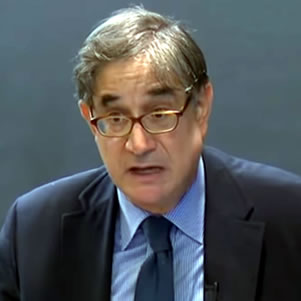 Who is Paul Freedman?
Paul Freedman is the Chester D Tripp Professor of History at Yale University. He specializes in medieval social history, the history of Spain, the study of medieval peasantry, and medieval cuisine.
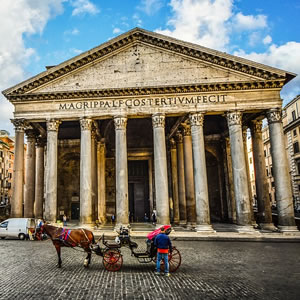 Where is Rome?
Rome is the capital city of Italy and a special comune (named Comune di Roma Capitale). Rome also serves as the capital of the Lazio region. With 2,872,800 residents in 1,285 km2 (496.1 sq mi), it is also the country's most populated comune. It is
the fourth-most populous city in the European Union by population within city limits. It is the centre of the Metropolitan City of Rome, which has a population of 4.3 million residents. Rome is located in the central-western portion of the Italian Peninsula, within Lazio (Latium), along the shores of the Tiber. The Vatican City is an independent country inside the city boundaries of Rome, the only existing example of a country within a city: for this reason Rome has been often defined as capital of two states. Rome's history spans 28 centuries. While Roman mythology dates the founding of Rome at around 753 BC, the site has been inhabited for much longer, making it one of the oldest continuously occupied sites in Europe.
 Who are ONS?