530 views
·
Last viewed: 2 days ago
Uploaded: 04 Apr 2012 (15 years ago) · Shared: 29 Sep 2017
Duration: 48:40
Uploaded: 04 Apr 2012 (15 years ago) · Shared: 29 Sep 2017
Duration: 48:40
Youtube Description
The Early Middle Ages, 284--1000 (HIST 210) In this lecture, Professor Freedman surveys major trends in Byzantine history from the sixth to eleventhcentury, dividing the era into four periods. In the sixth century, under Justinian's rule, the Byzantine Empire experienced a period of expansion (532-565). However, the Empire was unable to hold on to Justinian's hard won territories and so contracted for over a century of crisis that threatened its survival (565-717). In the next period, (717-843), the Byzantine army was reorganized and the Empire was able to regain some lost territory. At the same time, the empire was wracked by the conflicts accompanying theological controversies over artistic representations of the sacred (the Iconoclast controversy). Finally, with the religious situation smoothed over, the Byzantine Empire was able to expand further from 843 to 1071.
00:00 - Chapter 1. Introduction
07:34 - Chapter 2. The Contraction of the Byzantine Empire
21:52 - Chapter 3. Reconstruction of the Empire
30:30 - Chapter 4. Survival of the Byzantine Empire
39:36 - Chapter 5. Expansion of the Byzantine Empire
Complete course materials are available at the Yale Online website: online.yale.edu
This course was recorded in Fall 2011.
Explore More
Paul Freedman RomanSearch Google Search Explore Topics
 Who is Paul Freedman?
Paul Freedman is the Chester D Tripp Professor of History at Yale University. He specializes in medieval social history, the history of Spain, the study of medieval peasantry, and medieval cuisine.
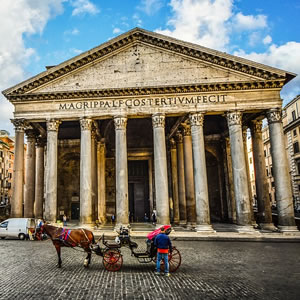 What is Roman?
In historiography, ancient Rome is Roman civilization. From the founding of the city of Rome in the 8th century BC to the collapse of the Western Roman Empire in the 5th century AD, encompassing the Roman Kingdom, Roman Republic and Roman Empire until the fall of the western empire. The civilization began as an Italic settlement in the Italian peninsula, dating from the 8th century BC, that grew into the city of Rome and which subsequently gave its name to the empire over which it ruled and to the widespread civilisation the empire developed. The Roman empire expanded to become one of the largest empires in the ancient world, though still ruled from the city, with an estimated 50 to 90 million inhabitants (roughly 20% of the world's population) and covering 5.0 million square kilometres at its height in AD 117.