717 views
·
Last viewed: 1 day ago
Uploaded: 04 Apr 2012 (14 years ago) · Shared: 29 Sep 2017
Duration: 44:11
Uploaded: 04 Apr 2012 (14 years ago) · Shared: 29 Sep 2017
Duration: 44:11
Youtube Description
The Early Middle Ages, 284--1000 (HIST 210) In this lecture, Professor Freedman discusses the Abbasid dynasty, which ruled the Islamic Caliphatebeginning in 750. The Abbasids moved the capitol of the Caliphate to the newly-built city of Baghdad and created a state characterized by a strong administration and well-organized tax system. The state sponsored a cultural flowering, based in part on the translation of classical Greek and Roman texts. Professor Freedman ends the lecture by focusing on developments in mathematics and astronomy.
00:00 - Chapter 1. The Rise of the Abbasids
15:47 - Chapter 2. Cultural Flowering
28:28 - Chapter 3. Assimilation of conquered peoples and ideas
40:00 - Chapter 4. Mathematics
Complete course materials are available at the Yale Online website: online.yale.edu
This course was recorded in Fall 2011.
Explore More
Search Google Search Explore Topics Paul Freedman Abbasid Rome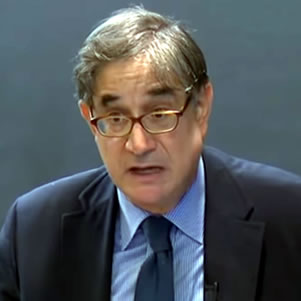 Who is Paul Freedman?
Paul Freedman is the Chester D Tripp Professor of History at Yale University. He specializes in medieval social history, the history of Spain, the study of medieval peasantry, and medieval cuisine.
 What is Abbasid?
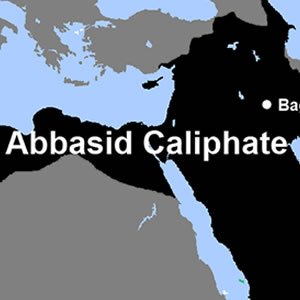
The Abbasid Caliphate was the third caliphate to succeed the Islamic prophet Muhammad. It was founded by a dynasty descended from Muhammad's uncle, Abbas ibn Abd al-Muttalib (566-653 CE), from whom the dynasty takes its name. After overthrowing the Umayyad Caliphate in the Abbasid Revolution of 750 CE (132 AH), they ruled as caliphs based in modern-day Iraq, with Baghdad being their capital for most of their history. The Abbasid Caliphate first centered its government in Kufa, modern-day Iraq, but in 762 the caliph al-Mansur founded the city of Baghdad as the new capital. Baghdad became the center of science, culture, arts, and invention in what became known as the Golden Age of Islam. By housing several key academic institutions, including the House of Wisdom, as well as a multiethnic and multi-religious environment, the city garnered an international reputation as a centre of learning.
 Where is Rome?
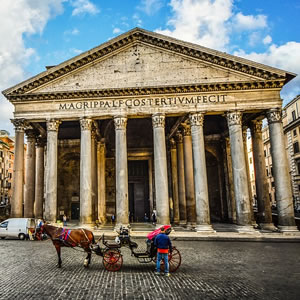
Rome is the capital city of Italy and a special comune (named Comune di Roma Capitale). Rome also serves as the capital of the Lazio region. With 2,872,800 residents in 1,285 km2 (496.1 sq mi), it is also the country's most populated comune. It is the fourth-most populous city in the European Union by population within city limits. It is the centre of the Metropolitan City of Rome, which has a population of 4.3 million residents. Rome is located in the central-western portion of the Italian Peninsula, within Lazio (Latium), along the shores of the Tiber. The Vatican City is an independent country inside the city boundaries of Rome, the only existing example of a country within a city: for this reason Rome has been often defined as capital of two states. Rome's history spans 28 centuries. While Roman mythology dates the founding of Rome at around 753 BC, the site has been inhabited for much longer, making it one of the oldest continuously occupied sites in Europe.