Where is the Gospel (Injeel) of Jesus? - Ahmed Deedat

   7:38
570 views  ·  Last viewed: 2 days ago
Uploaded: 15 Apr 2012   (14 years ago)  ·  Shared: 28 Mar 2017

Video Description (from Youtube)

Some Muslims think that the Bible is the Gospel إنجيل mentioned in Quran but the Gospel إنجيل in Quran is the Gospel given or taught by Jesus but the bibles don't have any book named Gospel of Jesus

but in contrary it has Gospel by Mark, Luke, John, Matthew.

Download 'Is The Bible God's Word'
http://www.archive.org/download/Shk_Ahmed_Deedats_Books/Is_The_Bible_Gods_Word.pdf

Full Lecture
http://youtu.be/OkaeIiX3rsQ

DISCLAIMER
All videos are shared for educational and information purposes only. All videos are hosted and viewable on Youtube servers. Video titles are generated using the original video title; overall content theme including actual dialogue and speech (Transcript); and A.I-based recommendations with a focus on SEO, keyword density, and internal search functions. The video title does not represent the views held by the Youtube video uploader, or any individual, organisation or business.

If you spot any mistake, omission or give feedback, kindly Contact Us with details

Overview & Key Concepts


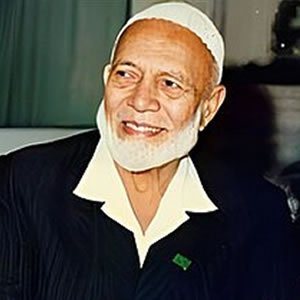
Who is Ahmed Deedat?

Ahmed Deedat (1 July 1918-8 August 2005) was a South African writer and public speaker of Indian descent. He was best known as a Muslim missionary

who held numerous inter-religious public debates with evangelical Christians, as well as video lectures on Islam, Christianity, and the Bible. Deedat established the IPCI, an international Islamic missionary organisation, and wrote several widely distributed booklets on Islam and Christianity. He was awarded the King Faisal International Prize in 1986 for his 50 years of missionary work. He wrote and lectured in English.
What is Injeel?

Injeel, or Injil is the Arabic name for the Gospel of Jesus (Isa). The Injil is described by the Quran as one of the four Islamic holy books which was

revealed by God, the others being the Zabur (Psalms), the Tawrat (Torah), and the Quran. The word Injil is also used in the Quran, the Hadith and early Muslim documents to refer to both a book and revelations made by God to Jesus. Muslims believe the Injeel is lost and no longer available. The Injeel is not the modern New Testament Bible.

What is Gospel?

Gospel is the Old English translation of Greek evangelion, meaning "good news". It originally meant the Christian message itself, but in the 2nd

century it came to be used for the books in which the message was set out. The four gospels of the New Testament: Matthew, Mark, Luke and John are the main source of information on the life of Jesus.

Frequently Asked Questions


1.What do Synoptic Gospels say about Jesus?

The Synoptic Gospels strictly portray Jesus through a human lens as an honorable prophet, a moral hero, and a devoted martyr. They do not present him as a literal God who assumed human flesh, nor do they frame his life as a cosmic sacrifice intended to die and rise again for the spiritual salvation of mankind.


2.What did Apostle Paul think of his fellow Gospel writers?

Paul was deeply unyielding toward alternative views of the faith, explicitly writing in Galatians 1:9 that if any person preached a gospel different from the one his followers had received, that individual should be completely accursed. This indicates he aggressively dismissed the legalistic, Jewish-Christian perspectives held by original disciples like James and Peter.


3.How did Matthew (Gospel) support Apostle Pauline Christian doctrine?

The Gospel of Matthew, aimed at law-abiding Jewish-Christians, did not support Pauline doctrine and actually stood in direct opposition to it.


4.When were the Gospels written?

The canonical gospels were composed during the second half of the 1st century, with Mark widely dated around 65-70 CE, followed by Matthew and Luke between 80-90 CE, and John close to 90-100 CE. These dates mean the texts were compiled decades after Jesus' earthly ministry, drawing on reliable oral traditions and early eyewitness testimonies.


5.What did Apostle Paul say about the other gospels?

In Galatians 1:6-9, Paul strongly condemned anyone preaching a different gospel, reflecting a significant conflict in the early church between his Gentile-inclusive mission and strict adherence to the Law.


6.Who wrote John's gospel?

The author of the fourth gospel is believed to be a Greek convert with limited knowledge of traditional Judaism, who frequently uses 'the Jews' as an antagonistic term over 60 times in the Gospel of John alone.


7.What were the Apocryphal Gospels?

Apocrypha are works, usually written works, that are of unknown authorship, or of doubtful authenticity, or spurious, or not considered to be within a particular canon.

The Apocrypha (Greek for 'hidden away') are revered Biblical text which were excluded from the canon Bible. They were literally hidden away from the early Christians, and tell a very different story of Jesus.

Gospel of Nazoreans
Gospel of Ebionites
Gospel of Egyptians
Gospel of Peter
Gospel of Thomas
Gospel of Hebrews


8.What is the significance of the Gospel of Thomas?

Thomas is the most important non-canonical Gospel recently discovered in the last century. It positively features in current studies of Christian origins and the historical Jesus.

Gospel of Thomas with sayings of Jesus is thought to be earliest written record of his life produced within ten years of his death.


9.How was the Gospel of John viewed?

In the 2nd century, some Christians felt John gospel was so different in tone and approach in comparison to the other three synoptic gospels (Mark, Matthew, Luke); it should have been excluded from the cannon.


10.In 325 AD, did Emperor Constantine burn gospels, writings and religious text?

The books of Arius and his followers, after the first Council of Nicaea (325 C.E.), were burned for heresy by the Roman emperors Constantine, Honorius, and Theodosius I, who published a decree commanding that, 'the doctrine of the Trinity should be embraced by those who would be called catholics; that all others should bear the infamous name of heretics'.


Videos on Ahmed Deedat (7)

Video: Muhammed in the Bible 1/11 - Ahmed Deedat 12:41
Video: Where is the Gospel (Injeel) of Jesus? - Ahmed Deedat 7:38
Video: In Quran 10:94, Muslims commanded to believe in Bible - Ahmed Deedat 4:43
Video: Torah, Psalm and Gospel (Injeel) were revelation from God given in spoken word form (Wahi) to Moses, David and Jesus - Ahmed Deedat 7:25
Video: In Deuteronomy 34:7, Moses wrote of his own death? If not Moses, who really wrote Deuteronomy? - Ahmed Deedat 5:21
Video: Jesus preached the Oral Gospel (Injeel), not New Testament Bible - Ahmed Deedat 4:43
Video: The Injeel is not the Christian Bible - Ahmed Deedat 3:17

EXPLORE TOPICS : AHMED DEEDAT | 7 INJEEL | 13 GOSPEL | 221   JESUS

Latest videos  •  6,061 videos  •  0 viewed/24 hour

SUBSCRIBE

Receive the latest news and updates by email - Subscribe Now!
About  |  Q&A  |  Contact Us    •    Terms  |  Privacy  |  Disclaimer  |  Sitemap
Connect:      Facebook  |    Twitter  |    Youtube
MuslimProphets.com is an educational website on the Prophets of God: David, Noah, Abraham, Moses, Jesus and Muhammad, who established the Abrahamic faiths of Judaism, Christianity and Islam. MuslimProphets.com explores contemporary social themes through Scripture, Evidences, Photo, Video, Maps, Current Affairs, Debate and 'alternative' Views held by Theologians, Apologists, Scholars and Street Preachers. Take a Site Tour

In accordance with Islamic etiquette, all prophet names should be followed with 'Peace Be Upon Him (PBUH)'. This is omitted to minimise text.

DISCLAIMER: All website content is for general information and educational purposes only and available in the public domain. Whilst all information comes from sources believed to be reliable, this cannot be guaranteed. External links are provided as a convenience and for informational purposes only. They do not constitute endorsement or approval for any products, services or comments by organizations or individuals. Title and Text links may be edited for external SEO, internal site and keyword search purposes. We bear no responsibility for the accuracy, legality, or content found on any external website or its subsequent links. Unless indicated, all images and content is licensed under a Creative Commons Attribution License distributed by Wikipedia, Wikimedia Commons, Pixabay, Pxhere, Pexels, Unsplash, Flickr and others. All Torah, Psalms, Old and New Testament Bible quotes are from the King James Version (KJV) Holy Bible in the public domain. All Quran quotes are from Taqi-ud-Din al-Hilali/Muhsin Khan English Quran translation.

ALWAYS DO YOUR OWN RESEARCH. If you spot any mistake, error or omission of information, contact us so we can correct it.