444 views
·
Last viewed: 6 hrs ago
Uploaded: 19 Feb 2019 (8 years ago) · Shared: 02 Apr 2019
Duration: 15:45
Uploaded: 19 Feb 2019 (8 years ago) · Shared: 02 Apr 2019
Duration: 15:45
Youtube Description
Dr. Michael S. Heiser discusses whether or not Old Testament writers were Polytheists. What did they believe about God, and did they equate other godswith Yahweh, the God of Israel? Learn more about this episode at Fringe Pop 321: https://www.fringepop321.com.
If you like what we do here please consider supporting this work. Visit our Patreon page at https://www.patreon.com/fringepop321. Thank you!
Explore More
Michael Heiser Polytheism Judaism GODSearch Google Search Explore Topics
 Who is Michael Heiser?
Michael Heiser earned an MA (1998) and PhD (2004) in Hebrew Bible and Ancient Semitic Languages from the University of Wisconsin-Madison. His dissertation was entitled, "The Divine Council in Late Canonical and Non-Canonical Second Temple Jewish Literature". Before going to the UW-Madison, Mike also earned an M.A. in Ancient History from the University of Pennsylvania (1992; major fields, Ancient Syria-Palestine and Egyptology). Mike can do translation work in roughly a dozen ancient languages, among them Biblical Hebrew, Biblical Greek, Aramaic, Syriac, Egyptian hieroglyphs, Phoenician, Moabite, and Ugaritic cuneiform. He has also studied Akkadian and Sumerian independently.
 What is Polytheism?
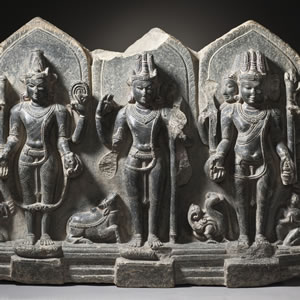
Polytheism is the worship of or belief in multiple deities, usually as a pantheon of gods and goddesses. In most religions which accept polytheism, the different gods and goddesses are representations of forces of nature or ancestral principles, and can be viewed either as autonomous or as aspects or emanations of a creator deity or transcendental absolute principle (monistic theologies), which manifests immanently in nature (panentheistic and pantheistic theologies). Most of the polytheistic deities of ancient religions, with the notable exceptions of the Ancient Egyptian and Hindu deities, were conceived as having physical bodies. Polytheism is a type of theism. Within theism, it contrasts with monotheism, the belief in a singular God, in most cases transcendent. Important polytheistic religions practiced today include Chinese traditional religion, Hinduism, Japanese Shinto, and various neopagan faiths.
 What is Judaism?
Judaism encompasses the religion, philosophy, culture and way of life of the Jewish people. Judaism is a monotheistic religion, with the Torah as its foundational text (part of the larger text known as the Tanakh or Hebrew Bible), and supplemental oral tradition represented by later texts such as the Midrash and the Talmud. Judaism is considered by religious Jews to be the expression of the covenantal relationship that God established with the Children of Israel. Judaism includes a wide corpus of texts, practices, theological positions, and forms of organization. Within Judaism there are a variety of movements, most of which emerged from Rabbinic Judaism, which holds that God revealed his laws and commandments to Moses on Mount Sinai in the form of both the Written and Oral Torah. The Jews are an ethnoreligious group and include those born Jewish and converts to Judaism. In 2012, the world Jewish population was estimated at about 14 million, or roughly 0.2% of the total world population. About 42% of all Jews reside in Israel and about 42% reside in the United States and Canada, with most of the remainder living in Europe.
 Who is GOD?
In monotheism and henotheism, God is conceived as the Supreme Being and principal object of faith. The concept of God as described by theologians commonly includes the attributes of omniscience (infinite knowledge), omnipotence (unlimited power), omnipresence (present everywhere), omnibenevolence (perfect goodness), divine simplicity, and eternal and necessary existence. In theism, God is the creator and sustainer of the universe In deism, God is the creator, but not the sustainer, of the universe Monotheism is the belief in the existence of one God or in the oneness of God In pantheism, God is the universe itself In atheism, God is purported not to exist, while deemed unknown or unknowable within the context of agnosticism.