813 views
·
Last viewed: 5 hrs ago
Uploaded: 08 Feb 2017 (10 years ago) · Shared: 01 Aug 2017
Duration: 5:09
Uploaded: 08 Feb 2017 (10 years ago) · Shared: 01 Aug 2017
Duration: 5:09
Video Description
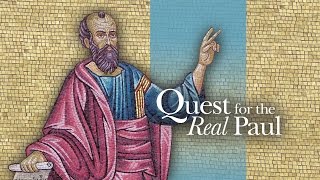
Uncover the intriguing intersection of ancient religion and empire with scholar Vivian Laughlin as she explores the integration of Ptolemy, Serapis, and Roman deities starting in 30 BC.
Explore More
Vivian Laughlin Ptolemy Serapis Roman GODSearch Google Search Explore Topics
 Who is Vivian Laughlin?
Vivian Laughlin is a doctoral candidate at the Institute of Archaeology at Andrews University. Her concentrations are Ancient Near Eastern & Roman Archaeology and Anthropology, with an Early Church History cognate. Laughlin's research pursuits have provided unique ethnographical, ethnohistorical, ethnoarchaeological and excavation opportunities in Australia, Egypt, Greece, Haiti, Israel, Jordan, Palestine, Italy (Rome, Sicily, Tivoli), and Turkey.
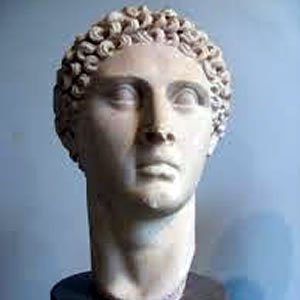 Who was Ptolemy?
Ptolemy I Soter (367 BC-282 BC) was a Macedonian Greek general under Alexander the Great. He was one of the three Diadochi who succeeded to his empire. Ptolemy became ruler of Egypt (323-282 BC) and founded a dynasty which ruled it for the next three centuries, turning Egypt into a Hellenistic kingdom and Alexandria into a center of Greek culture. He assimilated some aspects of Egyptian culture, however, assuming the traditional title pharaoh in 305/4 BC.
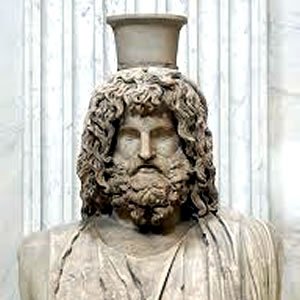 Who was Serapis?
Serapis is a Graeco-Egyptian deity. The cult of Serapis was introduced during the third century BC on the orders of Pharaoh Ptolemy I Soter of the Ptolemaic Kingdom as a means to unify the Greeks and Egyptians in his realm. A serapeum was any temple or religious precinct devoted to Serapis. The cultus of Serapis was spread as a matter of deliberate policy by the Ptolemaic kings, who also built the immense Serapeum of Alexandria. Serapis continued to increase in popularity during the Roman Empire, often replacing Osiris as the consort of Isis in temples outside Egypt. Serapis was depicted as Greek in appearance but with Egyptian trappings, and combined iconography from a great many cults, signifying both abundance and resurrection.
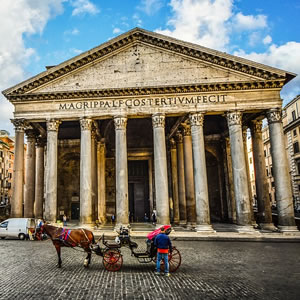 What is Roman?
In historiography, ancient Rome is Roman civilization. From the founding of the city of Rome in the 8th century BC to the collapse of the Western Roman Empire in the 5th century AD, encompassing the Roman Kingdom, Roman Republic and Roman Empire until the fall of the western empire. The civilization began as an Italic settlement in the Italian peninsula, dating from the 8th century BC, that grew into the city of Rome and which subsequently gave its name to the empire over which it ruled and to the widespread civilisation the empire developed. The Roman empire expanded to become one of the largest empires in the ancient world, though still ruled from the city, with an estimated 50 to 90 million inhabitants (roughly 20% of the world's population) and covering 5.0 million square kilometres at its height in AD 117.
Who is GOD?In monotheism and henotheism, God is conceived as the Supreme Being and principal object of faith. The concept of God as described by theologians commonly includes the attributes of omniscience (infinite knowledge), omnipotence (unlimited power), omnipresence (present everywhere), omnibenevolence (perfect goodness), divine simplicity, and eternal and necessary existence. In theism, God is the creator and sustainer of the universe In deism, God is the creator, but not the sustainer, of the universe Monotheism is the belief in the existence of one God or in the oneness of God In pantheism, God is the universe itself In atheism, God is purported not to exist, while deemed unknown or unknowable within the context of agnosticism.