Uploaded: 17 Feb 2026 (8 months ago) · Shared: 24 Feb 2026
Duration: 19:38
Video Description
Explore the challenging realities faced by residents of Gaza in this powerful video, 'Extremist Israeli settlers make living in Gaza impossible | The Guardian ISP 1/2'. The documentary delves into the escalating tensions and the impact of extremist actions on daily life, offering a balanced and insightful perspective. Drawing from the rich tapestry of Jewish, Christian, and Islamic teachings, the video highlights the importance of peace, justice, and human dignity. It invites viewers to reflect on the shared values of compassion and coexistence found in the Torah, Bible, and Quran. Whether you are a follower of Judaism, Christianity, or Islam, this video provides a compelling narrative that resonates with the core principles of faith and spiritual guidance.
Explore More
The Guardian Settlements Palestine IsraelSearch Google Search Explore Topics
 Who are The Guardian?
The Guardian is a British daily newspaper. It was founded in 1821 as The Manchester Guardian, and changed its name in 1959. Along with its sister papers The Observer and The Guardian Weekly, The Guardian is part of the Guardian Media Group, owned by the Scott Trust. The trust was created in 1936 to "secure the financial and editorial independence of The Guardian in perpetuity and to safeguard the journalistic freedom and liberal values of The Guardian free from commercial or political interference".
 What is Settlements?
Israeli settlements are civilian communities inhabited by Israeli citizens, almost exclusively of Jewish ethnicity. The settlements are built predominantly on lands within the Palestinian territories, which Israel has militarily occupied since the 1967 Six-Day War, and partly on lands considered Syrian territory also militarily occupied by Israel since the 1967 war. Such settlements within Palestinian territories currently exist in Area C of the West Bank and in East Jerusalem, and within Syrian territory in the Golan Heights.
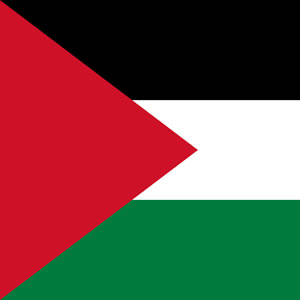 Where is Palestine?
Palestine is a geographic region in Western Asia. It is usually considered to include the Gaza Strip, the West Bank, Israel, and in some definitions, some parts of western Jordan. The name was used by ancient Greek writers, and it was later used for the Roman province Syria Palaestina, the Byzantine Palaestina Prima, and the Islamic provincial district of Jund Filastin. The region comprises most of the territory claimed for the biblical regions known as the Land of Israel, the Holy Land or Promised Land. Historically, it has been known as the southern portion of wider regional designations such as Canaan, Syria, ash-Sham, and the Levant. Situated at a strategic location between Egypt, Syria and Arabia, and the birthplace of Judaism and Christianity, the region has a long and tumultuous history as a crossroads for religion, culture, commerce, and politics.
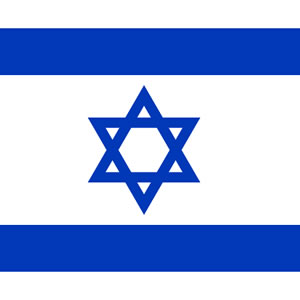 Where is Israel?
Israel, officially the State of Israel, is a country in the Middle East. Located on the southeastern shore of the Mediterranean Sea and the northern shore of the Red Sea. It has land borders with Lebanon to the north, Syria to the northeast, Jordan on the east, the Palestinian territories of the West Bank and Gaza Strip to the east and west, respectively, and Egypt to the southwest.