178 views
·
Last viewed: 6 mins ago
Uploaded: 05 Sep 2025 (1 year ago) · Shared: 15 Apr 2026
Duration: 22:20
Uploaded: 05 Sep 2025 (1 year ago) · Shared: 15 Apr 2026
Duration: 22:20
Youtube Description
COVID-19 vaccination, all-cause mortality, and hospitalization for cancer: 30-month cohort study in an Italianprovince
https://pubmed.ncbi.nlm.nih.gov/40881928/
https://pmc.ncbi.nlm.nih.gov/articles/PMC12381369/
https://www.thefocalpoints.com/p/breaking-first-population-wide-study
The rate of first hospitalization for cancer of any site
Unvaccinated group: 0.85%
Vaccinated group (one or more doses): 1.15%
N = 296,015 population
Hospital admission with a cancer diagnosis, 3,124
(p less than 0.001).
Vaccination with at least one dose
Colon-rectal cancer HR: 1.34
Breast cancer HR: 1.54
Bladder cancer HR: 1.62
After three or more vaccine doses
Breast cancer HR: 1.36
Bladder cancer HR: 1.43
All significant
After one dose (180 days after)
Rate of first hospital admissions for cancers
All cancers: up 23% significant
Colorectal: up 34% significant
Lung: down = 10%
Breast: up 54% significant
Uterine: up = 75%
Ovarian: up = 65%
Prostate: up = 1%
Bladder: up 62% significant
Thyroid: up =58%
Haematological: up = 33%
After three dose (180 days after administration of third dose)
All cancers: up = 9%
Colorectal: up = 14%
Lung: down = 5%
Breast: up=36% significant
Uterine: up = 20%
Ovarian: up = 86%
Prostate: down = 3%
Bladder: up=43% significant
Thyroid: down = 3%
Haematological: up = 5%
More about the study
Population-wide cohort analysis
Evaluating the risk of all-cause death and cancer hospitalization by SARS-CoV-2 immunization status.
National Health System official data, entire population, Pescara province, Italy
Followed from June 2021 (six months after the first vaccination) to December 2023.
296,015 residents aged ≥11 years
Hospital admission with a cancer diagnosis, 3,124
16.6% were unvaccinated
83.3% received ≥1 dose
62.2% ≥3 doses.
Compared with the unvaccinated, those receiving ≥1 dose showed a significantly lower likelihood of all-cause death
Cancer hospitalization was significant only among the subjects with no previous SARS-CoV-2 infection
Some cancer risks went down after 1 year (relative to 180 days)
(But breast, ovarian and bladder went up at one year relative to 180 days after 1 vaccine dose)
Given that it was not possible to quantify the potential impact of the healthy vaccinee bias and unmeasured confounders, these findings are inevitably preliminary.
Explore More
John Campbell Vaccine mRNASearch Google Search Explore Topics
 Who is John Campbell?
My name is John Campbell. I am a retired Nurse, Teacher, and A&E nurse based in England. I also do some teaching in Asia and Africa when time permits. These videos are to help students to learn the background to all forms of health care. My PhD focused on the development of open learning resources for nurses nationally and internationally.
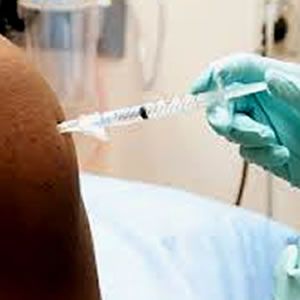 What is Vaccine?
A vaccine is a biological preparation that provides active acquired immunity to a particular infectious disease. A vaccine typically contains an agent that resembles a disease-causing microorganism and is often made from weakened or killed forms of the microbe, its toxins, or one of its surface proteins. The agent stimulates the body's immune system to recognize the agent as a threat, destroy it, and to further recognize and destroy any of the microorganisms associated with that agent that it may encounter in the future. The administration of vaccines is called vaccination. Vaccination is the most effective method of preventing infectious diseases; widespread immunity due to vaccination is largely responsible for the worldwide eradication of smallpox and the restriction of diseases such as polio, measles, and tetanus from much of the world.
 What is mRNA?
mRNA or messenger RNA, in molecular biology is a single-stranded molecule of RNA that corresponds to the genetic sequence of a gene, and is read by a ribosome in the process of synthesizing a protein. During transcription, RNA polymerase makes a copy of a gene from the DNA to mRNA as needed. This process is slightly different in eukaryotes and prokaryotes, including that prokaryotic RNA polymerase associates with DNA-processing enzymes during transcription so that processing can proceed during transcription. As in DNA, genetic information in mRNA is contained in the sequence of nucleotides, which are arranged into codons consisting of three base pairs each. Each codon codes for a specific amino acid, except the stop codons, which terminate protein synthesis. The translation of codons into amino acids requires two other types of RNA: transfer RNA, which recognizes the codon and provides the corresponding amino acid, and ribosomal RNA (rRNA), the central component of the ribosome's protein-manufacturing machinery.