1136 views
·
Last viewed: 1 hr ago
Uploaded: 19 Oct 2021 (5 years ago) · Shared: 13 Jun 2025
Duration: 5:45
Uploaded: 19 Oct 2021 (5 years ago) · Shared: 13 Jun 2025
Duration: 5:45
Youtube Description
This is a must watch show for anyone interested in getting to the bottom of the Historical Muhammad question. His book is a gold mine of informationabout the earliest history of Islam.
In Muhammad and the Empires of Faith, Sean W. Anthony demonstrates how critical readings of non-Muslim and Muslim sources in tandem can breathe new life into the historical study of Muhammad and how his message transformed the world. By placing these sources within the intellectual and cultural world of Late Antiquity, Anthony offers a fresh assessment of the earliest sources for Muhammad’s life, taking readers on a grand tour of the available evidence, and suggests what new insights stand to be gained from the techniques and methods pioneered by countless scholars over the decades in a variety of fields. Muhammad and the Empires of Faith offers both an authoritative introduction to the multilayered traditions surrounding the life of Muhammad and a compelling exploration of how these traditions interacted with the broader landscape of Late Antiquity.
GET THE BOOK HERE: 👉 https://amzn.to/35FqNYf
=================================
MythVision Website: 🔥 https://mythvisionpodcast.com/
MythVision Patreon 👉 https://www.patreon.com/mythvision
MythVision Paypal. 👉 https://www.paypal.me/dereklambert7
Cashapp: 👉 $rewiredaddiction
Venmo: 👉 @Derek-Lambert-9
Recommeded books 👉 https://amzn.to/35FqNYf
Email MythVision 👉 mythvisionpodcast@gmail.com
Facebook page: 👉 https://www.facebook.com/MythVision/
Facebook group: 👉 https://www.facebook.com/groups/TheWaterBoyZRadio/
Twitter: 👉 @DerekPodcast
Instagram: 👉 @dereklambert_7
MythVision Discord: https://discord.gg/dRQXdZBq6E
0:00 Introductions
4:08 Was there a Muhammad?
7:08 Non-Muslim sources that speak to the existence of a historical Muhammad.
18:40 Evidence of Muhammad’s existence from the Arabic side - the Hijri calendar and Muhammad’s Hijra to Medina.
27:30 Was there an eschatological motivation in the Arab conquest? Apocalyptic literature in the 7th century.
33:58 The compilation of the Quran, how early was the Quran compiled?
41:43 Is the Quran preserved word for word?
44:50 Doctrina Jacobi
53:22 Jesus in the Quran - ‘Isa’, the hostility towards the iconography of the cross in the early Muslim communities.
1:03:42 How did the hadith corpus develop?
1:13:53 Was Muhammad a shepherd or a merchant?
1:20:20 Traditions and legends common to all Abrahamic religions, the Kaaba.
1:28:04 The origins of the name ‘Allah’
1:33:45 The Petra theory, Dhul al-Qarnayn/ Alexander the Great
1:38:20 The sleepers of Ephesus.
1:40:24 Apocalypticism in the Quran
1:47:40 Dr. Sean Anthony’s hopes for the future of scholarship of Islam and the Muslim community in general.
1:55:20 Final remarks.
#MythVision #Muhammad #SeanWAnthony #Islam
Explore More
Derek Lambert Sean Anthony Archaeology Polytheism Pre-Islam Islam Mecca MythSearch Google Search Explore Topics
 Who is Derek Lambert?
MythVision Podcast (MVP) brings you some of the finest information surrounding Mythology. Knowledge from a variety of people in search of a better understanding of ancient text. We discuss mythology, syncretism, astrotheology, gematria, sacred geometry, secret societies, ancient languages, history, prophecy, scholarship, conspiracies, heretical ideas, myth interpretations and much more.
 Who is Sean Anthony?
Sean W. Anthony is a historian of early Islamic history and Arabic literature. After receiving his doctorate from the University of Chicago in 2009, Anthony taught at the University of Oregon (Eugene) and the Ohio State University, where he is currently professor of Near Eastern Languages and Cultures.
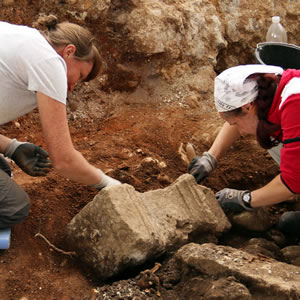 What is Archaeology?
Archaeology or archeology is the study of human activity through the recovery and analysis of material culture. The archaeological record consists of artifacts, architecture, biofacts or ecofacts, sites, and cultural landscapes. Archaeology can be considered both a social science and a branch of the humanities.
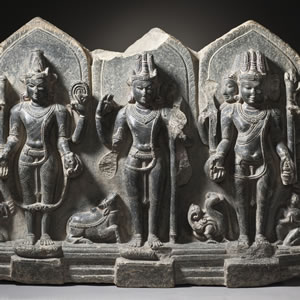 What is Polytheism?
Polytheism is the worship of or belief in multiple deities, usually as a pantheon of gods and goddesses. In most religions which accept polytheism, the different gods and goddesses are representations of forces of nature or ancestral principles, and can be viewed either as autonomous or as aspects or emanations of a creator deity or transcendental absolute principle (monistic theologies), which manifests immanently in nature (panentheistic and pantheistic theologies). Most of the polytheistic deities of ancient religions, with the notable exceptions of the Ancient Egyptian and Hindu deities, were conceived as having physical bodies. Polytheism is a type of theism. Within theism, it contrasts with monotheism, the belief in a singular God, in most cases transcendent. Important polytheistic religions practiced today include Chinese traditional religion, Hinduism, Japanese Shinto, and various neopagan faiths.
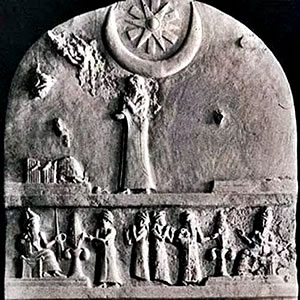 What is Pre-Islam?
Pre-Islam refers to the period in history before the emergence and widespread adoption of Islam. It specifically denotes the time before the Prophet Muhammad's revelations and the establishment of Islamic faith, culture, and civilization.
 What is Islam?
One of the major religions of the world, Islam literally translates to "submission," as a follower of Islam (Muslims) devotes their life to that of their God. The religion began with the teachings of Muhammad in the 7th century. The theology of Islam is based on the Qur'an, which was given to Muhammad by God. Some of the major fundamental principles of Islam include the Five Pillars, which hope to unite all Muslims into a community. Two different factions of Muslims exist - the majority are known as Sunni, with a small percentage known as Shi'a - both predominantly reside throughout the Middle East. Muhammad died in 632 AD and the religion of Islam formally started after his death. The Quran was formally compiled and finalised in 650 AD, prior to which it was 'memorised' and written across many parchments.
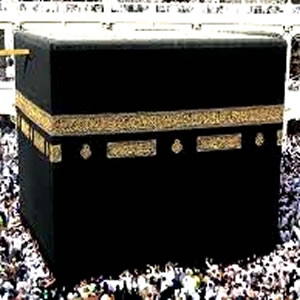 Where is Mecca?
Mecca, or Makkah is a city in the Hejazi region of the Arabian Peninsula, and the plain of Tihamah in Saudi Arabia. It is also the capital and administrative headquarters of the Makkah Region. The city is located 70 km (43 mi) inland from Jeddah in a narrow valley at a height of 277 m (909 ft) above sea level, and 340 kilometres (210 mi) south of Medina. Its resident population in 2012 was roughly 2 million,
 What is Myth?
Mythology refers to a collection of sacred, traditional tales from a specific culture that explain natural phenomena, world origins, and cultural values. This often featuring gods, goddesses, and heroes. It serves as a lens for interpreting shared human experiences through stories, rituals, and art. Myth is a genre of folklore consisting primarily of narratives that play a fundamental role in a society. For scholars, this is totally different from the ordinary sense of the term myth, meaning a belief that is not true, as the veracity of a piece of folklore is entirely irrelevant to determining whether it constitutes a myth. Myths are often endorsed by religious and secular authorities, and may be natural or supernatural in character. Many societies group their myths, legends, and history together, considering myths and legends to be factual accounts of their remote past. In particular, creation myths take place in a primordial age when the world had not achieved its later form. Origin myths explain how a society's customs, institutions, and taboos were established and sanctified. National myths are narratives about a nation's past that symbolize the nation's values. There is a complex relationship between recital of myths and the enactment of rituals.