603 views
·
Last viewed: 3 days ago
Uploaded: 06 Mar 2017 (10 years ago) · Shared: 05 Dec 2017
Duration: 11:25
Uploaded: 06 Mar 2017 (10 years ago) · Shared: 05 Dec 2017
Duration: 11:25
Youtube Description
Historian and New Testament expert Gary Habermas, Ph.D., debates a Skeptic Magazine editor on the resurrection of Jesus and the idea that his storywas copied from pagan gods. This debate took place on Lee Strobel's show called 'Faith under Fire' which aired in 2005.
Lee Strobel: http://leestrobel.com/
Gary Habermas: http://www.garyhabermas.com/
Patreon: https://www.patreon.com/reasonsforjesus
Website: https://reasonsforjesus.com
Facebook: https://www.facebook.com/ReasonsforJesus
Twitter: https://twitter.com/reasonsforjesus
Instagram: https://www.instagram.com/reasonsforjesus/
Explore More
Yaqeen Institute Jonathan Brown Gary Habermas Omar Suleiman The Bible Allah Pagan GOD Sin JESUS
JESUS
Search Google Search Explore Topics
 Who are Yaqeen Institute? (MEMBER OF YI)
The Yaqeen Institute for Islamic Research is an independent American research institute and think tank founded in 2016, mainly interested in the advanced study of modernity, Islam and Muslim societies. It works to aggregate complex Islamic topics for audiences outside of the field of Islamic academia. Yaqeen Institute was founded by American Islamic scholar Omar Suleiman and is based in Irving, Texas. It has published works have covered a variety of topics at the intersection of Islam, including perennialism, international politics, parenting, and historical preservation of Islamic texts. It works to "pioneer Islamic research in cutting-edge, creative formats."
 Who is Jonathan Brown? (MEMBER OF YI)
Jonathan Andrew Cleveland Brown (born 1977) is an American scholar of Islamic studies. Since 2012, he has been associate professor at Georgetown University's Edmund A. Walsh School of Foreign Service. He holds the Alwaleed bin Talal Chair of Islamic Civilization at Georgetown University. Brown has also published articles in the fields of Hadith, Islamic law, Salafism, Sufism, and Arabic language.
 Who is Gary Habermas?
Gary Habermas (born 1950) is an American historian, New Testament scholar, philosopher of religion. Habermas is a Christian apologist who frequently writes and lectures on the resurrection of Jesus.
 Who is Omar Suleiman? (MEMBER OF YI)
Omar Suleiman (born 1986) is an American Muslim scholar, civil rights activist and speaker. He is the Founder and President of the Yaqeen Institute for Islamic Research professor of Islamic Studies at Southern Methodist University. Suleiman is also the Resident Scholar of the Valley Ranch Islamic Center and the Co-Chair of Faith Forward Dallas at Thanks-Giving Square.
What is The Bible?The Bible is a canonical collection of texts sacred in Judaism and Christianity. There is no single "Bible" and many Bibles with varying contents exist. The term Bible is shared between Judaism and Christianity, although the contents of each of their collections of canonical texts is not the same. Different religious groups include different books within their Biblical canons, in different orders, and sometimes divide or combine books, or incorporate additional material into canonical books. The Hebrew Bible, or Tanakh, contains 24 books. Christian Bibles range from the 66 books of the Protestant canon to the 81 books of the Ethiopian Orthodox Church canon. The first part of Christian Bibles is the Old Testament, which contains, at minimum, the 24 books of the Hebrew Bible divided into 39 books and ordered differently from the Hebrew Bible. The Catholic Church and Eastern Christian churches also hold certain deuterocanonical books and passages to be part of the Old Testament canon. The second part is the New Testament, containing 27 books: the 4 Canonical gospels, Acts of the Apostles, 21 Epistles or didactic letters, and the Book of Revelation.
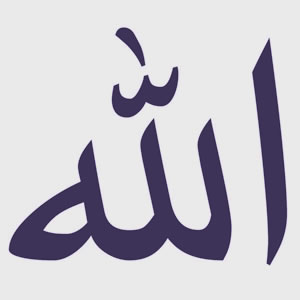 Who is Allah?
Allah is the Arabic word for God in Abrahamic religions. In the English language, the word generally refers to God in Islam. The word is thought to be derived by contraction from al-ilah, which means 'the god', and is related to El and Elah, the Hebrew and Aramaic words for God. The word Allah has been used by Arabic people of different religions since pre-Islamic times. More specifically, it has been used as a term for God by Muslims (both Arab and non-Arab) and Arab Christians.
 What is Pagan?
Paganism is a term first used in the fourth century by early Christians. It was applied on populations of the Roman Empire who practiced polytheism, either because they were increasingly rural and provincial relative to the Christian population or because they were not milites Christi (soldiers of Christ). Alternate terms in Christian texts for the same group were hellene, gentile, and heathen. Pagan and paganism were pejorative terms for the same polytheistic group, implying its inferiority. Paganism has broadly connoted the "religion of the peasantry", and for much of its history was a derogatory term. Both during and after the Middle Ages, pagan was a pejorative term that was applied to any non-Abrahamic or unfamiliar religion, and the term presumed a belief in false god(s).
Who is GOD?In monotheism and henotheism, God is conceived as the Supreme Being and principal object of faith. The concept of God as described by theologians commonly includes the attributes of omniscience (infinite knowledge), omnipotence (unlimited power), omnipresence (present everywhere), omnibenevolence (perfect goodness), divine simplicity, and eternal and necessary existence. In theism, God is the creator and sustainer of the universe In deism, God is the creator, but not the sustainer, of the universe Monotheism is the belief in the existence of one God or in the oneness of God In pantheism, God is the universe itself In atheism, God is purported not to exist, while deemed unknown or unknowable within the context of agnosticism.
What is Sin?In Abrahamic contexts, sin is the act of violating God's will. Sin can also be viewed as anything that violates the ideal relationship between an individual and God; or as any diversion from the ideal order for human living. To sin has been defined as "to miss the mark". Sins fall in a spectrum from minor errors to deadly misdeeds. Catholicism regards the least corrupt sins as venial sins which are part of human living and carry immediate consequences on earth, and, if unrepented for, more painful purgation, assuming the person is destined to heaven, as it is written in the formation letter "Purgatory", "most of the early Fathers of the Church speak of a cleansing fire, though we cannot tell whether this means actual or spiritual fire." Conversely, sins of great evil are mortal sins which bring the consequence of hell if they are not addressed either through an act of perfect contrition or going to confession about them.