812 views
·
Last viewed: 14 hrs ago
Uploaded: 28 Dec 2019 (7 years ago) · Shared: 04 Jan 2020
Duration: 9:34
Uploaded: 28 Dec 2019 (7 years ago) · Shared: 04 Jan 2020
Duration: 9:34
Youtube Description
New videos DAILY: https://bigth.ink/youtube Join Big Think Edge for exclusive videos:https://bigth.ink/Edge
----------------------------------------------------------------------------------
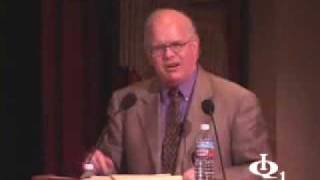
Big Think's fourth most popular video of 2019 features bioethicist Alice Dreger. She presents the idea that heterosexual people have been less interesting to scientists than gay people in terms of why they exist. This is because, evolutionarily speaking, being gay doesn't lead to a higher 'higher reproductive fitness' — meaning, it doesn't lead to more babies.
Huge and rigorous studies have proven the fraternal birth order effect: Statistically, if a mother has lots of pregnancies of males, every successive male child will be a little bit more likely to be gay. This is because the mother's immune system appears to react to the male fetus' hormones and may dampen them down.
The Western view of gay and straight isn't the definitive definition. In Samoan culture, there is a third gender: fa'afafine. These are boys who are raised as girls; they become women culturally and partner with men, although they don't change their physical anatomy.
----------------------------------------------------------------------------------
ALICE DREGER
Alice Dreger is an historian of medicine and science, a sex researcher, an award-winning writer, and an (im)patient advocate. Dreger’s latest major work is Galileo’s Middle Finger: Heretics, Activists, and the Search for Justice in Science.
----------------------------------------------------------------------------------
TRANSCRIPT
ALICE DREGER: We don't actually know the extent to which gender is socially constructed because you can't do an experiment where you remove culture and see what happens. So we don't know to what extent what we see as gendered patterns are the result of sex, biological sex, males and females. We know that gender differs according to culture, but we also know that there are patterns that appear to be fairly universal in terms of gender norms. And the ones that are more universal are more likely to probably have a sex bases to it, an evolved-to-sex basis, that is to say biological basis for males and females. So, for example, which gender serves a very important meal may be different by different cultures. So in some cultures a man will serve a very important meal versus a woman. So for example, think about it in the United States that historically speaking the father carves the turkey on Thanksgiving, but in general women prepare food historically speaking. So what we know is that these kinds of things can differ by culture, but that there are some 'universals'. And one of the universals we find, for example, is in childhood play that we find that children who are girls tend to do more social play, they tend to do more social role-play. Children who are boys tend to do more competitive play, they tend to do more play that mimics aggression or that mimics sport and mimics sometimes building, and so there are these kinds of patterns. But that doesn't mean everybody fits them.
And it's really interesting actually too if you look cross-culturally scientists find evidence that this may have – it's not just gender, that there's a sexuality component to it too. So boys who are going to grow up and be gay, and we know who they are because of retrospectively they grow up to be gay, they're what's called androphilic, that is to say they're attracted to males. And the majority of females are also attracted to males, so most females are androphilic and a small percentage of boys will grow up to be androphilic. We know that historically speaking, cross-culturally they tend to be more feminine in terms of their interests, they're more interested in social role-play, for example, they're more interested in helping their mothers, they're more interested in associating with girls as young children and more interested in dressing as girls, for example. That doesn't mean that they are girls, but it does suggest to us that sexuality and gender have interplayed components in them, that gender isn't just about social role but it has something to do with sexuality and that there's a reason females end up with these kind of patterns and males end up with these kinds of patterns and when you have a male who's attracted to males he ends up with a little bit more of the female pattern and in some circumstances if you have a girl and she's attracted to girls she'll end up with a little bit more of the male pattern in childhood.
So gender and sexual orientation seem to have sort of some connection to each other, but it's not a perfect connection in terms of absolute correlation and so we can't say that we can easily predict what would be somebody's gender role or sexual orientation simply by looking at some of the components... Read the full transcript here: bigthink.com/videos/4-what-makes-someone-gay-science-is-trying-to-get-it-straight-top-10-2019.
Explore More
Homosexual Big Think Science ONS LOT
LOT
Search Google Search Explore Topics
 What is Homosexual?
Homosexuality is romantic attraction, sexual attraction or sexual behavior between members of the same gender. As a sexual orientation, homosexuality is "an enduring pattern of emotional, romantic, and/or sexual attractions" to people of the same sex. It also refers to a person's sense of identity based on those attractions, related behaviors, and membership in a community of others who share those attractions.
 Who are Big Think?
Big Think is the leading source of expert-driven, actionable, educational content. We have thousands of videos, featuring experts ranging from Bill Clinton to Bill Nye, we help you get smarter, faster. Get actionable lessons from the world's greatest thinkers & doers. Our experts are either disrupting or leading their respective fields. We aim to help you explore the big ideas and core skills that define knowledge in the 21st century, so you can apply them to the questions and challenges in your own life.
 What is Science?
Science is a systematic enterprise that builds and organizes knowledge in the form of testable explanations and predictions about the universe. The earliest roots of science can be traced to the works of Ancient Egyptians and Mesopotamians, whose contributions entered and shaped Greek natural philosophy of classical antiquity. After the fall of the Western Roman Empire, knowledge of Greek science deteriorated in Western Europe during the Middle Ages but flourished in the Islamic Golden Age. Modern science is typically divided into three major branches that consist of the natural sciences (e.g. biology, chemistry, physics), which study nature in the broadest sense; the social sciences (e.g. psychology, sociology, economics), which study individuals and societies; and the formal sciences (e.g. mathematics, logic, theoretical computer science), which study abstract concepts.
 Who are ONS?
The Office for National Statistics (ONS) is the official national statistical institute of the United Kingdom.