776 views
·
Last viewed: 9 hrs ago
Uploaded: 20 Feb 2019 (8 years ago) · Shared: 17 Aug 2019
Duration: 4:23
Uploaded: 20 Feb 2019 (8 years ago) · Shared: 17 Aug 2019
Duration: 4:23
Youtube Description
Unrestricted Islamic Q&A with Mufti Abu Layth! Live on Facebook and YouTube every Monday night! Index: 5:46 Are Dinosaurs mentioned in theQuran?
10:19 Thoughts on the Neanderthals
16:45 Update on Mufti's DNA results
20:25 On Shamima Begumm’s British citizenship being revoked for joining ISIS
38:37 Thoughts on Mufi's Madrasah Reunion
43:30 What does Mufti think about Gibran Khalil Gibran
45:38 Does Mufti have a favorite Child?
47:01 Was Imam Qarafi an expert sculptor ?
47:48 Does Mufti watch the punisher?
48:40 Is there anything wrong with going to music concerts or the movies?
49:10 Does Mufti play video games?
51:53 Who is Mufti's favorite poet?
57:35 Reconnecting with Mufti’s Irish Aunt
58:55 Meaning of “Rabbi Zidni Ilmen” Dua
59:11 Which Seerah of the Prophet ﷺ are reliable?
1:02:06 Is eating gelatin halal?
1:04:41 Is there a concept of Guilt in Islam?
1:08:38 Does Mufti agree with the destruction of Jannatul baqi?
1:10:38 What is the point of Taubah (repentance)?
1:12:25 What is the meaning of the knots in Surah al Falaq?
1:18:37 Making Hijra in the modern world?
1:20:27 What does Islam say about the alleged crucifixion of Jesus (a.s.)?
1:25:30 Meaning of when Allah says: 'Indeed we will overcome' in relation to Jesus (a.s.)?
1:27:56 Is religion metaphysics?
1:28:16 In Depth: Hadith about Fornication - A man can to the Prophet ﷺ saying “I wish to fornicate…”
1:40:00 Is it okay to joke about scandalous issues such as the Imam Asim controversy?
1:43:40 Thoughts on the recent attack in Kashmir
Explore More
Crucifixion Abu Layth Islam JESUS
JESUS
Search Google Search Explore Topics
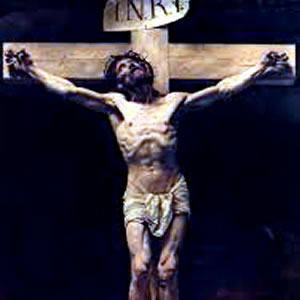 What is Crucifixion?
Crucifixion is a method of capital punishment in which the victim is tied or nailed to a large wooden beam. The victim is left to hang for several days until eventual death from exhaustion and asphyxiation. The crucifixion of Jesus is a central narrative in Christianity, and the cross (sometimes depicting Jesus nailed onto it) is the main religious symbol for many Christian churches. The English term cross derives from the Latin word crux. The Latin term crux classically referred to a tree or any construction of wood used to hang criminals as a form of execution. The term later came to refer specifically to a cross.
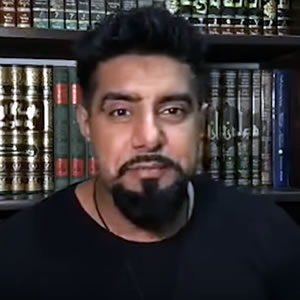 Who is Abu Layth?
Mufti Abu Layth carried out preliminary Arabic and Islamic Studies as a teenager in the UK in 1997. He went onto study Islam in Damascus, Syria. Abu Layth presents traditional Islam on a contemporary platform.
 What is Islam?
One of the major religions of the world, Islam literally translates to "submission," as a follower of Islam (Muslims) devotes their life to that of their God. The religion began with the teachings of Muhammad in the 7th century. The theology of Islam is based on the Qur'an, which was given to Muhammad by God. Some of the major fundamental principles of Islam include the Five Pillars, which hope to unite all Muslims into a community. Two different factions of Muslims exist - the majority are known as Sunni, with a small percentage known as Shi'a - both predominantly reside throughout the Middle East. Muhammad died in 632 AD and the religion of Islam formally started after his death. The Quran was formally compiled and finalised in 650 AD, prior to which it was 'memorised' and written across many parchments.