Explore More
Neanderthal Abu Layth Evolution ADAM
EVE
ADAM
EVE
Search Google Search Explore Topics
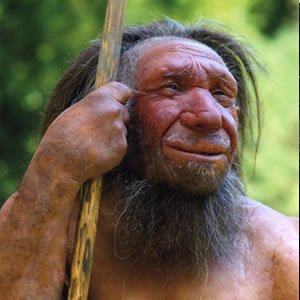 Who were Neanderthal?
Neanderthals are an extinct group of archaic humans who inhabited Europe and Western and Central Asia. Neanderthal extinction occurred roughly 40,000 years ago with the immigration of modern humans (Cro-Magnons). Neanderthals were characterised as a unique species of underdeveloped human, in particular by Marcellin Boule. By the mid-twentieth century, it was believed that human evolution progressed from an ape-like ancestor through a "Neanderthal phase" to modern humans. This gave way to the "Out of Africa" theory in the 1970s. With the sequencing of Neanderthal genetics first in 2010, it was discovered that Neanderthals interbred with modern humans.
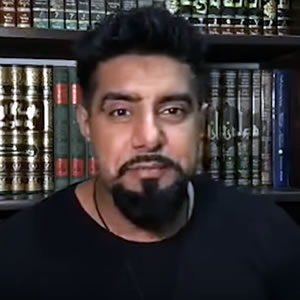 Who is Abu Layth?
Mufti Abu Layth carried out preliminary Arabic and Islamic Studies as a teenager in the UK in 1997. He went onto study Islam in Damascus, Syria. Abu Layth presents traditional Islam on a contemporary platform.
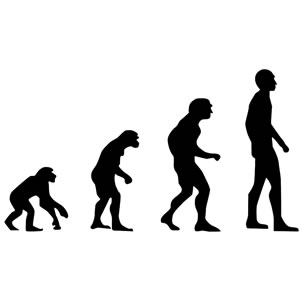 What is Evolution?
Evolution is change in the heritable characteristics of biological populations over successive generations. Evolutionary processes give rise to bio-diversity at every level of biological organisation, including the levels of species, individual organisms, and molecules. In the mid-19th century, Charles Darwin formulated the scientific theory of evolution by natural selection, published in his book On the Origin of Species (1859). Evolution by natural selection is a process first demonstrated by the observation that often, more offspring are produced than can possibly survive.