Youtube Description:
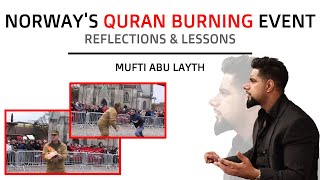
In the following session, taken from 'A Reply to Sheikh Yasir Qadhi' (full video link found below), Mufti Abu Layth looks into the Quranic story describing the Birth of Jesus (a.s.). Full video:
In the following session, taken from 'A Reply to Sheikh Yasir Qadhi' (full video link found below), Mufti Abu Layth looks into the Quranic story describing the Birth of Jesus (a.s.). Full video:
Explore More
 What is Early Christian?
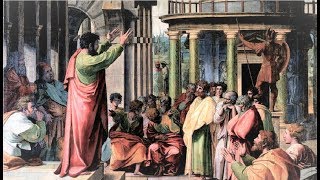
Early Christianity, the period of Christianity preceding the First Council of Nicaea in 325 AD. This typically divides historically into the Apostolic Age and the Ante-Nicene Period (from the Apostolic Age until Nicea). The first Christians, as
described in the first chapters of the Book of Acts, were all Jews either by birth or conversion and historians refer to them as Jewish Christians. The early Gospel message spread orally, probably originally in Aramaic, and later in Greek. The New Testament's Acts of the Apostles and Epistle to the Galatians record that the first Christian community centered on Jerusalem and that its leaders included Peter, James, the brother of Jesus, and John the Apostle.
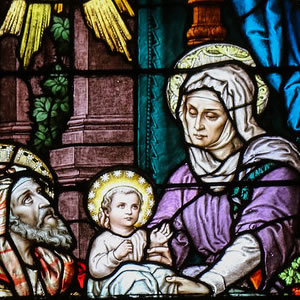 What was the Virgin Birth?
In Christianity and Islam, it is asserted that Jesus of Nazareth was conceived by his mother Mary solely through divine intervention and without sexual intercourse, thus resulting in his virgin birth. In accordance with these beliefs, Jesus had just
one biological parent instead of the necessary two; Mary's husband Joseph was his father only in the legal sense. Most Christians hold that Mary's virginity was perpetual. Though not biologically related, Jesus being Joseph's adoptive son is cited as linking him to the Davidic line. The Christian understanding is that the birth of Jesus by a virgin woman was made possible by the Holy Spirit of the Trinity.
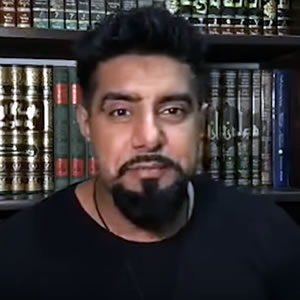 Who is Abu Layth?
Mufti Abu Layth carried out preliminary Arabic and Islamic Studies as a teenager in the UK in 1997. He went onto study Islam in Damascus, Syria. Abu Layth presents traditional Islam on a contemporary platform.
 What is The Quran?
Quran, literally meaning "the recitation" is the central religious text of Islam, which Muslims believe to be a revelation from God (Allah). It is widely regarded as the finest work in classical Arabic literature. The Quran is divided into chapters
(surah in Arabic), which are then divided into verses (ayah). Muslims believe that the Quran was verbally revealed by God to Muhammad through the angel Gabriel (Jibril), gradually over a period of approximately 23 years, beginning on 22 December 609 CE, when Muhammad was 40, and concluding in 632, the year of his death. Muslims regard the Quran as the most important miracle of Muhammad, a proof of his prophethood, and the culmination of a series of divine messages that started with the messages revealed to Adam and ended with Muhammad.