715 views
·
Last viewed: 7 hrs ago
Uploaded: 17 Jul 2018 (8 years ago) · Shared: 20 Jul 2018
Duration: 2:03
Uploaded: 17 Jul 2018 (8 years ago) · Shared: 20 Jul 2018
Duration: 2:03
Video Description
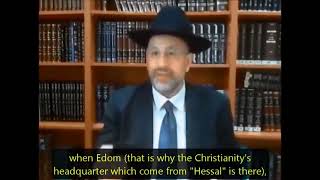
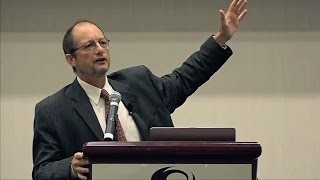
In this enlightening video, Tovia Singer delves into the fundamental differences between Islam and idolatry, clarifying that Muslims worship the One and Only God. Drawing from both Islamic and Jewish perspectives, Singer addresses common misconceptions and provides a deeper understanding of monotheism. This video is a valuable resource for anyone seeking to explore the roots of Islamic faith and its alignment with the teachings of the Quran and the Torah. Whether you are a follower of Islam, Judaism, or Christianity, this discussion offers spiritual reminders and insights that respect the early history and core beliefs of all Abrahamic faiths.
Explore More
Tovia Singer Idolatory Islam GOD SinSearch Google Search Explore Topics
 Who is Tovia Singer?
Tovia Singer (born 1960) is a Jewish rabbi. Singer is the founder and director of Outreach Judaism, Indonesia.
 What is Idolatory?
Idolatry literally means the worship of an "idol" such as a statue or icon. In Abrahamic religions, namely Christianity, Islam and Judaism, idolatry connotes the worship of something or someone other than God as if it were God. In these and several other monotheistic religions, idolatry has been considered as the "worship of false gods" and is forbidden. In the traditional religions of ancient Egypt, Greece, Rome, Africa, Asia, the Americas and elsewhere, the reverence of an image or statue has been a common practice, and cult images have carried different meanings and significance. The definition of idolatry has been a contested topic within Abrahamic religions, with some Muslims considering the worship of Jesus Christ; the Christian use of the cross as a symbol of Christ; and of Madonna (Mary) in some churches, as forms of idolatry.
 What is Islam?
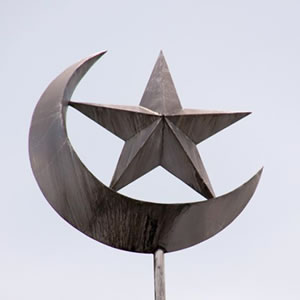
One of the major religions of the world, Islam literally translates to "submission," as a follower of Islam (Muslims) devotes their life to that of their God. The religion began with the teachings of Muhammad in the 7th century. The theology of Islam is based on the Qur'an, which was given to Muhammad by God. Some of the major fundamental principles of Islam include the Five Pillars, which hope to unite all Muslims into a community. Two different factions of Muslims exist - the majority are known as Sunni, with a small percentage known as Shi'a - both predominantly reside throughout the Middle East. Muhammad died in 632 AD and the religion of Islam formally started after his death. The Quran was formally compiled and finalised in 650 AD, prior to which it was 'memorised' and written across many parchments.
 Who is GOD?
In monotheism and henotheism, God is conceived as the Supreme Being and principal object of faith. The concept of God as described by theologians commonly includes the attributes of omniscience (infinite knowledge), omnipotence (unlimited power), omnipresence (present everywhere), omnibenevolence (perfect goodness), divine simplicity, and eternal and necessary existence. In theism, God is the creator and sustainer of the universe In deism, God is the creator, but not the sustainer, of the universe Monotheism is the belief in the existence of one God or in the oneness of God In pantheism, God is the universe itself In atheism, God is purported not to exist, while deemed unknown or unknowable within the context of agnosticism.
What is Sin?In Abrahamic contexts, sin is the act of violating God's will. Sin can also be viewed as anything that violates the ideal relationship between an individual and God; or as any diversion from the ideal order for human living. To sin has been defined as "to miss the mark". Sins fall in a spectrum from minor errors to deadly misdeeds. Catholicism regards the least corrupt sins as venial sins which are part of human living and carry immediate consequences on earth, and, if unrepented for, more painful purgation, assuming the person is destined to heaven, as it is written in the formation letter "Purgatory", "most of the early Fathers of the Church speak of a cleansing fire, though we cannot tell whether this means actual or spiritual fire." Conversely, sins of great evil are mortal sins which bring the consequence of hell if they are not addressed either through an act of perfect contrition or going to confession about them.