Uploaded: 15 Jul 2012 (14 years ago) · Shared: 02 Oct 2019
Duration: 11:01
Video Description
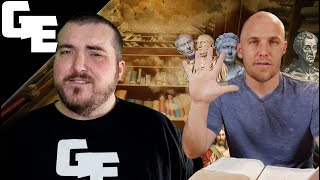
In this thought-provoking video, TruthSurge delves into the reliability of secular Christian history, examining key historical sources like Josephus, Pliny, Tacitus, Suetonius, Thallus, Lucian, and Celsus. The discussion challenges the notion that these ancient texts provide irrefutable evidence for early Christian claims. By exploring the intersection of Jewish, Christian, and Islamic traditions, the video offers a nuanced perspective on the early history of these faiths. It encourages viewers to critically examine historical narratives and consider the broader context of religious texts, including the Quran, Bible, and Torah. This engaging analysis is a must-watch for anyone interested in the spiritual and historical foundations of the Abrahamic faiths.
Explore More
TruthSurge Josephus Secular Tacitus Thallus Celsus Lucian PlinySearch Google Search Explore Topics
 Who are TruthSurge?
I am a Youtuber who enjoys making videos on music, religion and other stuff. I am an ex-Christian atheist with many thoughts and ideas to share concerning Christianity and its origins.
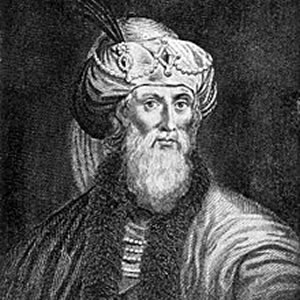 Who was Josephus?
Titus Flavius Josephus (37-100 AD), known as 'Josephus' was a first-century Romano-Jewish scholar. He was a historian and hagiographer, who was born in Jerusalem, then part of Roman Judea, to a father of priestly descent and a mother who claimed royal ancestry. He initially fought against the Romans during the First Jewish-Roman War as head of Jewish forces in Galilee, until surrendering in 67 CE to Roman forces led by Vespasian after the six-week siege of Jotapata. Josephus claimed the Jewish Messianic prophecies that initiated the First Roman-Jewish War made reference to Vespasian becoming Emperor of Rome. In response Vespasian decided to keep Josephus as a slave and presumably interpreter. After Vespasian became Emperor in 69 CE, he granted Josephus his freedom, at which time Josephus assumed the emperor's family name of Flavius. Flavius Josephus fully defected to the Roman side and was granted Roman citizenship. He became an advisor and friend of Vespasian's son Titus, serving as his translator when Titus led the Siege of Jerusalem.
 What is Secular?
As a philosophy, secularism seeks to interpret life on principles taken solely from the material world, without recourse to religion. In political terms, secularism is the principle of the separation of government institutions and persons mandated to represent the state from religious institution and religious dignitaries (the attainment of such is termed secularity). Under a brief definition, secularism means that governments should remain neutral on the matter of religion and should not enforce nor prohibit the free exercise of religion, leaving religious choice to the liberty of the people. Secularism draws its intellectual roots from Greek and Roman philosophers such as Zeno of Citium and Marcus Aurelius; from Enlightenment thinkers such as Erasmus, John Locke, Denis Diderot, Voltaire, Baruch Spinoza, James Madison, Thomas Jefferson, and Thomas Paine; and from more recent freethinkers and atheists such as Robert Ingersoll, Bertrand Russell, and Christopher Hitchens. It shifts the focus from religion to other 'temporal' and 'this-worldly' things with emphasis on nature, reason, science, and development.
 Who was Tacitus?
Gaius Cornelius Tacitus (56-120 AD), known as 'Tacitus', was a senator and a historian of the Roman Empire. The surviving portions of his two major works: the Annals and the Histories, examine the reigns of the emperors Tiberius, Claudius, Nero, and those who reigned in the Year of the Four Emperors (69 AD). These two works span the history of the Roman Empire from the death of Augustus, in 14 AD, to the years of the First Jewish-Roman War, in 70 AD. Tacitus is considered to be one of the greatest Roman historians.
Who was Thallus?Thallus was an early historian who wrote in Koine Greek. He wrote a three-volume history of the Mediterranean world from before the Trojan War to the 167th Olympiad, c. 112-109 BC. Most of his work, like the vast majority of ancient literature, has been lost, although some of his writings were quoted by Sextus Julius Africanus in his History of the World. The works are considered important by some Christians because they believe them to confirm the historicity of Jesus and provide non-Christian validation of the Gospel accounts: a reference to a historical eclipse, attributed to Thallus, has been taken as a mention of the darkness described in the Synoptic gospels account of the death of Jesus, although an eclipse could not have taken place during Passover when this took place. A common view in modern scholarship is that the Crucifixion darkness is a literary creation rather than a historical event.
Who was Celsus?Celsus was a 2nd-century Greek philosopher and opponent of early Christianity. He is known for his literary work, On The True Doctrine (or Discourse, Account), which survives exclusively in quotations from it in Contra Celsum, a refutation written in 248 by Origen of Alexandria. On The True Doctrine is the earliest known comprehensive criticism of Christianity. It was written c. 175 to 177, shortly after the death of Justin Martyr (who was possibly the first Christian apologist), and was probably a response to his work.
Who was Lucian?Lucian of Samosata (125-180 AD) was a Syrian satirist and rhetorician. He is best known for his characteristic tongue-in-cheek style, with which he frequently ridiculed superstition, religious practices, and belief in the paranormal. Although his native language was probably Syriac, all of his extant works are written entirely in Ancient Greek (mostly in the Atticized dialect popular during the Second Sophistic period).
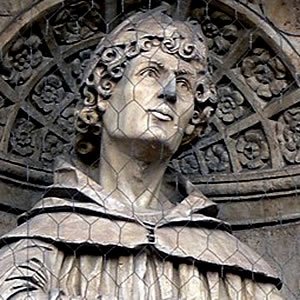 Who was Pliny?
Pliny the Elder (23-79 AD) was a Roman author. Also, he was a naturalist and natural philosopher, a naval and army commander of the early Roman Empire, and friend of emperor Vespasian.