610 views
·
Last viewed: 2 hrs ago
Uploaded: 11 Jul 2012 (14 years ago) · Shared: 02 Oct 2019
Duration: 4:40
Uploaded: 11 Jul 2012 (14 years ago) · Shared: 02 Oct 2019
Duration: 4:40
Youtube Description
In the next several vids, I'll take a brief look at most of the secular writings that are often presented as a kind of corroboration that Jesusexisted and the gospel stories are true. This will be fairly abridged but there will be some links in the next vid's descriptions for further reading. MANY points I don't even make that are excellent points against the historicity of Jesus.
Explore More
TruthSurge Tacitus Thallus Celsus Lucian Pliny JESUS
JESUS
Search Google Search Explore Topics
 Who are TruthSurge?
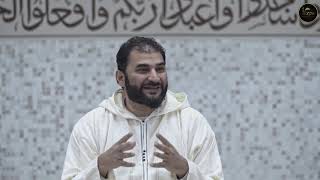
I am a Youtuber who enjoys making videos on music, religion and other stuff. I am an ex-Christian atheist with many thoughts and ideas to share concerning Christianity and its origins.
 Who was Tacitus?
Gaius Cornelius Tacitus (56-120 AD), known as 'Tacitus', was a senator and a historian of the Roman Empire. The surviving portions of his two major works: the Annals and the Histories, examine the reigns of the emperors Tiberius, Claudius, Nero, and those who reigned in the Year of the Four Emperors (69 AD). These two works span the history of the Roman Empire from the death of Augustus, in 14 AD, to the years of the First Jewish-Roman War, in 70 AD. Tacitus is considered to be one of the greatest Roman historians.
Who was Thallus?Thallus was an early historian who wrote in Koine Greek. He wrote a three-volume history of the Mediterranean world from before the Trojan War to the 167th Olympiad, c. 112-109 BC. Most of his work, like the vast majority of ancient literature, has been lost, although some of his writings were quoted by Sextus Julius Africanus in his History of the World. The works are considered important by some Christians because they believe them to confirm the historicity of Jesus and provide non-Christian validation of the Gospel accounts: a reference to a historical eclipse, attributed to Thallus, has been taken as a mention of the darkness described in the Synoptic gospels account of the death of Jesus, although an eclipse could not have taken place during Passover when this took place. A common view in modern scholarship is that the Crucifixion darkness is a literary creation rather than a historical event.
Who was Celsus?Celsus was a 2nd-century Greek philosopher and opponent of early Christianity. He is known for his literary work, On The True Doctrine (or Discourse, Account), which survives exclusively in quotations from it in Contra Celsum, a refutation written in 248 by Origen of Alexandria. On The True Doctrine is the earliest known comprehensive criticism of Christianity. It was written c. 175 to 177, shortly after the death of Justin Martyr (who was possibly the first Christian apologist), and was probably a response to his work.
Who was Lucian?Lucian of Samosata (125-180 AD) was a Syrian satirist and rhetorician. He is best known for his characteristic tongue-in-cheek style, with which he frequently ridiculed superstition, religious practices, and belief in the paranormal. Although his native language was probably Syriac, all of his extant works are written entirely in Ancient Greek (mostly in the Atticized dialect popular during the Second Sophistic period).
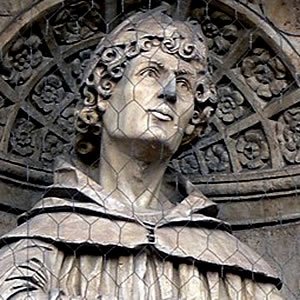 Who was Pliny?
Pliny the Elder (23-79 AD) was a Roman author. Also, he was a naturalist and natural philosopher, a naval and army commander of the early Roman Empire, and friend of emperor Vespasian.