Video Description:
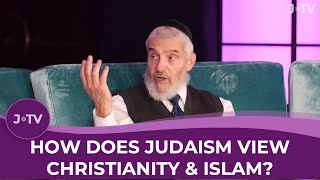
Join Shabir Ally as he delves into the complex and often misunderstood topic of blasphemy laws in Islam. In this insightful video, Ally provides a comprehensive overview, drawing from Islamic teachings and historical contexts to offer clarity and understanding. This discussion is not only relevant to followers of Islam but also offers valuable insights for those interested in comparative religious studies, including Christian and Jewish perspectives. Explore the nuances of religious law and the principles of justice, mercy, and tolerance as they are articulated in the Quran and other sacred texts. Whether you're a student of religion, a seeker of spiritual guidance, or simply curious about the intersection of faith and law, this video is a must-watch.
Explore More
 Who is Shabir Ally?
Shabir Ally is a Canadian Muslim preacher who serves as the president of the Islamic Information & Dawah Centre International in Toronto, Ontario, Canada. Ally is known for promoting a contextual interpretation of the Quranic verses, but seeks to
find their justification in similar expressions within the Christian Bible. He has debated William Lane Craig, David Wood, Nabeel Qureshi, Michael Licona and John Dominic Crossan. He has also debated apologists James White and Jay Smith.
 What is Blasphemy?
Blasphemy is the act of insulting or showing contempt or lack of reverence to a deity, or sacred things. Some religions consider blasphemy to be a religious crime. As of 2012, anti-blasphemy laws existed in 32 countries, while 87 nations had hate
speech laws that covered defamation of religion and public expression of hate against a religious group. Anti-blasphemy laws are particularly common in Muslim-majority nations, such as those in the Middle East and North Africa, although they are also present in some Asian and European countries.
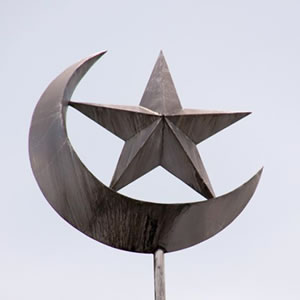 What is Islam?
One of the major religions of the world, Islam literally translates to "submission," as a follower of Islam (Muslims) devotes their life to that of their God. The religion began with the teachings of Muhammad in the 7th century. The theology of Islam
is based on the Qur'an, which was given to Muhammad by God. Some of the major fundamental principles of Islam include the Five Pillars, which hope to unite all Muslims into a community. Two different factions of Muslims exist - the majority are known as Sunni, with a small percentage known as Shi'a - both predominantly reside throughout the Middle East.
Muhammad died in 632 AD and the religion of Islam formally started after his death. The Quran was formally compiled and finalised in 650 AD, prior to which it was 'memorised' and written across many parchments.